




MLP delivers a clearer picture of lifetime Merino performance
A decade of Merino Lifetime Productivity research is giving woolgrowers clearer evidence to guide breeding, classing, and selection. Discover how combining visual assessment, objective measurement and breeding values can improve lifetime productivity and profitability.
After 10 years of research, the Merino Lifetime Productivity (MLP) project has delivered the most comprehensive lifetime dataset yet assembled for the Australian Merino industry, providing stronger evidence to guide breeding, classing and selection decisions.
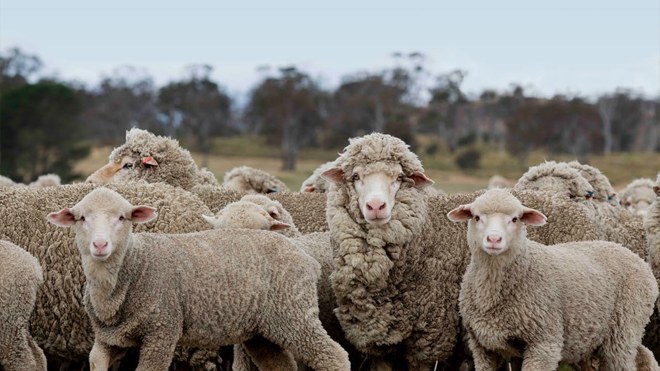
The $13 million collaborative project, led by Australian Wool Innovation (AWI) in partnership with the Australian Merino Sire Evaluation Association (AMSEA) and Merino breeders, followed more than 5,700 Merino F1 ewes across five research sites. The daughters of 134 industry sires were assessed throughout their working lives, generating more than two million validated records.
Importantly, the ewes were retained regardless of performance. This allowed researchers to compare early assessments with adult and lifetime results without the influence of performance culling, and to examine wool, reproduction, growth and carcase, health and welfare, visual traits, classing and genomics across a broad range of environments and Merino types.
One of the clearest findings is that there is no single assessment method, age, trait or Merino type that defines lifetime productivity. Instead, MLP reinforces the importance of having a clear breeding objective and combining the information best suited to the traits within that objective.
Many core production traits were shown to be heritable and responsive to selection. Fibre Diameter was very highly heritable from Yearling age, while Body Weight was highly to very highly heritable across life stages. Weaning Rate, however, had very low heritability, demonstrating the strong influence of environment and management and the need for repeated records, pedigree and genomic information to improve selection accuracy.
MLP also confirmed the value of visual classing. Classing was a useful genetic indicator for Clean Fleece Weight, Staple Length and Body Weight, while enabling selection for characteristics such as conformation, feet and legs, and wool quality. However, measurements and breeding values remain essential for traits that are difficult to assess visually and those involved in genetic trade-offs.
The timing of assessment was a major focus. Post-Weaning and Yearling information remain useful for early selection and identifying lower-performing animals, but the project found Hogget and early Adult assessments were generally more heritable and more strongly related to lifetime performance.
For wool traits, Hogget Clean Fleece Weight had a very high relationship with Adult performance, while Post-Weaning Clean Fleece Weight had only a moderate relationship. Hogget fleece assessments also improved the identification of high-profit-per-hectare sires. Both early- and late-maturing sire groups had animals that changed in fleece weight ranking between Yearling and Adult ages, showing why early selection alone can miss animals that perform strongly over their lifetime.
The practical recommendation is a two-stage approach: use young-age information for early decisions and retain Hogget or early Adult assessment where lifetime fleece and reproduction performance is important. Genomics has improved the accuracy and stability of early-life ASBVs, but it has not removed the value of later wool and reproduction records. Current animals should also have their ASBVs updated before annual classing.
The project also quantified the effect of birth and rear type. Multiple-born and reared ewes were generally lighter and cut moderately less clean wool than singles, particularly at younger ages, but these differences reflected their early environment rather than lower genetic merit and were not passed on to their progeny. Accurate recording and appropriate adjustment for birth type, rear type and dam age are therefore essential when comparing animals.
Reproduction requires a longer view. A single joining does not provide enough information to reliably predict lifetime reproductive performance, and rankings can change across adult ages. MLP found that at least two adult reproduction assessments, supported by pedigree and genomics, are needed to achieve reasonable accuracy for Weaning Rate ASBV. Reproductive history can also help classers distinguish the temporary physical effects of raising lambs from a ewe’s underlying genetic merit.
Economic analysis showed substantial genetic variation in flock profitability, with fleece value and reproduction emerging as key drivers of profit per hectare. Yet no single breeding philosophy dominated: high-profit sires were found across different Merino types and production systems. The right breeding objective depends on the environment and enterprise and its success in how effectively selection is applied.
MLP data is already strengthening MERINOSELECT, the Merino Genomic Reference Population and the development of reproduction breeding values, with further major updates planned for 2027–28. Its lasting contribution is not a replacement for classing, measurement or woolgrower judgement, but clearer evidence about where each is strongest and how they can be used together to lift lifetime productivity, profitability and genetic gain.
Read the full feature, ‘The MLP Story’, on pages 12–16 of the September 2026 edition of Beyond the Bale or visit wool.com/mlp for the MLP final reports, economic analysis and classer reports.
This article appeared in the AWI Woolgrower Newsletter September 2026. Reproduction of the article is encouraged and should be attributed as follows: This article was first published in the AWI Woolgrower Newsletter.