




The MLP Story
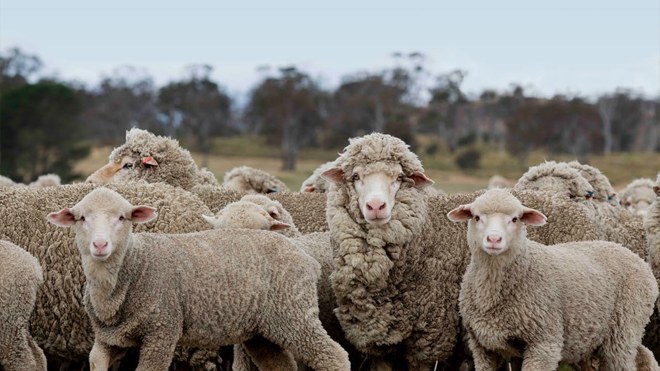
After 10 years, five research sites, more than 5,700 Merino ewes and more than two million validated records, the Merino Lifetime Productivity Project has created an unprecedented picture of lifetime performance in the Australian Merino.
Following a national series of MLP Results Seminars, Beyond the Bale looks at what the project has delivered, what it has confirmed, what it has challenged and what comes next.
Ten years of lifetime data
After ten years of research, the Merino Lifetime Productivity (MLP) Project has delivered more than two million validated records from more than 5,700 Merino F1 ewes, creating a major lifetime productivity dataset for the Australian Merino industry.
The project set out to improve lifetime productivity and profitability, strengthen genetic evaluation and benchmarking, improve the timing of assessment decisions, evaluate selection approaches and indexes, assess reproductive performance and its impacts, and support the future competitiveness of the Merino.
Led by Australian Wool Innovation (AWI) in partnership with the Australian Merino Sire Evaluation Association (AMSEA), along with site hosts and industry partners, the 10-year, $13 million project followed more than 5,700 Merino F1 ewes across five diverse environments.
Foundation ewes were joined to 134 industry sires representing a broad range of merino types and breeding philosophies, with the resulting ewe progeny assessed throughout their working lives. Across the project, 22,740 joinings were recorded and more than two million validated records collected.
The project generated lifetime information across wool, reproduction, growth and carcase, health and welfare, visual traits, classing and genomics. Almost all ewes were retained regardless of performance, enabling researchers to examine how early assessments related to adult and lifetime performance without the effect of performance culling.
While data collection was completed in August 2024, the work of translating that data into industry outcomes continues.
Over recent months, MLP Results Seminars have been rolled out across Australia, presenting the major findings to woolgrowers, ram breeders, classers, advisors and researchers. The seminar program has focused on the timing and value of assessments, lifetime trait relationships, classing and measured performance, project profit drivers, genomics and the incorporation of MLP findings into MERINOSELECT.
“Adoption of the MLP outcomes will lift gains in lifetime profitability and the rate of genetic gain through improvements in the genetic evaluation technology to date and near future, increase in hogget and adult fleece assessments and their use in animal selection and better combining visual and measured assessments by both ram breeders and buyers.”
MLP by the numbers
|
|
Why was MLP needed?
The industry’s previous major Merino R&D flocks dated from the 1990s. Since then, Merino types and the tools used to select them have changed considerably.
The industry now includes plainer and non-mulesed types, faster maturing and lower fibre diameter sheep, alongside MERINOSELECT ASBVs, new traits and indexes and genomics. At the same time, there is increasing chemical resistance to internal and external parasites and the lamb industry and sheep and lamb values have increased the economic value of reproduction.
Over many decades merino selection decisions have also been occurring progressively at younger and younger ages.
There are financial incentives to class and sell cull rams and ewes before they cut adult teeth, while joining ram and ewe lambs has become more common. In some systems, animals are therefore being selected at or soon after weaning.
This created several questions for MLP: how well does performance measured early in life predict adult and lifetime performance; are later-maturing sheep disadvantaged by early assessment; what is the value of yearling, hogget and adult assessments; and how should visual classing, objective measurement, ASBVs and indexes be combined?
The project also examined relationships and trade-offs between wool production, fibre diameter, reproduction, growth, carcass, welfare and visual traits, with the aim of providing evidence for balanced breeding objectives rather than selection for relatively few traits in isolation.
“The biggest questions were “Did the new genomic technology mean adult fleece weight could be predicted accurately at weaning or even after one shearing or is a hogget early adult shearing still required”, “How many reproduction assessments were needed”, and “how well did the MERINOSELECT wool indexes predict lifetime performance.”
How MLP was designed
MLP was designed to generate lifetime genetic and economic data from animals across different environments and Merino types. Five sire evaluation sites were established across environmentally and genetically diverse locations: Pingelly in Western Australia; Balmoral in Victoria; and MerinoLink, Macquarie and New England in New South Wales.
The sites represented different ewe bases and Merino types, ranging from an ultra-fine 16-micron New England flock through to a 20-micron Macquarie ewe base incorporating two divergent skin types.
Across the sites, annual measurements included greasy and clean fleece weight, fibre diameter, staple length and strength, body weight, fat and eye muscle depth, reproduction, worm egg count, condition score and a broad range of visual wool, conformation and welfare traits. Sheep were also professionally classed and genomic information was collected.
Almost all ewes were retained for life, with no performance culling and removal only for welfare reasons. This allowed the project to test early selection decisions, quantify re-ranking between age stages and estimate relationships between young-age, adult and lifetime performance.
The genetic analysis also accounted for non-genetic effects including contemporary group, birth and rear type, age, dam age and adult reproductive status, helping separate observed performance from estimates of genetic merit.
“All daughters of the AI sires were retained for life as we wanted to know how all the grades at every classing performed throughout their lifetime. This gave us results to show when classing was most strongly aligned with lifetime performance and at what age the assessment of each trait is most heritable to maximise genetic gain.”
What did the data show?
The MLP analysis has produced specific findings on when traits are most heritable, how well young-age measurements predict adult and or lifetime performance, how much genetic re-ranking occurs between ages, the effect of birth and rear type on lifetime performance, the value of repeated fleece and reproduction records, and how visual and measured assessments can be combined.
It has also added lifetime data to the Merino Genomic Reference Population, informed MERINOSELECT updates and provided independent validation of selection indexes and ASBVs.
What MLP confirmed
One of the clearest outcomes from MLP is that there is no single assessment method, age or trait that defines lifetime productivity. The project instead reinforced the value of a clear breeding objective and using the assessment methods that are best suited to the traits within that objective.
The genetic analysis found that many core production traits are heritable and can respond to selection. Clean and greasy fleece weight were moderately to very highly heritable depending on age, fibre diameter was very highly heritable from yearling age onwards, and body weight was highly to very highly heritable across life stages. By contrast, weaning rate had very low heritability, reinforcing the greater influence of environment and management on reproductive performance and the need for repeated records and genetic evaluation to optimise progress in low-heritability traits.
The project also confirmed that visual classing remains an effective selection tool for traits that can be readily observed. Genetic and observational analyses showed classing was a useful genetic proxy for clean fleece weight, staple length and body weight, while also allowing simultaneous selection for commercially important characteristics not fully represented in indexes or ASBVs, including conformation, feet and legs, and wool quality. Its limitations were equally clear. Measurements are needed to monitor genetic trends over time and classing was less effective for traits that are difficult to assess visually, including fat and eye muscle depth, worm egg count and weaning rate, and for traits involved in antagonistic relationships with clean fleece weight. For these traits, MLP supports combining visual assessment with measurements, raw data and breeding values rather than viewing classing and selection with measurement as competing approaches.
“While one year old measured assessments have value, hogget or early adult assessments better reflect how the animals will perform over their lifetime. These older age measured and visual assessments for wool and reproduction better align, which lead to greater confidence and better selection decisions occur in improving lifetime performance and genetic gain. This is particularly the case when there are important non visual and antagonistic traits in the breeding objective.”
What MLP challenged – how early is too early?
The timing of selection was one of the major questions MLP was designed to investigate, and the results provide an important qualification to the industry’s long-term move towards younger assessment.
Post-weaning and yearling assessments provide useful information, but for several traits they were less heritable and less predictive of lifetime performance than measurements taken at hogget or early adult ages.
For wool traits, the relationship strengthened markedly for both lifetime performance and genetic gain as animals matured. Post-weaning clean fleece weight had only a moderate genetic relationship with adult performance, while hogget clean fleece weight had a very high relationship with later adult performance. Fibre diameter was more consistent across ages, with high correlations from young ages and very high correlations from hogget age onwards. Heritability was also higher at the older ages which leads to higher rates of genetic gain.
The results do not suggest that early assessment has no value. Early classing at post-weaning or yearling age reliably identified low-performing animals, and and young-age measurements remain useful for early selection. However, MLP found that hogget assessment – particularly at 18–22 months with around 10–12 months of wool – provided a stronger basis for identifying animals likely to perform at a high level over their lifetime and how their progeny would perform.
This was also evident in the economic analysis. Hogget-age fleece assessments improved the identification of high profit-per-hectare sires, while high-profit sires could not be predicted as well from post-weaning or yearling fleece assessments alone. Both early- and late-maturing sire groups moved up and down in fleece-weight ranking between yearling and adult ages.
The implication is not to abandon young-age selection, but to recognise the value from additional information available from a second assessment. MLP supports greater use of hogget and early adult fleece information, particularly in ram breeding programs, and recommends that hogget and/or adult fleece weight ASBVs and their accuracies be made more visible in ram and semen sale information alongside yearling results. (For flock rams, adult data is predicted from older relatives and genomics and when their sisters are assessed later in life.
Updating flock rams ASBVs is important, don’t rely on their early in life ASBVs when reclassing them at older ages.)
“MLP has shown that while genomics has made early in life ASBVs more stable and robust, genomics has not replaced the need for hogget or early adult wool and reproduction assessments. Early and late maturing animals can re-rank early in life and hogget and early adult assessments are needed for both. Update ASBVs of current animals prior to annual classing.”
Age of assessment
Post-weaning and yearling: useful early information and effective for identifying lower-performing animals and early progeny testing of sires.
Hogget: stronger genetic relationships with adult and lifetime performance for a number of traits; the MLP classing work identified hogget age as the most effective stage for selecting higher lifetime performance and genetic gain.
Adult: repeat records remain important for traits such as reproduction and where performance or rankings can change across adult ages.
Early-life effects matter – but they are not genetics
MLP also quantified the lasting effect that birth and rear type can have on observed performance.
Ewes born and reared as multiples were lighter and produced less clean fleece weight through life than ewes born and reared as singles, with the largest differences occurring at younger ages and decline through adult life. Multiple-born and reared ewes also had broader fibre diameter and lower fat and muscle measurements at yearling and hogget ages.
Importantly, these differences were environmental rather than evidence of lower genetic merit and do not flow through to their progeny. Birth and rear type had a highly significant effect on fleece weight and body weight across all assessed ages, meaning unadjusted comparisons could systematically favour single-born and single-reared animals.
The reproduction pattern was different. Singles held an early advantage as maidens, consistent with their greater size and condition, but multiples caught up later in life and recorded higher reproduction at later ages in the MLP analysis.
For selection, the message is straightforward: birth and rear type and dam age need to be accurately recorded and accounted for when predicting genetic merit. MERINOSELECT ASBVs already adjust for these effects, while classers and breeders using raw performance information need access this information to make improved assessments of lifetime performance and genetic merit.
Reproduction requires lifetime information
Lifetime reproduction was a key merino R&D data gap and a core component of MLP. It’s contribution to enterprise profitability in many regions has increased in recent decades but remains difficult to select for directly.
The genetic analysis reinforced why. Weaning rate had very low heritability – approximately 0.02 to 0.04 across the adult age stages assessed – and genetic ranking showed more movement between younger and later adult reproduction records than was observed for traits such as fleece weight and fibre diameter.
Repeated reproductive records therefore add information that cannot be captured reliably from a single joining. MLP has contributed large, well-recorded reproduction datasets to Sheep Genetics and supported the development and refinement of new reproduction breeding values including conception, litter size, ewe rearing ability and weaning rate.
The classing work also identified an important interaction. Across most sites, ewes with higher lifetime reproduction tended to be classed down later in life, reflecting the physical impact of reproduction on the ewe at the time of assessment. Providing reproductive history when mature stud ewes are classed can therefore help distinguish reproductive effects from underlying genetic merit.
While the heritability for Weaning Rate was very low that was a large variation between sires that ram breeders can utilise.
Profit was driven by more than one trait
The MLP economic analysis found substantial genetic variation in flock profitability, but no single trait or breeding philosophy was dominant in the highest-profit animals.
Current MERINOSELECT wool indexes aligned well with the MLP profit-per-hectare analysis, providing independent support for the way the indexes combine economically important and welfare traits. Across the analysis, fleece value and reproduction emerged as key profit-per-hectare drivers.
There was also large genetic variation in lifetime fleece value, while ewe survival from yearling age through life had a profit impact similar to staple strength. The analysis highlighted the trade-offs with welfare and other traits that are difficult to place an economic value on because current market signals are limited for some traits and or the value of a trait can vary enormously across different wool growing regions (i.e. worms, dags, flystrike).
Importantly, high-profit sires occurred across most of the breeding philosophies and production systems represented in MLP. The finding supports the project’s broader conclusion that there is no single Merino type of breeding philosophy maximises profitability in every environment or enterprise. The breeding objective, production system and how effectively selection is implemented remain central.
“In some wool growing regions a few traits are key to sustainability and profit, in other regions a much broader range of traits are required. This creates a range of merino types that are best suited to specific environments and allows for a range of breeding philosophies to achieve the “right” merino. The key is how well each breeding objective is put into practice to optimise lifetime performance and genetic gain.”
Findings from the MLP data
- Hogget information adds value. Young-age assessments are useful, but hogget and early adult assessments improve prediction of lifetime fleece performance, profit and genetic gain.
- Classing and measurement are complementary. Classing performs strongly for visible traits; measurements and breeding values add information for both visual and non-visual traits and for breeding objectives with a number of antagonistic traits (genetic trade-offs).
- Birth and rear type affect observed performance. Singles and multiples should not be compared without appropriate adjustment or allowances.
- Reproduction needs repeat adult records. At least 2 adult assessments are needed with pedigree and genomics information, to reach reasonable accuracies for Weaning Rate.
- There was no single high-profit Merino type. High-profit sires were represented across different breeding philosophies, with fleece value and reproduction key drivers of profit per hectare.
What MLP added
Beyond the individual findings, MLP has already provided data to Australia’s national genetic evaluation system.
Lifetime phenotypes and genotypes from the project have been added to the Merino Genomic Reference Population. MLP data contributed to MERINOSELECT analysis, trait and index developments in 2022 and 2024 and will contribute to further major updates planned for 2027–28.
The project has also contributed data to the development of new reproduction breeding values and to genomic-only tools designed to provide new genetic benchmarking tools to breeders outside of the ASBVs system. Genomics has increased the accuracy of breeding values, including weaning rate, and the addition of lifetime records is helping improve the stability of early in life ASBV predictions. However, one of MLP’s important findings is that genomics has not yet removed the value of hogget and early adult fleece assessment or the need for at least 2 reproduction assessments.
That distinction is important. The project has not produced a replacement for classing, measurement or producer judgement. It has provided considerably more evidence about where each source of information is strongest, where its limitations lie and how they can be combined more effectively.

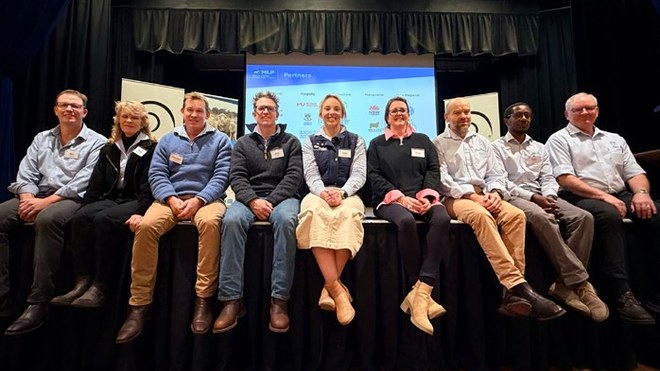
L–R Ben Swain, Australian Merino Sire Evaluation Association (AMSEA), Tracie Bird-Gardiner, NSW DPIRD, Matthew Coddington, Macquarie Sire Evaluation Association, Rich Keniry, MerinoLink, Peta Bradley, MLA Sheep Genetics, Anne Ramsay, Stenhouse Consulting, Daniel Brown, Animal Genetics and Breeding Unit (AGBU), Peter Wahinya, AGBU and Geoff Lindon, AWI.
MORE INFORMATION
Click on MLP Final Reports to access the MLP project report, the Economic Analysis of MLP data and MLP Classer Reports
This article appeared in Issue 106 of AWI’s Beyond the Bale magazine that was published in September 2026. Reproduction of the article is encouraged and should be attributed as follows: This article was first published in Issue 106 of AWI’s Beyond the Bale magazine.