




Getting in front of Johne’s disease: the ‘silent but costly disease’
Johne’s disease (JD) remains a complex and persistent challenge across Australian livestock systems. JD is challenging because of its slow development, hidden spread, and long-term impact on flock productivity. While it can be difficult to detect early, understanding how the disease behaves and how it can be managed supports more confident, informed decision-making on farm.
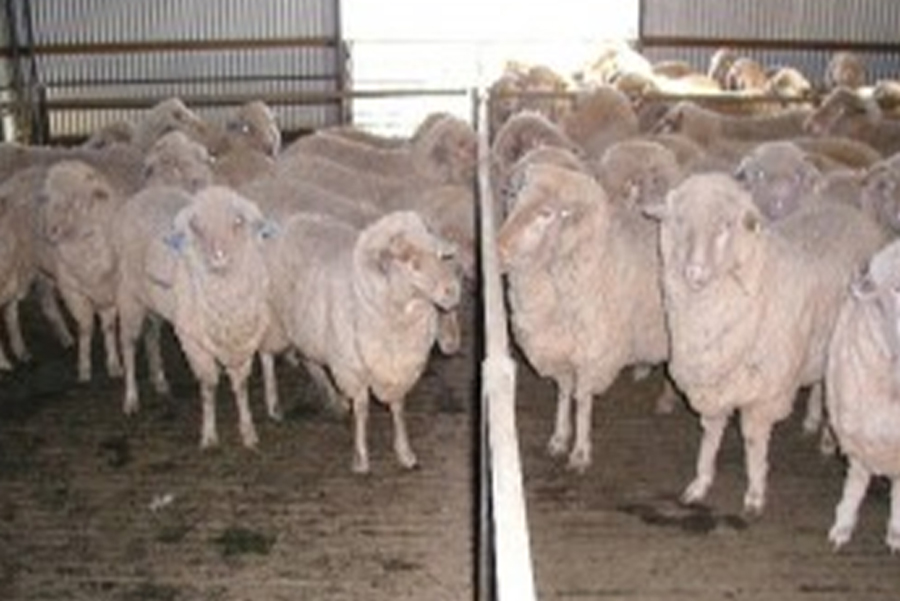
Main image: A divided mob – sheep with JD on the left. Image with thanks to Animal Health Australia.
Authors: Emily King, AWI National Extension Manager; Tom Burke, Zoetis Veterinary Operations Manager – Livestock; and Rob Barwell, AHA Head of Program, Biosecurity
What is Johne’s disease?
Johne’s disease (pronounced ‘yo-nees’) is a wasting disease that affects various species of animals. In Australia, Johne’s has been found in sheep, cattle, goats, deer and camelids (e.g. alpacas).
JD bacteria affect animals by causing a thickening of the intestinal wall resulting in a reduction in the normal absorption of food. Infected animals continue to eat but cannot absorb any nutrients and progressively lose condition, resulting in wasting and finally death. Diarrhoea and bottle jaw are also common signs in cattle.
Johne’s disease:
- Is caused by the bacterium Mycobacterium paratuberculosis
- Can survive in the environment, contributing to ongoing risk
- Takes a long time to develop (often over years), often delaying visible signs
- Has no cure and infected animals will eventually decline.
A key challenge is that Johne’s disease (JD) behaves as an ‘iceberg disease’ – many infected animals show no visible signs for long periods while still contributing to disease spread within your flock.
Johne’s disease is a chronic condition that develops slowly over time, making it difficult to detect early and challenging to manage once established.
Why Johne’s disease is difficult to manage
There are several important factors which contribute to the difficulty of managing JD:
1. Long incubation period
- Sheep are often infected early in life but remain outwardly healthy for months or years.
- During this time, they can already be shedding bacteria into the environment.
- JD can become established before it is recognised in the flock.
2. Environmental persistence
- The bacteria can survive in the environment, increasing the risk of ongoing exposure within paddocks.
- Contaminated paddocks, water, and infrastructure can continue to pose a risk.
3. Biosecurity limitations
- Even strong biosecurity alone cannot fully protect a flock.
- This is due to the long incubation period, environmental survival of the bacteria, and the ease of transmission between sheep.
4. Ease of transmission
- Infection occurs when sheep ingest bacteria from contaminated sources.
- Young animals are particularly susceptible.
These factors mean JD often goes undetected until it is already established in your flock.
How Johne’s disease spreads
JD is primarily spread through contamination from infected animals:
- Bacteria are shed in dung from infected sheep.
- Infection occurs when sheep ingest contaminated:
- Pasture
- Water
- Feed
- Milk.
Contamination can also occur via shared infrastructure (e.g., water points or feeders) and soil movement (via runoff or wind-blown material).
Young sheep are particularly susceptible, especially when exposed early in life.
Because infected animals can appear healthy while shedding bacteria, JD can enter a flock unnoticed, often through introduced stock.
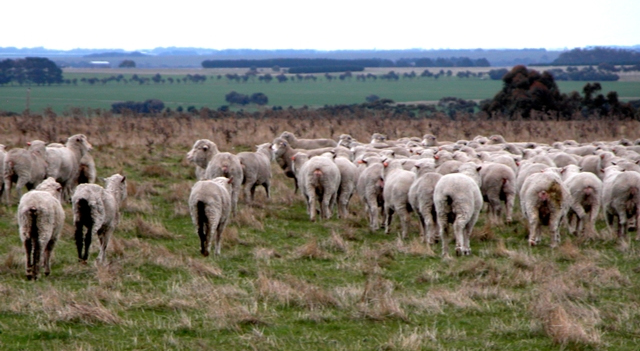
Image: Can you spot the sheep visibly affected with JD? Seeing an animal that is wasting away when others in their cohort are performing well is a sign to investigate JD on your property. Image with thanks to Animal Health Australia.
Preventing introduction: a shared priority
The same is true of JD as for all endemic diseases – prevention really is better than cure. This is even truer of diseases such as JD and ovine brucellosis, for which we have no cure.
To minimise the risk of introducing JD to your property, you can:
- Act as a closed flock and do not introduce any new sheep.
- Buy sheep with lower risk of JD from a SheepMAP accredited flock or recent testing of a closed flock.
- Vaccinate your flock if there is a risk of JD coming in from straying stock from neighbours or you’re in a district with high prevalence.
- Improve your flock’s resistance to disease through optimum nutrition and worm control.
- Seek expert advice when purchasing sheep or diagnosing health issues.
While JD cannot always be prevented, careful purchasing decisions and informed risk assessment remain critical.
JD’s impact on flock productivity
JD is not always immediately visible, but its impact is real and cumulative. Owners of flocks that are infected with JD who undertake no appropriate management measures will, over time, experience heavy production losses and deaths as the level of infection within the flock increases.
Johne’s disease affects both animal welfare and enterprise performance:
- Increased mortality over time
- Higher culling rates
- Reduced wool quantity and quality
- Reduced growth and production
- Ongoing contamination of the farm environment.
Annual death rates in infected Australian sheep flocks of up to 25% annually have been seen and, in a self-replacing flock, the lambing percentages can fall to an unsustainable level.
In unmanaged flocks, losses can be significant, reinforcing the importance of early awareness and management.
Recognising the signs of Johne’s disease
Clinical signs typically appear later in the disease and may include:
- Progressive weight loss despite normal appetite
- Poor condition or ‘ill thrift’
- Reduced productivity, including wool cut and quality and reproduction.
However, visible signs only represent a small proportion of infected animals. By the time signs appear, many others in the flock will usually already be infected.
Practical management strategies
A multi-layered approach to managing JD is recommended, and includes:
1. Vaccination
Vaccination is a central tool in JD management:
- Vaccination does not completely prevent infection.
- However, it can:
- Reduce deaths by 90%
- Reduce clinical wasting
- Lower bacterial shedding in dung.
This helps limit environmental contamination and dramatically slows transmission, lessening the impact of JD on your flock over time.
2. Grazing management
Reducing exposure as much as possible, particularly for young sheep, is critical. Key principles include:
- Prioritise lower contamination pastures for lambing and weaning
- Keep weaners on these paddocks as long as practical
- Prepare cleaner pastures through:
- Spelling
- Cropping
- Grazing with older cattle
- Pasture renovation.
Pasture preparation may take:
- Around 12 weeks in summer
- Up to six months in winter.
Research suggests M. paratuberculosis bacteria can persist in the environment for up to 52 weeks in ideal conditions. To clear the bacteria from your property it is recommended to spell it for at least 15 months, including two summers.
3. Reducing contamination
Targeted action can reduce the overall infection pressure across the flock:
- Poorly, infected sheep shed high levels of bacteria.
- Cull ill thrifty or suspect animals promptly.
- Targeted culling reduces overall paddock contamination.
4. Monitoring and testing
Early detection supports better decision-making:
- On-farm or abattoir testing supports earlier detection
- Monitoring helps track disease impact and management effectiveness
- Early diagnosis enables more informed decision-making.
Testing provides a clearer picture of disease presence, even when clinical signs are limited.
5. Strengthening biosecurity
While not sufficient alone, biosecurity remains critical:
- Avoid introducing infected stock
- Seek advice when purchasing or investigating disease
- Use available assurance tools (such as the National Sheep Health Declaration) where appropriate.
Prevention remains a shared priority across all endemic diseases.
6. Whole-flock approach
Effective control requires a flock-level strategy, not just treatment of individual animals. Growers are recommended to:
- Work with veterinarians or advisors
- Develop a clear management plan following diagnosis
- Combine vaccination, grazing, culling, and monitoring.
Essential information for using Gudair® vaccine
Getting the most out of your Gudair® investment
There is one registered vaccine on the Australian market to provide protection for sheep against JD, and that is Gudair®.
Gudair is a killed strain, oil-based vaccination, which works by stimulating a sustained immune response to mycobacteria. This results in ongoing lifetime protection for the sheep. This vaccine has been specifically formulated to work in sheep and goats, minimising the number of mortalities and amount of bacterial shedding associated with JD, when used as per the label directions.
To minimise the risk of extreme site reactions and adverse welfare impacts on the sheep, as well as improving the effectiveness of the vaccine and safety for people using it, use these guidelines to assist you in finding the right injection site and administering Gudair:
- Always use the Sekurus Safety Vaccinator for giving Gudair vaccinations. Not only does this minimise the risk of accidental injections to unintended targets (e.g. to a human), but the Sekurus Safety Vaccinator is specially designed to work with the Gudair vaccine ingredients and will have greater longevity.
- Deposit Gudair about 5 cm down the neck from the top of the spine, and approximately ⅓ of the way along the neck from the base of the ear.
- Gudair is intended as a subcutaneous (the area between the skin and muscle) injection. Depositing the vaccine into the subcutaneous area achieves the intended efficacy for the vaccine and reduces the risk of adverse site reactions.
- The angle of the vaccinator and the size of the needle are important for delivering the vaccine to the subcutaneous area. Use the following guidelines depending on what class of sheep you’re vaccinating:
- Lambs: Sekurus Safety Vaccinator angled at 45°. Use 6 mm (¼ inch), 18 gauge needles.
- Adults – short wool or low condition score (CS2 or below): Sekurus Safety Vaccinator angled at 45°. Use 6 mm (¼ inch), 18 gauge needles.
- Adults – full wool: Sekurus Safety Vaccinator angled at 90°. Use 6 mm (¼ inch), 18 gauge needles.
- If you’re giving Gudair at the same time as other injections (e.g., 6-in-1 vaccine and meloxicam at marking, etc.), they should be placed at least 5 cm apart. Vaccines should ideally be placed on opposite sides of the neck.
Before using any chemical product, read the label and seek advice from the manufacturer or a qualified advisor if you have any questions.
Human safety when using Gudair®
Some of the same components that make Gudair so effective in sheep can cause significant issues if accidentally injected into a human, so you should be careful when you’re using Gudair and take appropriate risk reduction steps to use it safely.
Even when only a small amount of Gudair is accidentally injected into a human, it can cause intense swelling and persistent inflammation. If left untreated, the swelling and inflammation can reduce bloody supply and cause the surrounding tissue to die.
Always use the Sekurus Safety Vaccinator when administering Gudair to sheep to drastically reduce the risk of accidental injection.
If you have been exposed to Gudair (e.g., skin contact, eye exposure, oral ingestion), sustained a needle-stick or needle scratch injury, or suspect the vaccine has entered your body, you should immediately seek medical advice.
Given the number of Gudair-related injuries is relatively low, many medical practitioners don’t have experience with its treatment, so it is recommended that you request they contact Zoetis (manufacturer of Gudair) on 1800 814 883 so they can provide them information from the medical community to best treat your injury.
Key takeaways for woolgrowers
- Johne’s disease is slow-moving, persistent, and often hidden.
- Early infection often occurs without visible signs.
- Young sheep are most vulnerable.
- Combining vaccination, grazing management, culling and monitoring delivers the strongest results.
- Vaccination is an essential tool in the fight against Johne’s but must be used safely.
- Limiting exposure at all times helps both prevent introduction and reduce impact.
- Even where JD is present, management can significantly reduce losses and slow spread.
More information
- MMFS Johne’s disease (JD) fact sheet
- AHA Johne’s disease
- AHA Johne’s disease in sheep
- AHA About JD
- MMFS Tool 11.13 Diagnosis, control and eradication of footrot, lice, JD and OB
- AHA Managing JD in sheep
- AHA SheepMAP resources and finding a SheepMAP flock
- MMFS Tool 11.14 Minimising the risk of potential sources of disease
- Zoetis Gudair information
- Zoetis Gudair Sekurus Safety Vaccinator
- Zoetis information sheet: Information for healthcare professionals about human accidental or self-injection and exposure to the animal vaccine, Gudair
This article appeared in the AWI Woolgrower Newsletter April 2026. Reproduction of the article is encouraged and should be attributed as follows: This article was first published in the AWI Woolgrower Newsletter.