




Autumn worm control: setting up livestock for winter success
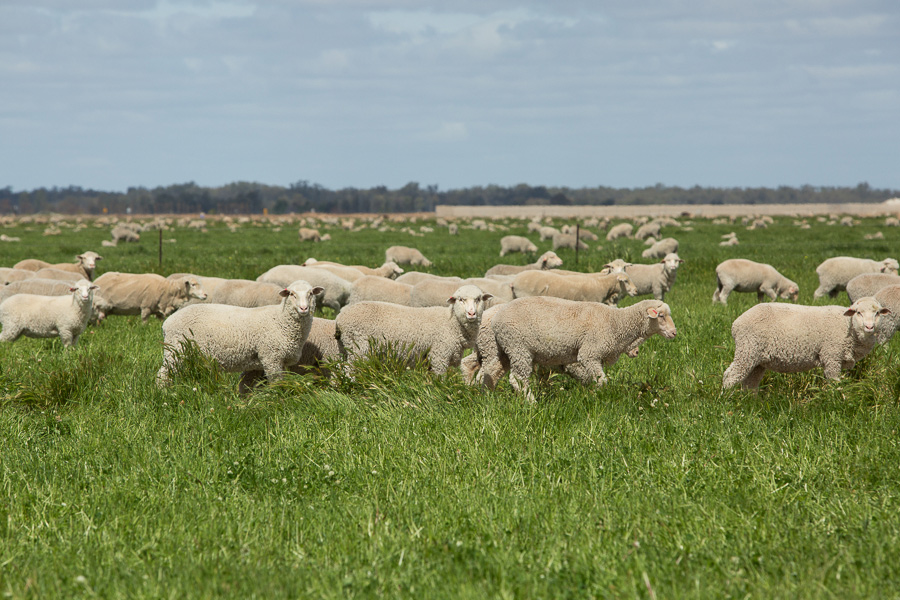
Autumn is a critical time for worm control in Australian sheep systems. As conditions shift from summer into cooler, often wetter months, producers have a valuable opportunity to reduce worm burdens which may have built up over summer and set up for winter productivity.
Seasonal conditions drive worm risk
Following summer, rainfall and milder temperatures create ideal conditions for worm larvae to survive better on pasture. In many regions, this leads to a build-up of infection risk heading into autumn, particularly after favourable seasons for worms, or ineffective control measures creating contaminated pastures. High burdens of eggs dropped onto pasture now will tend to more successfully hatch and become infective larvae in the milder conditions currently on offer.
Autumn therefore becomes a key time to interrupt the parasite lifecycle before larval contamination peaks in winter with the scour worms, along with the opportunity to clean up pastures from worm burdens over the summer.
Worm egg counts – informing your decisions
Worm egg counts are critical to improving the level of understanding of:
- How many worms are inside your sheep
- Which worms you are dealing with
- The effectiveness of your treatments.
Low in cost, and high on impact – worm egg counts (WEC) can save you time and money by informing you better before you reach for the drench gun. They also tell you which worms you are dealing with so you can tailor your product choices accordingly.
Follow up WEC testing 10–14 days post treatment serves as an excellent check to how effective your drench was. Whilst there is a small amount of planning involved here, the potential upside in management is substantial. If it alerts you to a failed treatment, this can pay back in spades, by knowing there is a problem before it shows up in the paddock with sick or dead animals.
Always aim to have WEC test kits on hand to ensure timely testing. Using accredited testing methods is strongly advised.
Focus on both pasture and animals
A central message is that effective control requires managing both worms in animals and larvae on pasture. Overlooking pasture contamination can lead to ongoing reinfection cycles and reduced productivity. This creates an ongoing problem where it feels like there is no progress and continued need for regular drenching, or the situation may arise of a catastrophic episode which causes significant losses.
Strategies to aid integrated control of worms include:
- Reducing larval contamination on paddocks
- Using grazing management to limit exposure
- Planning ahead for low worm-risk paddocks.
Preparing ‘clean’ paddocks by allowing larvae to die off and preventing new contamination is a particularly effective late summer–autumn strategy. This requires a greater degree of understanding of the life cycle of the worms and also a greater level of attention to the ongoing worm burdens and effectiveness of the treatments you are applying but pays off handsomely in the long run.
Target the most vulnerable stock
Young livestock, especially weaners, are the highest priority for protection due to their naturally low immunity. Ensuring they graze low-risk paddocks and are monitored closely is essential for maintaining growth and health.
Other vulnerable groups include pregnant and lactating ewes which also have reduced resistance to worms.
Smarter management and drenching to combat resistance
Traditional, routine drenching is no longer considered best practice, nor sustainable. Overuse of drenches has led to widespread anthelmintic resistance across Australia. Using combination drenches, containing a minimum of three actives to help slow the development of drench resistance, has helped considerably but is not a silver bullet on its own.
Whilst a complex topic, there are several simple steps you can take to reduce the risk of developing resistant worms in your flock:
- Know your enemy – what worms are present and what are you targeting? Use worm egg counts (WEC) to quantify what burdens are present, and larval differentiation to identify which species are present and when. Regular testing is important. Worm species present may differ at different times of the year.
- What is your threshold for different classes of sheep by worm type? Check out the ParaBoss Drench Decision Guides for your WormBoss region.
- Calibrate your drenching equipment and ensure it is always in excellent working order. Under-dosing leads to accelerated development of resistance and over-dosing is costly and leads to increased risk of residue issues or toxicity.
- ALWAYS follow the label directions. Check withholding periods and export slaughter intervals, along with the special instructions that pertain to the product you are using, e.g., time off feed, stress, etc.
- Drench to the heaviest sheep in the mob to avoid under-dosing. If there is a large variation in weights in the mob split the mob into heavies and lights. Use scales to be accurate in your dosages!
- Follow up drenching with a WEC test 10–14 days after treatment to ensure your drench was effective. This is an economical way to be sure your efforts have achieved what you set out to do. It also gives you an early heads-up if the drench has not worked before further production losses occur.
- Know the drench resistance status of single actives on your farm. This can be used to calculate the rate of effectiveness of the combinations. This is done by doing a Worm Egg Count Reduction Test (WECRT, also sometimes called a fecal egg count reduction test [FECRT] or drench resistance test). The ParaBoss Combination drench efficacy calculator can then be used to predict the percentage of likely efficacy of drench combinations.
- Use all opportunities to minimise worm challenge to susceptible stock. Prepare low worm-risk paddocks (spelling, use of grazing crops and crop stubbles, etc.) and where available selecting rams with genetic resistance to worms (negative WEC ASBV).
- Utilise effective quarantine protocols for all sheep you introduce to your property. You don’t know the drench resistance status of other properties, so don’t risk bringing in their problems by not adhering to a strict quarantine protocol. See MMFS Tool 11.8 Management of worms for protocols.
These approaches help preserve drench effectiveness while still controlling worm burdens.
Integrated, whole-farm approach
Ultimately, autumn worm control is most effective when part of a whole-farm strategy combining:
- Monitoring (WEC testing and diagnostics)
- Grazing and pasture management
- Strategic drenching (where appropriate)
- Nutrition and animal class prioritisation.
- No single tool is sufficient on its own – success comes from integrating multiple practices to reduce reliance on chemicals and improve long-term sustainability.
The ParaBoss webinar Seasonal worm update covers autumn worm management and drench resistance, helping you understand, identify, and slow its development.
Take-home message
Autumn is not just another treatment window, it’s a strategic opportunity. By reducing pasture contamination, targeting high-risk animals, and adopting smarter drenching practices, Australian woolgrowers can significantly lower worm burdens and protect livestock performance through winter and beyond.
More information
- WormBoss website
- WormBoss Grazing management for sheep
- WormBoss Benefits of using combination drenches
- WormBoss Rotation vs. combinations to combat drench resistance
- WormBoss Preparing low worm-risk paddocks
- ParaBoss webinar library
- AWI Extension NSW webinar Drench resistance and winter worm management
- MMFS Tool 11.8 Management of worms
- MMFS Tool 11.9 Management of drench resistance
This article appeared in the AWI Woolgrower Newsletter April 2026. Reproduction of the article is encouraged and should be attributed as follows: This article was first published in the AWI Woolgrower Newsletter.