




AWI and MLA back next phase of flystrike vaccine development
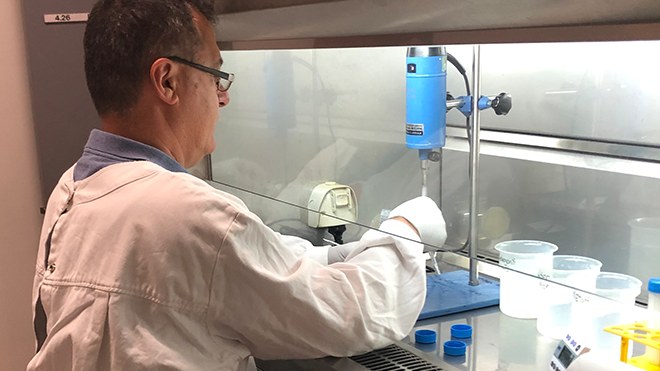
Australian Wool Innovation (AWI) is continuing its long-term investment in research towards a vaccine for flystrike, with a new project underway to build on years of research with CSIRO and move the technology closer to a practical, commercially viable option for Australian woolgrowers.
Flystrike remains one of the most significant animal health and welfare challenges facing the Australian sheep industry. An effective vaccine could provide woolgrowers with an additional tool to protect sheep, while reducing production costs, the use and reliance on chemical insecticides and supporting the industry's animal welfare and social licence objectives.
AWI and CSIRO have invested in flystrike vaccine research over many years. CSIRO has explored a range of approaches in engineering vaccines and tested them for the control of flystrike. Since the start of the project in 2019, 93 different formulations of vaccines have been tested in sheep.
The research has shown that the experimental vaccines can produce a strong immune response in sheep and promising results in laboratory tests. However, these results have not yet translated into the level of protection needed in live sheep.
Further CSIRO research identified one possible reason: the laboratory-produced proteins used in the vaccine differ from the proteins naturally found in blowflies, particularly in their sugar structures (glycosylation). This may affect how well the sheep's immune system recognises and responds to them.
A new project has recently commenced to tackle these challenges and progress the research from fundamental science towards a commercially viable vaccine. It aims to improve the vaccine by producing antigens that more closely resemble those found naturally in blowflies, while also testing new adjuvants, vaccine formulations and delivery methods to create a stronger and longer-lasting protective response in sheep.
The project is co-funded by AWI and Meat & Livestock Australia's Donor Company (MDC), with CSIRO also contributing through Victorian Government Livestock Biosecurity Funds.
How the vaccine is administered will be another important area of research. The team will compare dermal, intramuscular and subcutaneous delivery, as well as investigating slow-release pellet technologies that could potentially provide longer-lasting protection.
Together, these areas of research are intended to address the key technical challenges that remain between the promising results achieved through fundamental research and a vaccine capable of delivering effective protection in sheep under practical conditions.
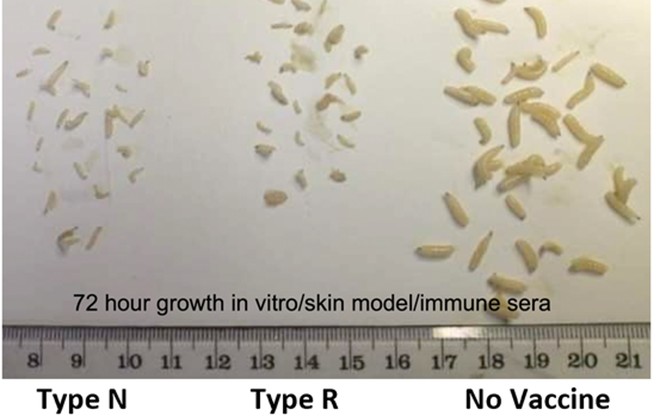
Larvae recovered after feeding for 72 hours on serum from vaccinated sheep in an in vitro feeding assay.
This article appeared in Issue 106 of AWI’s Beyond the Bale magazine that was published in September 2026. Reproduction of the article is encouraged and should be attributed as follows: This article was first published in Issue 106 of AWI’s Beyond the Bale magazine.