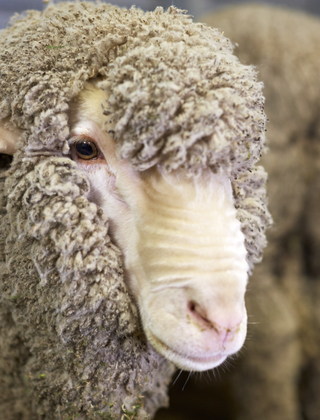





Winter lambing puts focus on early decisions
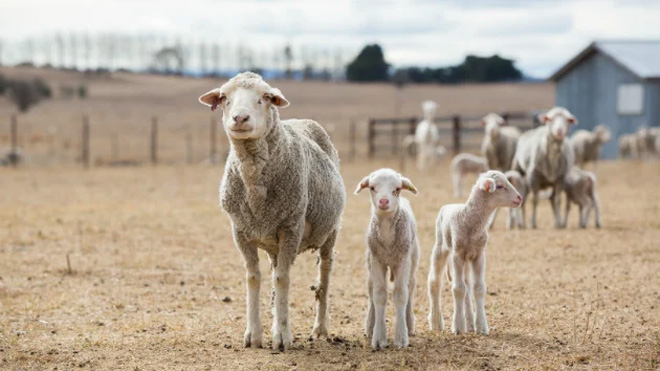
With dry conditions continuing across many wool-growing regions, veterinarian and nutritionist Dr Jillian Kelly urges producers to make early, informed management decisions. From pregnancy scanning and condition scoring to feed budgeting and containment feeding, proactive planning can help maximise lamb survival and ewe performance through a challenging winter.
With dry conditions continuing across large parts of major wool-growing regions, veterinarian and ruminant nutritionist Dr Jillian Kelly advises sheep producers heading into lambing to make early, data-based decisions.
Speaking during a recent AWI Extension NSW webinar, Dr Kelly said this season was shaping as a difficult one for many flocks.
“This is not just a drought,” she said.
“It’s a drought plus worldwide circumstances that are impacting prices and commodities. It’s a really tricky time to be managing, and lambing is such a high-needs operation.”
Dr Kelly said pregnancy scanning was one of the most important tools available to producers this year, but only if the information was used.
“Don’t skip scanning this year,” she said.
“If you do bother to scan, don’t just leave them all in one mob. Make some really tactical decisions about splitting them up and suiting their nutritional needs.”
Twin-bearing ewes have significantly higher energy requirements than singles in late pregnancy and lactation.
Managing all ewes under one feeding program can result in singles being overfed and twins being underfed.
Dr Kelly said once ewes were four to six weeks out from lambing, options became limited.
“They’re not fit to load and they’re not going to transport.”
“If you want to sell or move stock, you’ve got to do it…at that scanning point,” she said.
With mutton prices strong, she said selling poorer-performing ewes early may be a sound decision, particularly where grain reserves, labour or seasonal confidence are limited.
She encouraged producers to class ewes at scanning and remove animals with poor udders, feet, teeth or condition.
“If she (the ewe) hasn’t got the best chance of rearing those lambs successfully, she can depart now,” Dr Kelly said.
Condition scoring is also critical. For lambing, Dr Kelly recommends singles be around condition score 2.8 to 3, while twin-bearing ewes should be 3 to 3.3. In a tough winter, she said aiming for the top end of those ranges gives ewes more resilience.
Containment feeding has been widely used in many areas this season to preserve ground cover and allow more accurate and efficient feeding. Dr Kelly said containment did not need to be complicated, but it did need to be well managed.
“Once you begin, you get a lot of control,” she said.
“You can do some really good calculations and feed them really accurately.”
Adequate trough space, careful grain induction, clean water and access to roughage are all essential. Dr Kelly said feeding grain off the ground where possible helps reduce waste and disease risk.
She also stressed the importance of feed testing, particularly as hay quality varies widely and supply becomes tighter.
“All hay is not equal,” she said.
Water quality is another key consideration, particularly where ewes are heavily pregnant, lactating or being fed dry rations.
Dr Kelly said producers should prioritise lambing paddocks with good water, shelter and warmth, especially for twin-bearing ewes.
For lamb survival, she said three key factors matter most: mob size, ewe condition and green feed at the birth site.
This year, green feed may be limited or absent in many areas, leaving mob size and condition score as the two factors growers can control.
For twin-bearing ewes, she suggested mobs of fewer than 150 where possible. For singles, mobs below 400 are preferred.
Whilst feeding systems vary between farms, Dr Kelly said whether producers use trail feeding or self-feeders, the system needs to be managed properly.
For trail feeding during lambing, she recommended feeding every second day in the early afternoon, with amounts carefully calculated. Self-feeders can work well once intake requirements increase but need to be spread across paddocks to avoid ewes congregating around one point and increasing the risk of mismothering.
She also reminded producers that ewes are not ‘out of the woods’ once lambs are born.
Lactation lifts energy demand to its peak point in the annual cycle, and underfed ewes reduce milk production and may fail to rear both lambs.
“We’ve spent all the money, but we don’t get the result,” she said.
Dr Kelly said growers should aim to get lambs growing strongly and consider early weaning if the dry season continues.
While the seasonal outlook is challenging, she said good management can still deliver reasonable results.
“It’s tough. Don’t kid yourself,” she said.
“But if we do this well, we should still be getting reasonable survival.”
The key message for producers is clear: know your numbers, scan, condition score, feed test, budget feed and make hard decisions early.
This article appeared in the AWI Woolgrower Newsletter June 2026. Reproduction of the article is encouraged and should be attributed as follows: This article was first published in the AWI Woolgrower Newsletter.