




Winner of AWI Research Prize
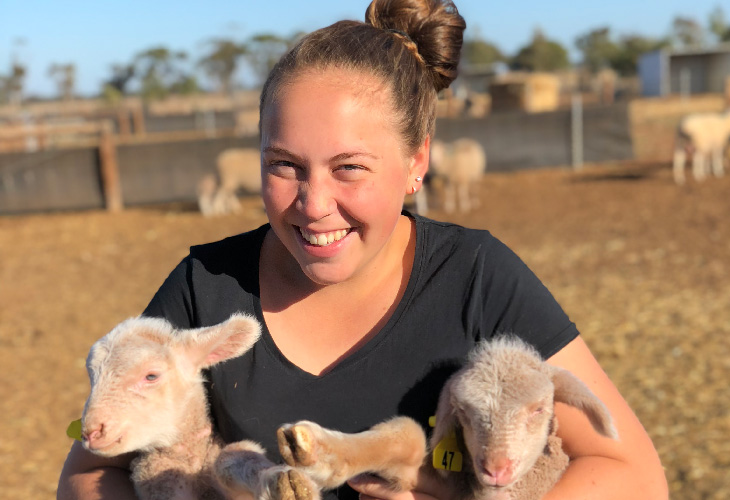
The University of Adelaide’s Bianca Agenbag is the 2021 recipient of the Australian Wool Innovation Award at the Science and Innovation Awards for Young People in Agriculture, Fisheries and Forestry.
The University of Adelaide’s Bianca Agenbag is the 2021 recipient of the Australian Wool Innovation Award at the Science and Innovation Awards for Young People in Agriculture, Fisheries and Forestry.
The nationwide awards are organised by the Department of Agriculture, Water and Environment and are open to young Australians aged between 18-35 who deliver scientific research for the benefit of agriculture.
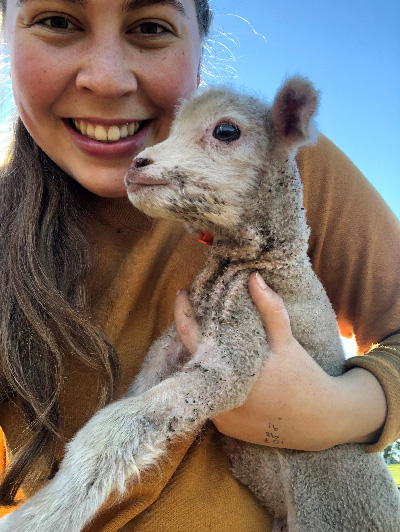
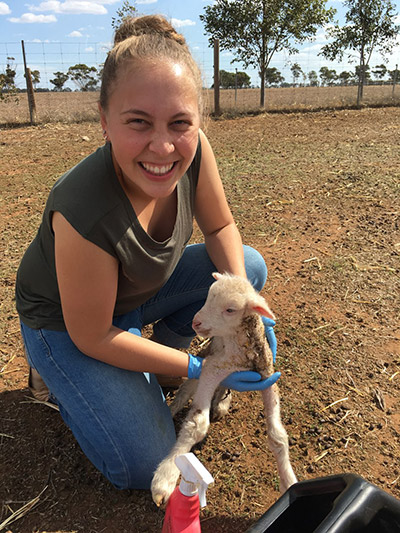
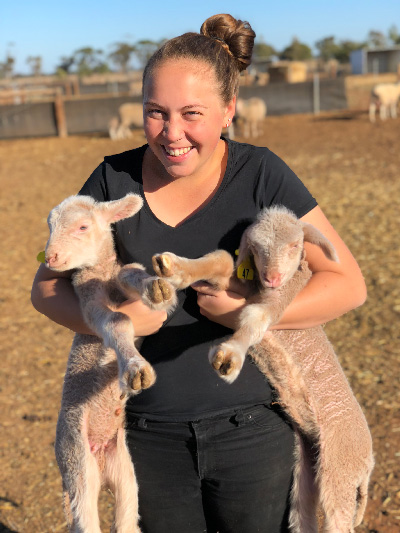
Bianca Agenbag’s project aims to fill a significant knowledge gap in the early development of lambs by focussing on colostrum.
“Colostrum contains all of the essential antibodies needed for the lamb to start its digestive system and gastrointestinal tract,” Ms Agenbag says.
“Lambs are born with absolutely no antibodies of their own, so having that first drink is absolutely crucial. Up until now there has little research done in this area for sheep.”
“I absolutely love sheep,” she says. “But also, I really love closing the gap between industry and research.”
“I’m really passionate about following through the research and then making it available and easily understandable and adaptable to farmers.”
Australian Wool Innovation Chief Executive Stuart McCullough says AWI is proud to be a partner of the award.
“Improving lamb survival is a key part of the wool industry’s focus on sheep welfare. It also drives recovery of the size of the national Merino flock.
AWI has a great interest in reproduction and nutrition research and development and we feed the findings into our grower training program Lifetime Ewe Management which drives up lamb and ewe survival”.
“Results from LTEM are becoming important measures of the wool industry’s sustainability as well.
“The future for the Australian wool industry is a bright one with countless opportunities, research like this is all about improving animal welfare and also getting better results for Australian woolgrowers. It is a win win situation”.
10 other young researchers received awards covering different fields of agriculture.
Each of this year’s recipients have been awarded funding to undertake their project over a 12-month period.