




Stop spring lameness in its tracks
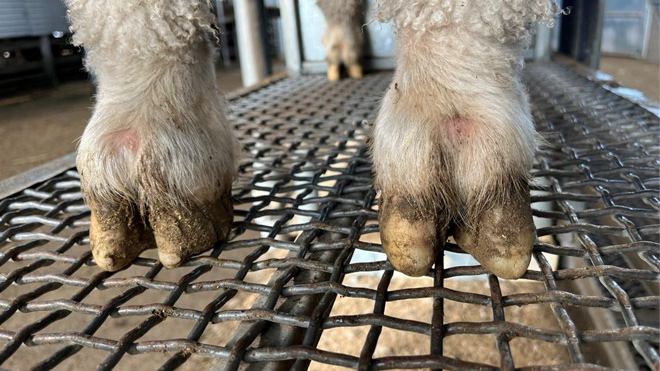
Wet, warm spring conditions can quickly expose foot problems. Early detection, accurate diagnosis and sound biosecurity help protect sheep welfare, flock performance and productivity before lameness firmly gains a foothold.
Spring brings welcome pasture growth across many wool-growing regions, but warmer temperatures, wet paddocks and long grass can also create ideal conditions for sheep foot problems.
Regular monitoring and early action can prevent an isolated lame sheep from becoming a more significant welfare, productivity or flock health issue. The first step is knowing what to look for – and not assuming every lame sheep has footrot.
Healthy, well-maintained feet are essential for sheep welfare and performance. Lameness can reduce wool production and quality, growth rates, ewe fertility and ram activity. It can also contribute to weight loss, increase flystrike risk and reduce the value of sale sheep.
Start with the mob
Signs of lameness can range from subtle changes in movement to a sheep being unable or unwilling to stand.
When checking mobs, look for sheep taking short or uneven steps, carrying one leg, shifting their weight unevenly or showing obvious discomfort while standing or walking. A head bob or shoulder drop that follows a shortened stride can also indicate pain.
Other signs include excessive head flicking, “bunny hopping” to remove pressure from the front feet, or sheep lagging behind when the mob is moved.
Observe sheep from a distance before handling them, as mob movement can help reveal animals that are reluctant to walk or unable to keep pace. Any affected sheep should then be caught and all four feet inspected carefully.
Foot abscess or footrot?
Several conditions can cause lameness, including foot abscess, footrot, ovine interdigital dermatitis, bruising, shelly hoof, scabby mouth and strawberry footrot. Accurate diagnosis is important because treatment and management will differ.
A sheep with a foot abscess will generally be severely lame in one foot. The affected foot is often hot, swollen and painful, and the abscess may occur in either the toe or heel. Foot abscess is associated with Fusobacterium necrophorum and is not contagious.
Footrot, however, is a contagious bacterial disease caused by Dichelobacter nodosus. It can affect more than one foot, with inflammation between the toes and, depending on the strain and severity, underrunning of the hoof horn.
Warm, moist conditions encourage footrot to spread. Risk increases when average daily temperatures reach 10°C or more for several days, moisture is present and pasture is sufficiently long and dense to keep the ground – and sheep’s feet – damp.
Ovine interdigital dermatitis can also occur in warm, wet conditions. It causes inflammation between the toes but does not underrun the hoof. While it can heal quickly once feet dry, it creates conditions that make feet more susceptible to infection and can resemble the early stages of footrot.
If the cause is unclear, seek advice from a veterinarian or sheep health advisor. Footrot regulations differ between states, and it is notifiable in most jurisdictions, making prompt and correct diagnosis particularly important.
Take care when paring
Growers should understand the normal shape of a sheep’s foot and avoid unnecessary or excessive foot paring.
Over-trimming can cause bleeding and pain, contribute to toe granulomas and leave the foot vulnerable to infection. Sheep that are lame or bleeding following foot paring should be held in a suitable paddock with ready access to feed, water and shelter until they recover.
Treatment should be based on an accurate diagnosis. Foot abscess may require careful paring to allow drainage, along with antibiotics prescribed by a veterinarian. Footrot control or eradication requires a coordinated flock plan and may involve footbathing and other measures recommended for the property and jurisdiction.
Keep disease at the gate
Prevention remains the most effective defence against footrot. The disease can be eradicated, but doing so can be costly and heavily dependent on seasonal conditions.
Secure boundary fences are the first line of defence. When purchasing sheep, request and review a National Sheep Health Declaration and consider the disease status and trading history of the source property.
All introduced sheep should be quarantined on arrival. Small numbers, including newly purchased rams, can be individually inspected several times before entering the flock, while larger mobs should complete an appropriate quarantine period. Footbathing sheep as they leave the truck provides only superficial disinfection and will not eliminate an established footrot infection.
Sheep returning from agistment should also be treated as introductions, as they may have encountered stray or resident sheep, contaminated yards, roads or transport vehicles. Contractors, staff and equipment can also move infectious material between properties if sound hygiene practices are not followed.
Rams warrant particular attention. Inspect their feet carefully before purchase and again 8–12 weeks before joining so problems can be diagnosed and managed before they affect mobility, serving capacity and joining performance.
Longer term, foot health begins with breeding. Selecting sheep with sound conformation and structure helps maintain normal foot shape and supports animals that can stand, walk and perform comfortably throughout their productive lives.
This spring, make foot observation part of routine mob checks. Finding a problem early, establishing its cause and acting quickly will give affected sheep the best chance of recovery c while helping protect the health and productivity of the entire flock.
More information:
Visit AWI’s foot health and footrot resources
This article appeared in the AWI Woolgrower Newsletter September 2026. Reproduction of the article is encouraged and should be attributed as follows: This article was first published in the AWI Woolgrower Newsletter.