




Season splits sharpen the focus on feed budgeting
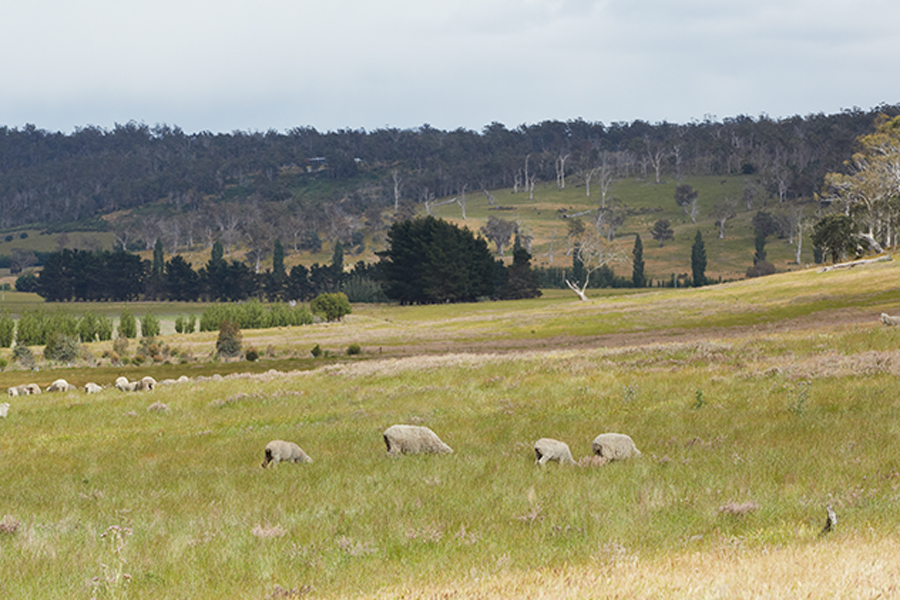
Seasonal variability is driving very different feeding decisions across Australia. Whether it’s dry feed losing quality or green feed lacking balance, feed budgeting is helping woolgrowers stay ahead. By matching feed supply to animal demand early, producers can protect condition, maintain performance and make more confident decisions through changing seasonal conditions.
Across Australia, the season is telling two very different stories.
In some regions, summer rain has carried through and pastures are holding.
In others, the break hasn’t arrived — or it came and went too quickly — leaving feed supplies tightening and decisions needing to be made earlier than planned.
For woolgrowers, that variability isn’t just seasonal background. It directly shapes how — and how early — feeding decisions are made.
At its core, the challenge is simple: matching what your sheep need with what your paddocks can supply.
That’s where feed budgeting becomes less of a theory and more of a day-to-day management tool.
When feed is there — but not doing the job
In drier areas, feed on offer can be misleading. There may be bulk in the paddock, but as pastures mature, digestibility and energy decline.
Sheep can only eat so much. As fibre increases, intake is limited, meaning animals physically cannot consume enough to meet their requirements — regardless of how much feed appears to be available.
The result is often gradual:
- condition scores slip
- energy deficits build
- performance is compromised
Feed budgeting brings clarity to this. It shifts the focus from what’s visible to what’s actually being consumed and converted into production.
As outlined in the AWI Feed Budgeting Masterclass, it’s not just quantity, but feed quality — particularly digestibility and metabolisable energy — that drives outcomes.
Green feed brings a different set of decisions
Where rain has freshened paddocks, the challenge is different — but no less important.
Short, green feed often contains high moisture and lower dry matter, meaning animals may not be getting the energy intake expected. Feed that looks abundant can still fall short nutritionally.
In these systems, supplementation decisions are about balance, not just volume.
Feed budgeting helps identify where gaps exist — whether in energy, protein or intake — and allows targeted supplementation rather than blanket feeding.
Timing is everything
Across both scenarios, one factor stands out: timing.
Feed budgeting is about planning ahead — identifying deficits before they show up in stock.
It supports decisions around:
- when to introduce supplementary feeding
- how to prioritise different classes of stock
- whether to adjust stocking rates or sell
Importantly, it reduces the risk of reacting late — when condition has already been lost and recovery becomes more costly.
Different sheep, different demands
Not all sheep have the same nutritional requirements — and this becomes critical at key production stages.
Pregnant and lactating ewes, particularly those carrying twins, drive feed demand. In late pregnancy, twin-bearing ewes can require up to 76% more energy than dry sheep.
Managing these mobs as one group often leads to underfeeding where it matters most.
Feed budgeting allows producers to:
- prioritise high-demand stock
- allocate feed more efficiently
- maintain condition through key reproductive stages
Condition scoring and knowing your flock structure are central to this process.
Removing the guesswork
One of the strongest advantages of feed budgeting is certainty.
Feed tests — measuring dry matter, energy and protein — provide an accurate picture of feed value. This allows producers to compare feeds properly and calculate costs on a usable energy basis, rather than simply $/tonne.
Without this, decisions are often based on assumptions.
With it, feeding becomes targeted and measurable.
As the AWI Masterclass highlights, feed budgeting underpins livestock performance, welfare and whole-farm profitability by aligning feed supply with animal demand.
Putting it into practice
At a practical level, feed budgeting comes back to five key questions:
- What do your sheep need?
- What are they getting from the paddock?
- Is there a gap?
- What supplement will fill it?
- How much do you need to feed?
Answering these consistently — and reviewing them as conditions change — allows producers to stay ahead of the season, rather than chasing it.
The takeaway
Seasonal variability isn’t new, but the spread of conditions across regions this year is sharpening the focus.
Whether it’s dry feed losing quality or green feed lacking balance, the principle remains the same:
Match supply to demand — early.
Feed budgeting isn’t just about managing through a tough patch. It’s about protecting ewe condition, supporting lamb survival, maintaining wool growth and ultimately driving enterprise performance — regardless of what the season delivers next.
This article appeared in the AWI Woolgrower Newsletter April 2026. Reproduction of the article is encouraged and should be attributed as follows: This article was first published in the AWI Woolgrower Newsletter.