





Optimising ewe condition for joining
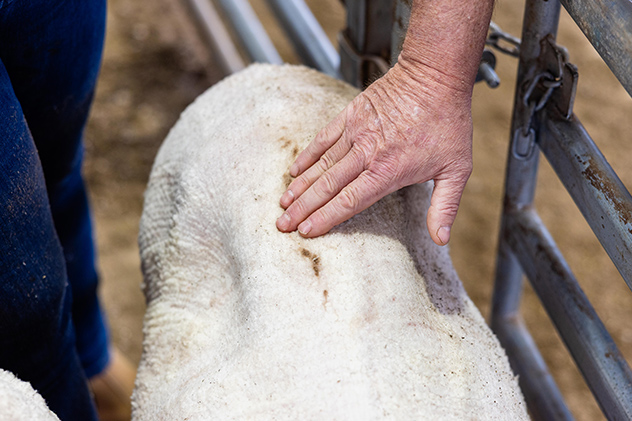
Ewe nutrition directly influences reproductive efficiency and the lifetime performance of progeny. Nutritional setbacks—from joining through lambing, weaning, and back to pre-joining—reduces overall flock productivity. Condition scoring breeding ewes throughout this cycle is one of the key management tools available to producers.
Author: Alison Desmond, Project Leader, AWI Extension VIC & BestWool/BestLamb
Why condition score at joining matters
Condition score remains the most reliable and practical tool for assessing and managing ewe nutritional status. Importantly, ewe condition score (CS) at conception—not the trend leading up to joining—is the primary driver of reproductive rate.
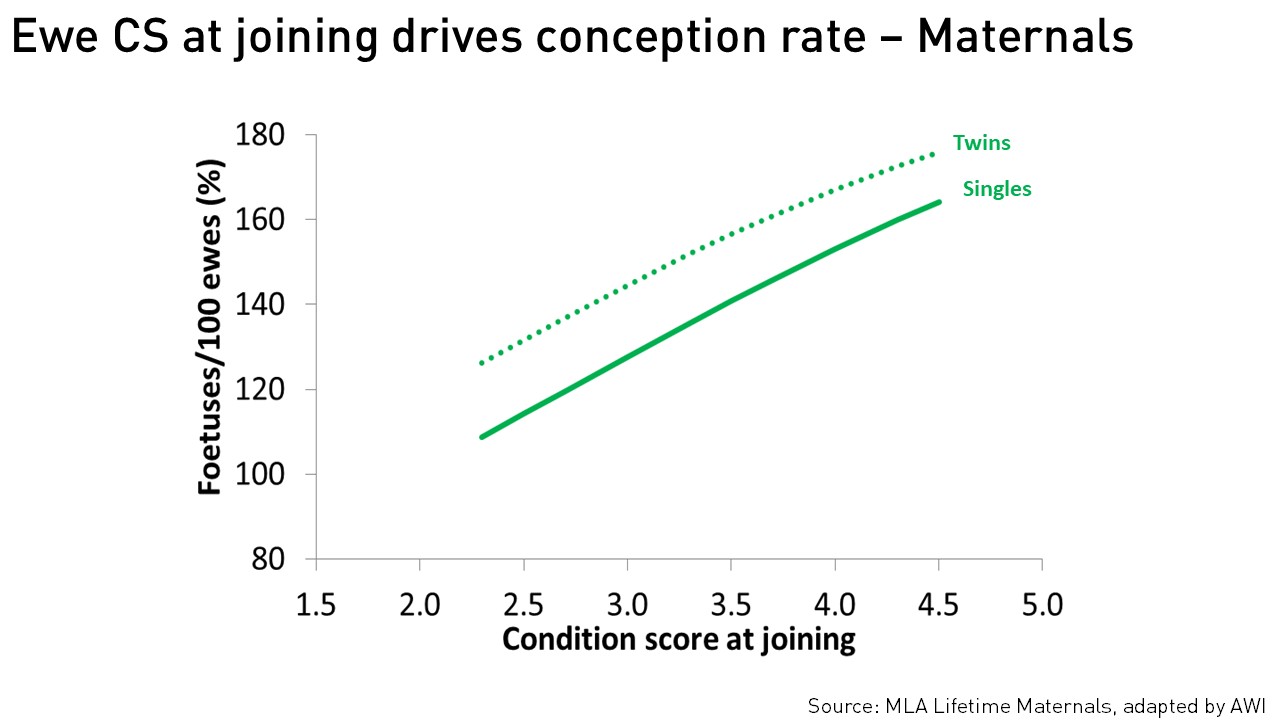
Research across Merino and Maternal flocks illustrates that ewes in better CS at joining have more lambs. The graphs below show a near-linear increase in lambs conceived between CS 1.5 and 4.5. However, CS ≥ 4 elevates the risk of dystocia, so pushing ewes too far carries diminishing returns.
The LifetimeWool project highlighted that Merino ewes on average conceive 20 extra lambs/100 ewes per additional CS at joining.
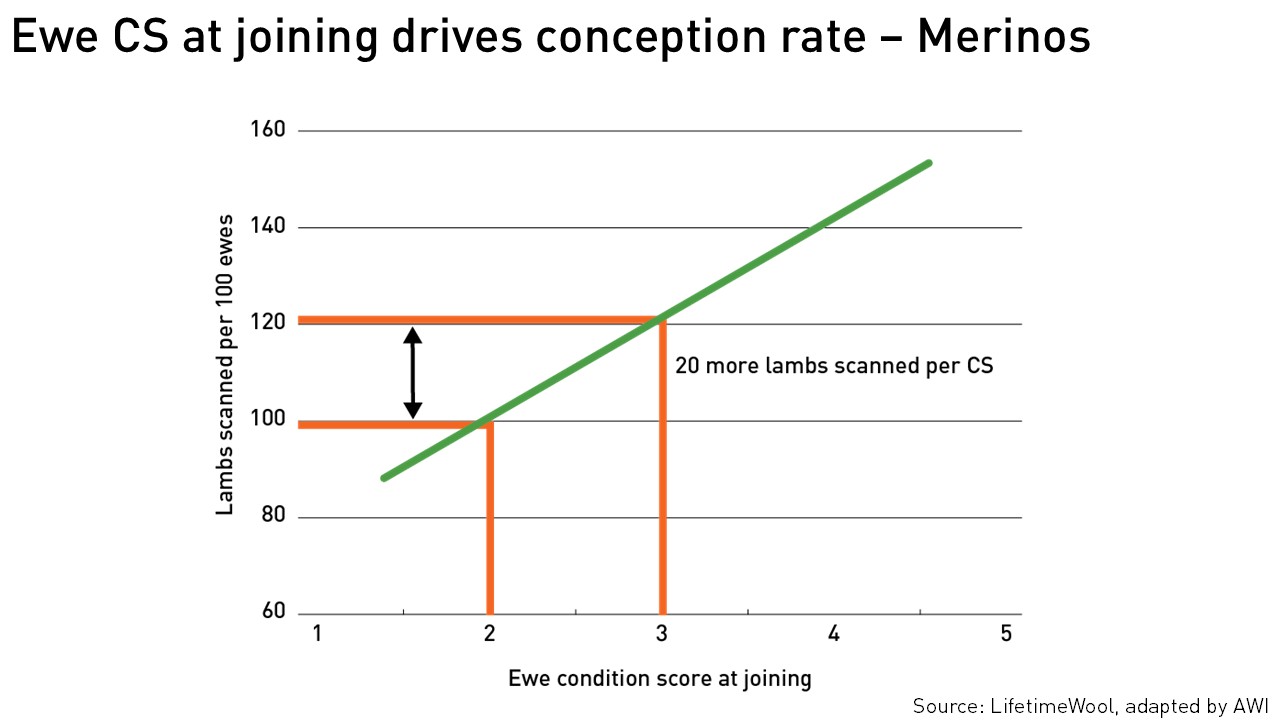
Ewe response in conception rate to CS at joining varies widely (7–36% in the flocks studied in the LifetimeWool research), and is influenced by genetics, seasonal conditions and lambing time. Later lambing systems generally gain more value from lifting CS.
The impact of CS at joining for Maternals is similar to Merinos, with an average of 24% more lambs for each additional CS at joining.
Practical CS targets for ewes at joining
- Merinos: CS 3+
- Maternals: CS 3.7+
Strategic timing: when it’s cheap to add condition
Post-weaning is the most cost-effective period to build condition—particularly on green feed—before pressure on the feed base increases later in the reproductive cycle.
Approaching joining, supplementary feeding is generally cost-effective for maintaining condition but far less efficient for gaining condition, especially under high feed prices.
Which animals to prioritise?
Post weaning, it is important to draft off thin ewes (<CS2) and preferentially feed them to ensure they can meet joining CS targets. In many cases those ewes in lower CS have mostly likely reared multiples. Twinning has a repeatability of ~15%, so investing in the recovery of proven twin-bearers maximises genetic and economic gains.
Feed budgeting: plan ahead to avoid forced decisions
- Maintaining ewes at target CS requires forward planning—not reactive feeding. A solid feed budget allows you to:
- Identify feed gaps months ahead
- Allocate pasture strategically
- Plan supplementary feeding based on energy supply vs. demand
- Prevent unnecessary condition loss
Access tables for the energy and protein requirements of sheep here and how much energy can sheep get from dry pastures here, to align your available feed, stocking rate, and joining CS targets.
Key takeaway for producers
Achieving the right CS at joining remains one of the most reliable ways to lift scanning rates and overall flock profitability. The most cost-effective strategy is simple: Build condition early, maintain it economically, and prioritise the animals most likely to deliver a return.
More information
- AWI Change Makers Episode 4: Ewe condition scoring
- Making More From Sheep Chapter 10.5 Prepare your ewes for the next joining
- AWI & MLA Resource guide for sheep reproduction
- Agriculture Victoria’s Drought feeding and management of sheep:
- AWI Repro Masterclass
- AWI & MLA Pregnancy scanning resources: