




Why are brands asking different questions about my farm?
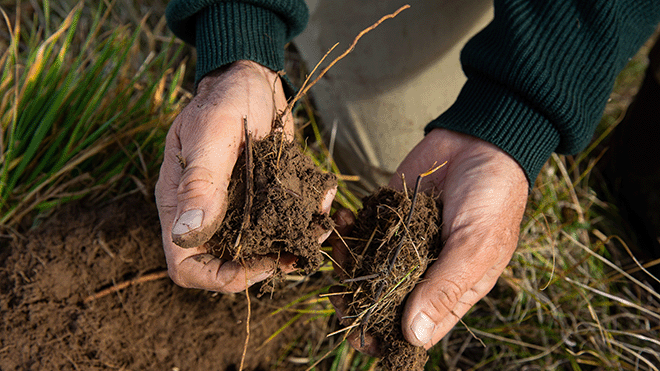
Discover how Woolmark’s Nature Positive Farming framework helps woolgrowers measure environmental outcomes and inform farm management, while meeting growing expectations from brands and retailers for verified information about how wool is produced.
For generations, woolgrowers have been accustomed to their wool being measured.
Micron, yield, staple length, strength and vegetable matter all help determine the characteristics and value of a clip.
But increasingly, some wool buyers and brands want to know something else as well: what is happening on the farm where that wool was produced?
Questions about ground cover, trees, biodiversity, waterways, greenhouse gas emissions and farm inputs might seem a long way removed from the wool in a bale. But changes taking place further along the global textile supply chain mean that information about the farm is becoming increasingly relevant.
Brands and retailers are facing growing expectations to understand and report the environmental impacts associated with their supply chains.
International initiatives including the Taskforce on Nature-related Financial Disclosures (TNFD) and Science Based Targets for Nature are part of that change, encouraging companies to better understand their impacts and dependencies on nature and provide evidence to support environmental claims.
For wool, that reaches all the way back to the farm.
Australian Wool Innovation Environmental Sustainability Manager Edward Fernie said the shift reflected more formal reporting requirements further along the supply chain.
“What’s evolving is the emergence of more formal climate and nature reporting requirements, which means brands are increasingly required to track environmental impacts across their supply chains, including at farm level,” Mr Fernie said.
Turning farm information into evidence
Woolmark+ Nature Positive Farming (NPF) Framework has been developed to provide a way of measuring environmental outcomes at farm level.
Rather than focusing on a single environmental measure, the Woolmark+ NPF Framework looks across ten areas covering the condition of the farm’s natural assets as well as production inputs and emissions.
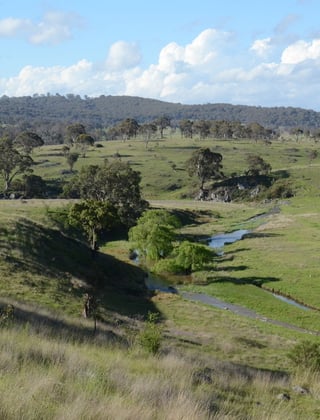
They include ecological condition, forage and ground cover, trees, shade and shelter, aquatic condition, greenhouse gas emissions, water use, fertiliser and chemical use.
The metrics have been developed and tested through Farming for the Future and La Trobe University research conducted between 2021 and 2024 across 130 wool and livestock farms in NSW, Victoria, Tasmania and Western Australia.
Importantly, the research has sought to understand not only environmental condition, but the relationship between natural capital, productivity, profitability and resilience.
That distinction matters.
For woolgrowers, measuring environmental condition need not simply be about producing another piece of information for someone further along the supply chain. Over time, consistent measurement can also provide another source of information for managing the farm itself.
“For woolgrowers, the value is practical: supporting market access, improving business decisions, and building greater resilience to a changing climate,” Mr Fernie said.
What does it tell the grower?
A first Woolmark+ NPF assessment establishes a whole-of-farm baseline.
Subsequent measurements can then show how different parts of the farm are changing and whether management decisions are producing measurable results.
That could include tracking the impact of revegetation, changes to grazing management or riparian restoration, or identifying changes in ground cover before their effects become more apparent elsewhere in the farming system.
Many of the measures are also things woolgrowers already think about because they affect the productive capacity of their country.
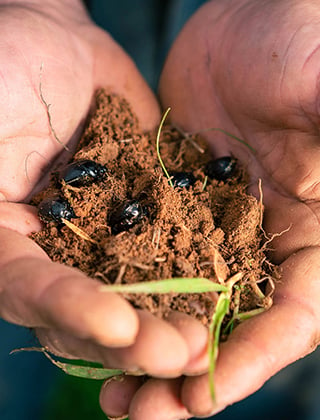
Ground cover, for example, helps protect soil from erosion, retain moisture and support soil biological activity. Trees can provide livestock shelter as well as habitat, while the condition of forage resources affects livestock production and the ability of pastures to recover following dry conditions.
The difference is the ability to measure those characteristics consistently across the property and track them over time.
For growers who know their country intimately, that data does not replace experience. It adds another layer of evidence to better inform wool-buying businesses along the value chain.
From claims to proof
The information is also becoming increasingly valuable at the other end of the wool supply chain.
Brands are setting sourcing targets around regenerative and nature-positive fibres, while at the same time facing greater scrutiny over the environmental claims they make.
That means broad statements about sustainability are increasingly being accompanied by a demand for measurable evidence.
Farm-scale information gives wool an opportunity to provide that evidence from the place where the fibre begins.
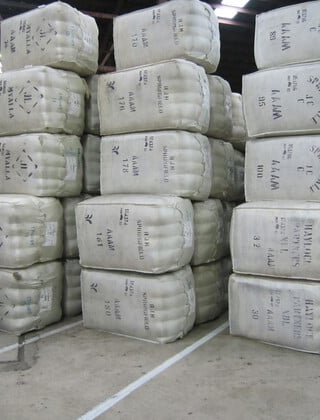
For Australian woolgrowers, that does not mean every farm suddenly needs to change the way it operates. But it does mean the information attached to a bale of wool is evolving.
Quality will remain fundamental. Increasingly, however, buyers may also want evidence about the environmental condition and management of the land that produced it.
“NPF is about providing a practical and more cost-effective way for woolgrowers to put credible evidence around what is already happening on their farm, while supporting better business decisions, profitability, and access to markets that are increasingly asking for that evidence,” Mr Fernie said.
For woolgrowers, understanding why those questions are being asked — and recognising that the information gathered can have value within their own farm business as well as further along the supply chain — is an important first step.
Australian woolgrowers will soon be invited to generate a Woolmark+ Nature Positive Farming report, helping demonstrate their farm’s environmental outcomes to the wool supply chain.
This article appeared in the AWI Woolgrower Newsletter October 2026. Reproduction of the article is encouraged and should be attributed as follows: This article was first published in the AWI Woolgrower Newsletter.