




How one woolgrower found a new view of Merino
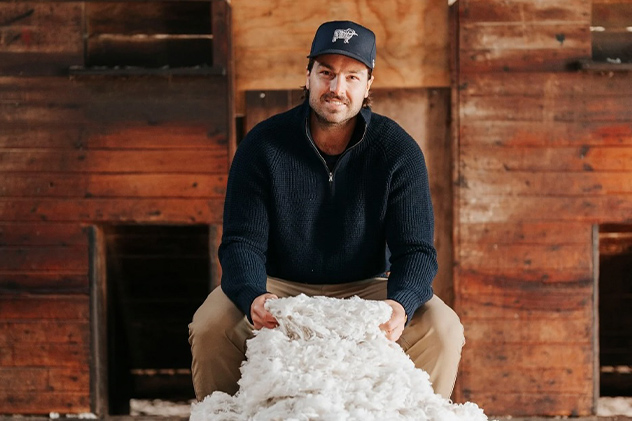
When woolgrower Jock Merriman moved to Texas, he began seeing Merino from the consumer’s side for the first time. Speaking with people who knew little about the fibre helped him understand what customers value and how simple explanations can change perceptions. His experience starting Sir W. gave him a practical view of the retail end of the wool chain and showed how availability, comfort, and clear communication all play a role in building long-term demand for Australian wool.
When Jock Merriman moved to Texas at 24, he thought he was heading over for a year of rugby, travel and life experience before returning home to the family Merino property at Boorowa.
He didn’t expect that the biggest change would come not from the move, but from seeing wool through the eyes of people who knew almost nothing about it.
“I went over there with a visa and thought, this is a good chance to play rugby and have a bit of fun before coming home,” he said.
“I didn’t expect I’d still be there years later, let alone starting a clothing brand.”
In those early months in Austin, Jock wasn’t thinking about business. But he was observing—how people lived, bought things, talked about clothing and made decisions. The American market, especially in Texas, was different to anything he had grown up with.
“You get exposed to a level of consumerism that’s just bigger and faster,” he said.
“It opened my eyes to how people buy, what they notice and what they don’t.”
But the seed for Sir W Merino didn’t begin in Texas. It began years earlier at AWI, when colleague Stephen Feighan handed Jock a grey Merino T-shirt sample and suggested he try it.
“I wore it to the gym, and the next day it didn’t smell,” he said.
“I’d been wearing polyester my whole life and just assumed gym clothes had to stink. That was the first time I really understood the difference.”
It stayed with him. As he went to work each day in cotton shirts that didn’t breathe and didn’t wear well, the contrast grew.
“I remember thinking: why am I wearing this stuff every day when that wool shirt exists? I didn’t understand why wool wasn’t being used for everyday clothing.”
Years later, in Texas, when he finally had some savings, that question resurfaced. If wool worked better, why weren’t more people wearing it?
Jock knew wool. He knew shearing sheds, ram breeding, micron measurements and seasonal conditions. But he didn’t know how to make a garment, who to call, or what the first step even looked like.
“I had no idea,” he said. “I literally Googled ‘how to start a clothing brand,’ and everything I saw said you needed things like tech packs and CAD drawings. But I didn’t have the money for that. So I had to go another way.”
He reached out to people he knew—or barely knew—because they might know more than he did. One of those people was Jimmy Jackson.
“I remembered Jimmy was involved in wool manufacturing, so I emailed him and said, ‘I’m trying to make a polo shirt—can you point me in the right direction?’ And he did. That email changed everything.”
Jimmy connected him with manufacturers who could help him start small.
They sent fabric options. Jock held them up, felt them, dismissed the ones that didn’t seem right and settled on one that felt strong enough for a polo.
They sent a basic sample. It wasn’t quite right—too blocky, sleeves too long—but there was something to work with.
“I’d just put it on and say, ‘shorten this,’ ‘add a button,’ ‘change that.’ No design background. Just common sense and what I thought would look good.”
Everything was done by email and spreadsheets. No patternmaker. No designer. Just trial, error and persistence.
He began with two colours: a cream and a royal blue. They weren’t perfect, but they existed—something he could hold, wear and show.
“That was a big moment. Actually having something I could sell.”
Selling the shirt taught him more than making it.
“I had thousands of conversations with people at markets and pop-ups. Most of them didn’t know anything about wool. They’d pick it up, feel it, say ‘wow, it’s soft,’ and then I had 30 seconds to explain why.”
Jock said he quickly learnt what worked and what didn’t.
“I could talk about thermo-regulation or antibacterial properties, but that didn’t always land. So I started saying, ‘A sheep can’t take its wool on and off. It has to work in summer and winter.’ People understood that straight away.”
He learnt to speak to what mattered to them: comfort, smell, sweat, feel, durability.
“They’re not buying a shirt because it’s sustainable. They’re buying it because it feels good and looks good. If it’s sustainable—that’s a bonus. But it’s not the reason.”
He also realised how easily the industry forgets what it’s like to know nothing about wool.
“We explain it like people already understand it. They don’t. You’ve got to take it right back to basics.”
Those consumer conversations changed his thinking about the Australian market too.
“I grew up assuming people didn’t wear wool here because it was too hot. But I wear my shirts every day in Texas—35 degrees and 80% humidity—and they’re the best thing in my wardrobe.”
So if Australians weren’t wearing wool, he decided, it wasn’t the climate.
“It’s availability and marketing. People can’t buy what’s not on the shelf. I never wore wool growing up because there was nothing to buy,” said Jock.
Living offshore gave him distance from the industry he grew up in. It sharpened his view on how different parts of the wool supply chain depend on one another.
“As growers, we sometimes forget that retail is part of our industry. If things aren’t selling at the shopfront, it affects everything behind it,” he said.
He learned this first-hand as a small brand.
“To grow, I need margin on every shirt. If my costs are too high, it doesn’t matter if I sell out—I can’t reinvest. That’s the same all the way along the chain. Buyers, processors, spinners—everyone needs to make something on what they’re doing.”
He points out that unlike growers, wool brands and manufacturers are not obligated to use Merino.
“I could decide tomorrow to make cotton shirts. I won’t—but I could. That’s why education is important. If people don’t understand wool, they won’t choose it.”
He also believes the industry should think in longer timeframes.
“Sometimes we focus too much on next year’s wool cheque. But if we want prices higher in the future, we’ve got to grow demand now. That comes from brands using wool—and consumers wanting it,” Jock said.
The US market has been a challenge, but an informative one.
“They don’t know wool comes from a sheep half the time,” he said.
“There’s no context. So you start from zero, every single time.”
But he sees opportunity in that.
“They have no negative perceptions either. They’re blank. Once they learn what it does—especially that it doesn’t smell—they’re in.”
He hears the same questions repeatedly: “Will it itch?”; “Can I wash it normally?”; “Why doesn’t it smell?”; “Why haven’t I heard of this before?” He has learnt to answer simply.
“If they pick up one piece of information they can remember, that’s enough.”
Despite the complexity of building a brand, Jock remains understated about it.
“I’ve had moments where I think, what am I doing? But if I didn’t start, I’d never get anywhere. I’m still in the proof-of-concept stage. I’m still learning.”
He does most things himself—design, website, photography planning, customer service—because he has to. But he also recognises the value in learning the long way around.
“If it wasn’t wool, I would’ve given up a long time ago. But I believe in the fibre. And I believe people should be able to wear it every day.”
People aren’t buying his shirts because of the family heritage behind the name, but the story is still part of the whole piece.
“People are buying them because they feel good. The story matters, but the shirt has to work.”
Still, he sees the lineage as something that contributes to the broader picture of wool’s value.
“It’s not just about my family. It’s about showing that wool comes from real places, real people, real work. And that a garment goes through so many hands before someone puts it on.”
In a way, Sir W. is less about a clothing label and more about a bridge—between growers, brands and consumers.
“If growers could hear the questions I hear from customers, it would change how we talk about wool. And if consumers heard the stories from growers, it would change how they value the fibre.”
Jock’s next steps include expanding the range—new colours, a workout T-shirt, and eventually golf wear. But slow, thoughtful growth is his focus.
“I’ve learnt that you don’t need everything at once. You just need the right things.”
And for him, the goal remains the same as the day he stood in the gym wearing that first AWI gifted Merino T-shirt.
“I want more people wearing wool. That’s it. If I can help do that—even in a small way—that’s worth it.”