




Growing wool's future: From classroom to career
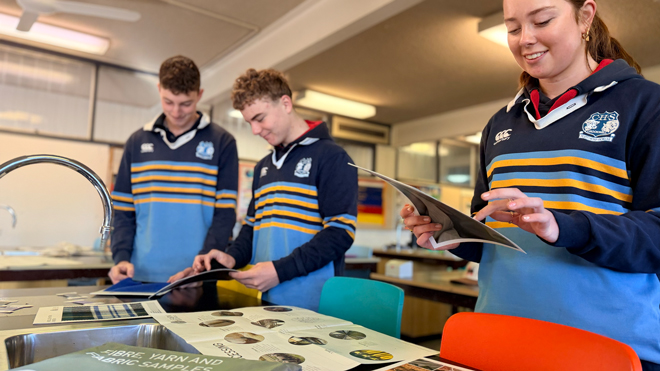
Discover how AWI is inspiring the next generation of wool industry leaders through engaging education programs that take students from the classroom to practical, hands-on experiences and career pathways across the Australian wool pipeline.
Every career in the wool industry starts somewhere. It might begin in the classroom, at an agricultural show, through a school sheep program or on the family farm. Wherever that first connection is made, Australian Wool Innovation (AWI) is helping inspire the next generation through education programs that build knowledge, develop practical skills and showcase the many career opportunities Australian wool has to offer.
AWI Program Manager, Education Extension, Kelly McAvoy, said investing in education was fundamental to securing the future of Australian wool.
"It starts with education,” Ms McAvoy said.
“When we invest in young people, we are investing in the future of Australian wool by building understanding, creating career pathways and inspiring the next generation of industry leaders, innovators, designers and informed consumers.
“By connecting young people with wool today, we are helping to strengthen demand, grow appreciation for our fibre and ensure Australian wool remains valued for generations to come."
From handling wool samples in the classroom to managing Merino wethers, learning wool harvesting skills, designing garments or pursuing careers across the global wool pipeline, AWI's educational resources are designed to do more than teach students about wool. They encourage curiosity, build practical skills and showcase the diverse career opportunities available throughout one of Australia's most innovative and sustainable agricultural industries.
For primary school students, the journey often begins with the Learn About Wool program.
Aligned with the Australian Curriculum, the free classroom resources help teachers bring agriculture into the classroom through hands-on learning. Resource kits include wool, yarn and fabric samples, classroom activities and lesson plans that explore everything from science and geography to sustainability, design and technology.
Rather than simply reading about fibre production, students are encouraged to touch, test and investigate wool while gaining an understanding of where it comes from, how it is produced and why it continues to play an important role as a natural, renewable fibre.
For many students, that early curiosity quickly grows into practical, hands-on learning.
Among the many practical learning opportunities supported by AWI are school wether competitions, which operate across Australia's wool-growing states. While each state delivers its own program, they all share a common goal — providing students with hands-on experience in sheep husbandry, wool production and commercial Merino management.
At Crookwell High School in New South Wales, the challenge has become an important part of the school's agricultural curriculum, with students taking responsibility for every aspect of managing their sheep, from developing feed rations and monitoring animal health to handling, crutching, foot trimming and preparing the sheep for exhibition.
Agriculture teacher Brett Woods said the hands-on nature of the challenge gave students an appreciation for the complete production cycle.
"They get the animals at the start and then actually see the whole production process over the last five months of what it takes to raise sheep, get them through to shearing and then off to market," Mr Woods said.
Programs such as these help bridge the gap between classroom learning and commercial agriculture, giving students the confidence to apply theory in practical settings while building an understanding of Australia's sheep and wool industries.
For creatively minded students, AWI also provides opportunities through Wool4School, an international design program that challenges secondary school students to explore the versatility of Merino wool through fashion and garment design. The program encourages creativity while introducing students to the exciting career opportunities available within the textile, fashion and product development sectors.
Education continues well beyond the school gates.
Students considering careers within the wool industry can access further learning through wool harvesting training, wool classing education, university partnerships, The Woolmark Performance Challenge and the Woolmark Learning Centre, helping develop skills across areas including shearing, wool handling, textile manufacturing, product innovation and global marketing.
Together, these initiatives demonstrate the breadth of opportunities available throughout the Australian wool industry, whether students aspire to become producers, researchers, educators, designers, marketers or skilled wool harvesting professionals.
Importantly, they also help strengthen the long-term future of Australia's wool industry.
By investing in education from the earliest years through to professional development, AWI is helping ensure the industry continues to attract knowledgeable, passionate and skilled people who understand not only the value of Australian wool, but the people, science and innovation behind it.
This article appeared in the AWI Woolgrower Newsletter August 2026. Reproduction of the article is encouraged and should be attributed as follows: This article was first published in the AWI Woolgrower Newsletter.