





Goldwin looks deeper into wool’s future
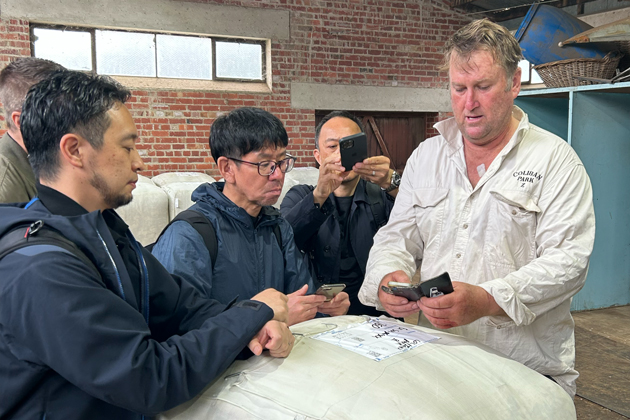
On their recent Australia trip Japanese sportswear and technical brand, Goldwin, visited wool-growing properties and auction rooms – seeking a deeper understanding of Australian wool production as they update the company’s Raw Material Procurement Guidelines. Focused on material transparency, traceability and responsible sourcing, the delegation noted the importance of understanding not just the fibre and production system, but the people behind it.
“As a brand, actually meeting woolgrowers is very rare.”
That was one of the strongest reflections shared by Goldwin Chief R&D Officer Mr Arai, who oversees both research and development and material procurement, during a recent visit to Australia, as the Japanese global sportswear and outdoor brand deepens its understanding of Australian wool and its role in the company’s future material strategy.
The visit comes as Goldwin reviews and updates its Raw Material Procurement Guidelines, with the company increasingly focused on material transparency, traceability and responsible sourcing across its global operations.
Leading the delegation was Mr Arai, the senior team member responsible for both research and development and material procurement, and heavily involved in future fibre and product innovation.
During their time in Australia, the group visited wool-growing properties and auction rooms to better understand the journey of Australian wool from farm to auction and the systems supporting Australian wool production.
“Going to farms, listening to what woolgrowers had to say and asking questions directly was very important,” Mr Shibata, who is responsible for developing materials that help reduce environmental impact through a shift in raw materials said.
“Actually being in Australia and hearing directly from woolgrowers helps us better understand the future of wool products and Australian provenance.”
One of the key themes throughout the visit was traceability and the growing global focus on transparency within textile supply chains, particularly as brands prepare for increasing consumer expectations and emerging regulations such as Digital Product Passports (DPP).
Mr Shibata said seeing the Australian wool supply chain firsthand — from sheep production through to wool auctions — reinforced the importance of understanding not only the fibre itself, but the people and production systems behind it.
Mr Arai said Australian wool’s traceability systems, environmental stewardship and direct connection to growers were all significant takeaways from the visit.
While Goldwin already incorporates wool through brands such as Icebreaker, Mr Arai confirmed opportunities are continuing to emerge for wool-based performance products across the company’s broader portfolio, including future developments within Goldwin and THE NORTH FACE.
The visit also reinforced wool’s performance advantages in outdoor and active apparel.
“For us, wool often equals sweaters or winter products, but after actually wearing wool products and experiencing them, we better understood the benefits,” Mr Shibata said.
He said personally wearing wool products during outdoor activities such as hiking had shifted perspectives internally, particularly around comfort, versatility and wool’s natural odour resistance.
“If you put the wool on and wear it, then you personally know the benefit of it and how good it is,” he said.
Importantly, the discussions also reinforced the growing value of Australian provenance and long-term supply confidence.
“In the future, there might be times where you want to make wool products, but you won’t be able to, so protecting Australian provenance will be important,” Mr Arai said.
The visit provided another example of how global performance brands are increasingly seeking closer connections with Australian woolgrowers — not only to support sustainability and procurement goals, but to better understand the fibre, provenance and people behind Australian wool.
This article appeared in the AWI Woolgrower Newsletter July 2026. Reproduction of the article is encouraged and should be attributed as follows: This article was first published in the AWI Woolgrower Newsletter.