




Flystrike research: putting the focus back on why it happens
Why does flystrike affect some sheep and not others? It’s a question that has long plagued woolgrowers and one that Researchers from Deakin University are working hard to solve.
Flystrike remains one of the most persistent and costly challenges for woolgrowers — not just in treatment costs, but in labour, lost time and the constant pressure of monitoring sheep during already demanding parts of the year.
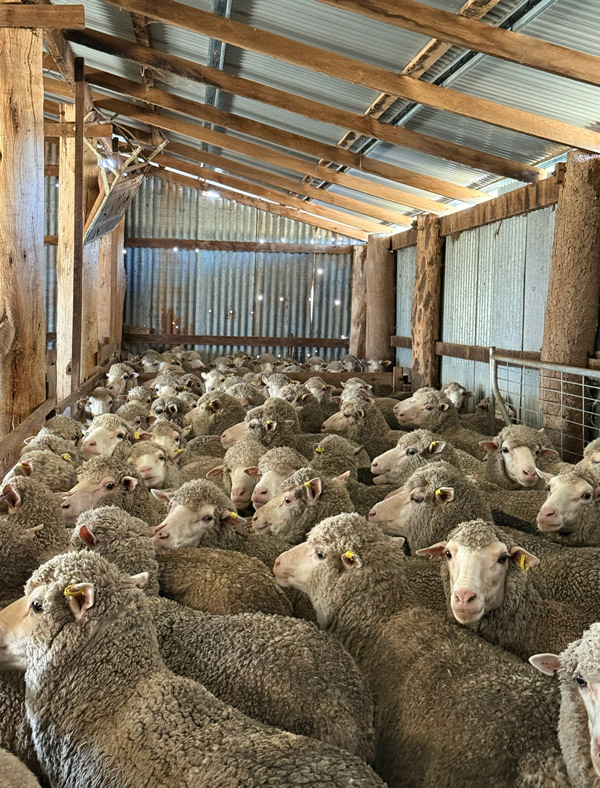
While growers have a range of tools to manage flystrike, one key question has never been fully answered: why are some sheep struck, while others in the same mob are left untouched?
That question is now being tackled through a national, multi-year research project supported by Australian Wool Innovation, taking science out of the lab and into commercial paddocks.
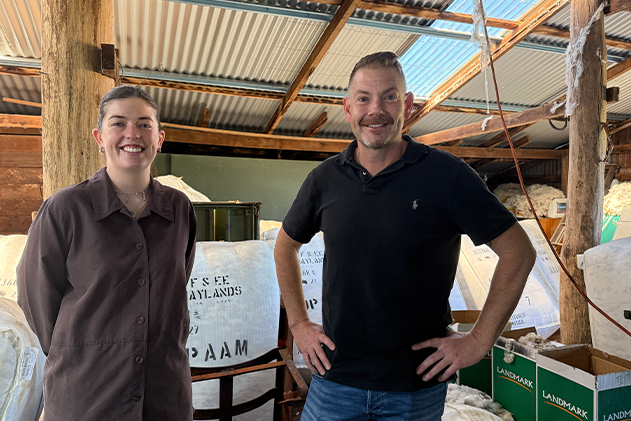
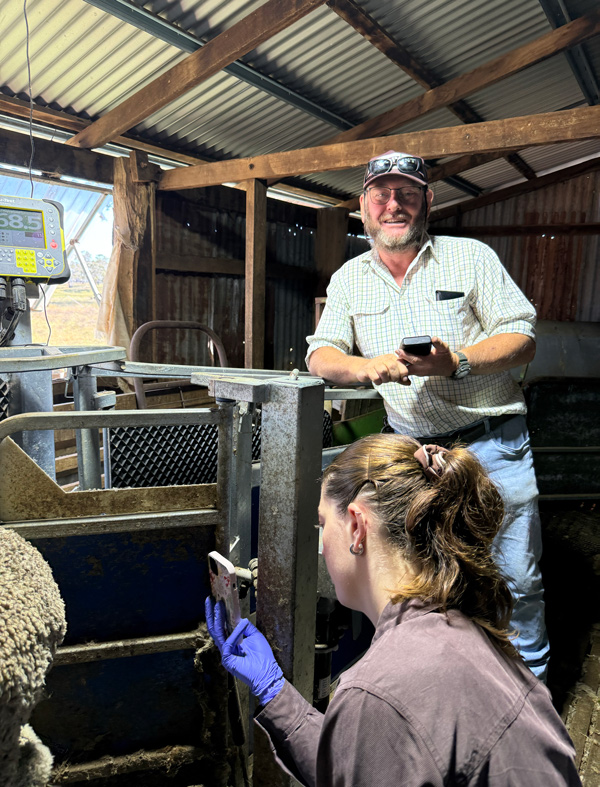
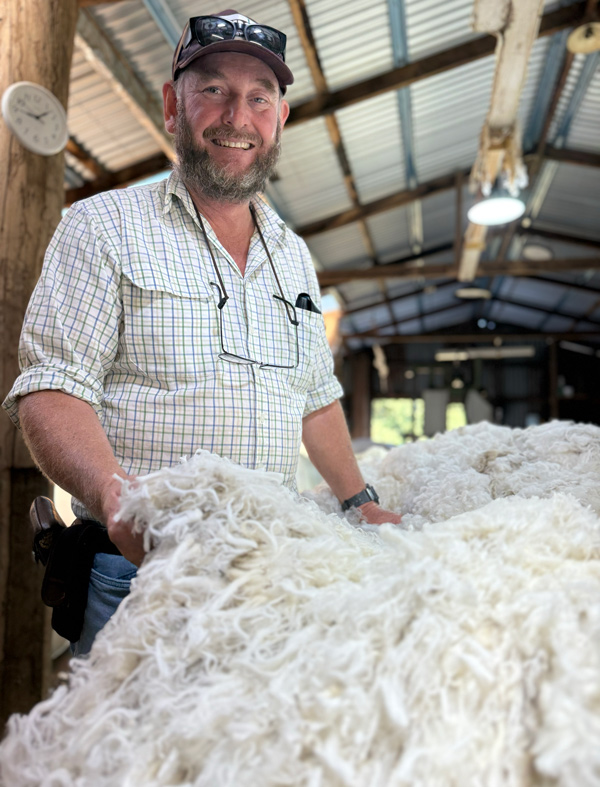
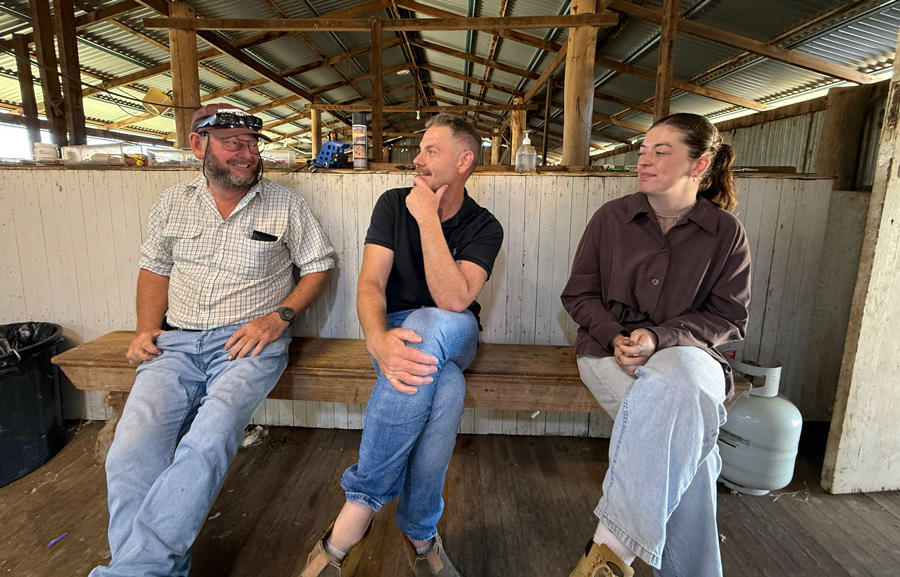
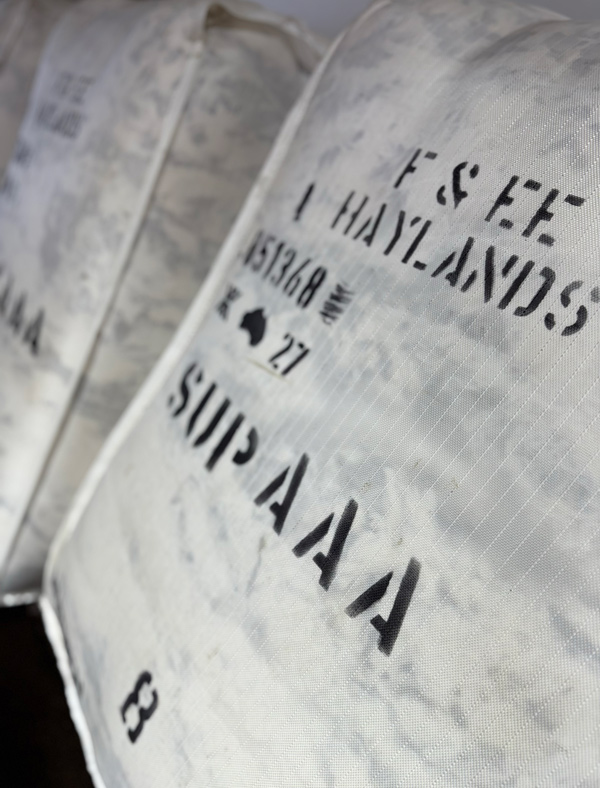
At Haylands, near Armidale, NSW woolgrower Michael Edmunds is working alongside researchers from Deakin University to better understand what attracts flies to certain sheep. Rather than focusing solely on treatments after strike occurs, the research is investigating the biological and microbial drivers that may make individual animals more attractive to blowflies in the first place.
Early findings are already proving insightful. Struck sheep across different regions, genetics and management systems appear to share common characteristics, suggesting there may be underlying biological triggers at play — particularly linked to microbes on the sheep’s skin and the chemical signals they produce.
This work is also occurring against a backdrop of changing flystrike patterns, with seasonal variability and climate conditions influencing when and where fly pressure emerges. Building data across multiple seasons is critical to ensuring any future solutions are robust, reliable and relevant to commercial wool enterprises.
“If it can take some of the pressure off fly management, that’s a win,” Michael said. “Anything that reduces reliance on chemicals and fits into the way we already run sheep is worth looking at.”
The long-term goal is not eradication, but smarter control: behaviour-based, non-chemical options that could reduce fly pressure on-farm and complement existing management practices.
Importantly for growers, the research has been designed to fit into real livestock operations. On-farm involvement is deliberately low-impact, requiring only brief yardings a few times a year — ensuring the data reflects commercial reality, not idealised conditions.
For growers involved, the value lies in practical outcomes: research shaped by paddock conditions, seasonal variability and labour constraints, with the aim of delivering tools that genuinely work on-farm.
The full story will appear in the March edition of Beyond the Bale, with deeper insights from growers and researchers involved. Growers can also look out for a dedicated episode of The Yarn podcast, where the project, early findings and what it could mean for future flystrike management will be discussed in more detail.
This article appeared in the AWI Woolgrower Newsletter February 2026. Reproduction of the article is encouraged and should be attributed as follows: This article was first published in the AWI Woolgrower Newsletter.