




Thinking beyond the farm gate
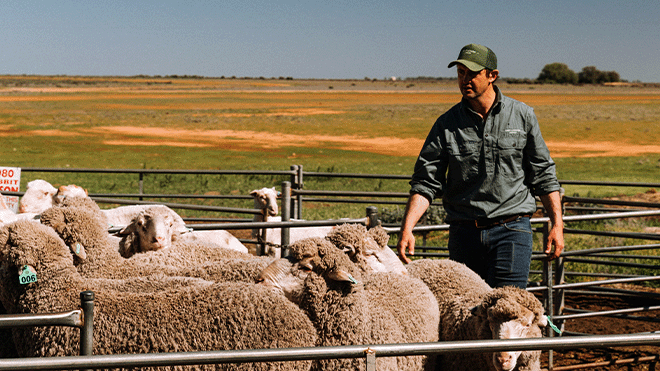
How a Nuffield Scholarship changed the way Tom Hooke thinks about building a resilient Merino business.
Tom Hooke doesn’t believe the biggest opportunities for Australian woolgrowers are always found in the paddock.
Sometimes, he says, they’re found thousands of kilometers from home.
As the operator of East Loddon Merino Stud at Wanganella in the western NSW Riverina, Tom knows that resilience isn’t built on theory.
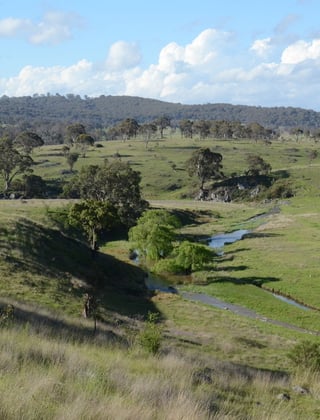
Running approximately 7,500 breeding ewes across 16,000 hectares alongside a self-replacing plain bodied Merino stud, every decision is shaped by rainfall, feed availability and the long-term profitability of the business.
Those realities prompted Tom to apply for a Nuffield Scholarship in 2020, taking him through South Africa, New Zealand, the United States and South America to study grazing systems, livestock production and business management.
But he wasn’t looking for overseas farming systems to copy.
He wanted to understand why some businesses consistently outperformed others.
“If you’re the smartest person in the room, you’re in the wrong room,” Tom said.
“Being around people who are constantly asking questions, challenging ideas and looking for opportunities really changes how you think about your own business.”
Looking back, Tom believes the scholarship changed far more than his understanding of grazing systems.
It changed the questions he asks of his own business.
Rather than focusing solely on breeding better sheep, he began looking more broadly at what makes a Merino enterprise productive, profitable and resilient over the long term.
Building a business, not just a flock
With a strong background and current presence in the merino stud industry, Tom is constantly pushing profitability via genetic gain.
However, when he stepped back and looked at the business, another factor consistently emerged.
“Our biggest variable is feed cost,” he said.
“At the end of the day, that’s what makes or breaks our year.”
That realisation prompted a shift in thinking.
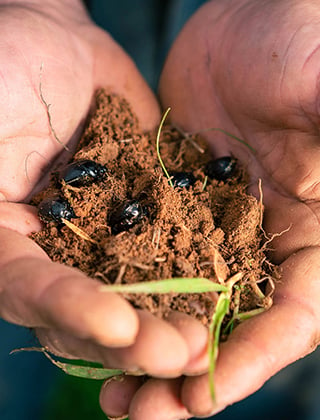
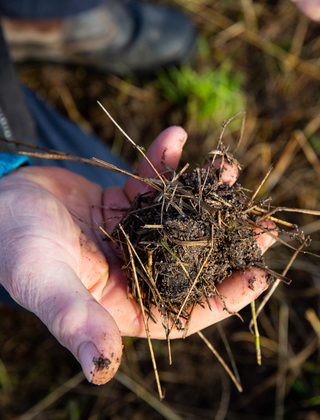
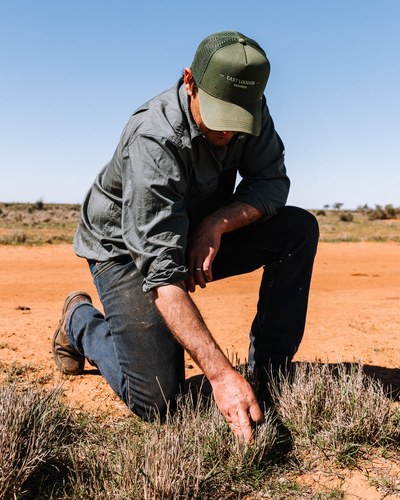
Rather than continuing to focus solely on genetics, Tom began exploring how grazing management could improve productivity while reducing reliance on purchased feed during the dry times.
One of the greatest things about constant genetic improvement is that its cumulative. It is the same when building healthier soils. Progress in one year layers on top of the previous year’s gains.
“We want to start every year with a flock of sheep, that are better than last year, grazing on a landscape that is healthier than the year before,” he said.
“The cheapest feed we’ll ever have is the grass we grow ourselves.”
It sounds straightforward, but in low-rainfall environments where every millimeter of rain counts, maximising homegrown feed can have a profound impact on profitability.
Through his Nuffield travels, Tom studied regenerative grazing systems in South Africa, New Zealand the United States and South America.
Rather than searching for one revolutionary idea, Tom was looking for principles that could strengthen Australian Merino businesses.
What he found was not necessarily a collection of revolutionary ideas, but rather a group of producers who were willing to think differently.
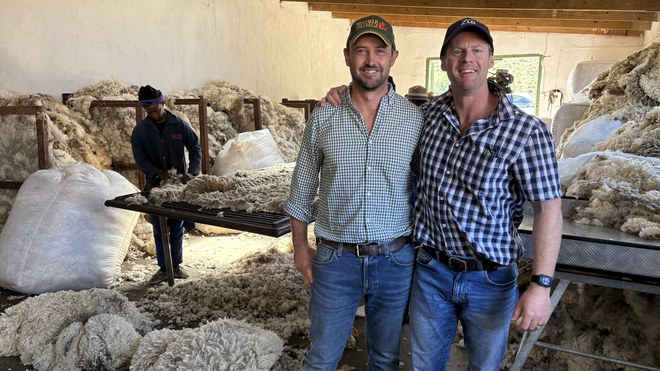
Many had challenged accepted practices within their regions and adopted grazing systems that prioritised pasture recovery, improved utilisation and greater flexibility.
“The people doing it best weren’t necessarily from farming backgrounds,” Tom said. “They weren’t tied to the idea that things had always been done a certain way.” That observation resonated strongly.
“It takes a bit of courage to step outside social norms and challenge accepted practices, but that’s often where the opportunities are.”
The rainfall reality
One of the strongest lessons from Tom’s travels was just how different Australian production systems are from many overseas enterprises.
While he encountered numerous innovative businesses, he quickly realised many of their strategies were heavily dependent on reliable rainfall.
“People would have another great idea and another great investment opportunity, and I’d keep thinking, ‘That’s great, but what happens if it doesn’t rain?’,” he said.
“In Australia, rainfall risk influences almost every decision we make.”
This became particularly apparent when comparing Australian systems to those operating in higher rainfall regions.
One example that still makes Tom smile occurred during a farm tour in New Zealand.
“The farmer kept referring to his property as being in a low-rainfall area,” he said. “Eventually one of the Australians asked what his annual rainfall was.”
The answer was approximately 650 millimetres.
“There were about 50 Australians standing there laughing.”
It was a humorous moment, but it reinforced an important lesson.
For Australian sheep producers operating in lower rainfall environments, the story highlights an important reality: overseas solutions cannot simply be copied and pasted.
They must be adapted.
That is one reason Tom believes grazing management offers such significant potential. Unlike fertiliser applications, pasture renovation programs or infrastructure-heavy investments, improving grazing management can often be achieved using existing resources.
“In our low rainfall environment, changing how we graze is one of the biggest, and perhaps the only, real tool we’ve got available,” said Tom.
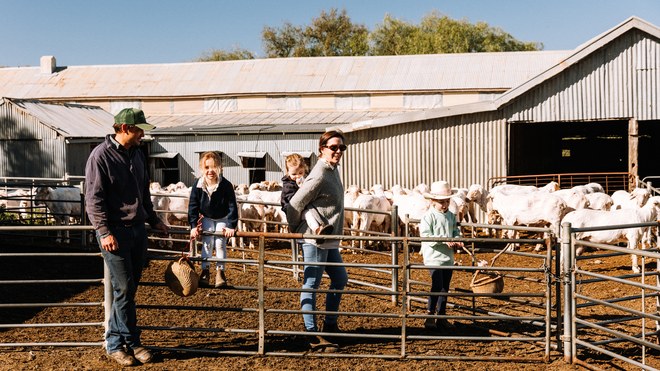
Tom Hooke believes building a resilient Merino business means continually questioning accepted practices while keeping a firm focus on the fundamentals that drive long-term profitability
The power of continuous improvement
When asked what separates businesses that thrive from those that merely survive, Tom’s answer is surprisingly nuanced.
He does not believe successful operators constantly chase every new idea. Nor does he believe they become locked into doing things the way they have always been done.
Instead, they strike a balance.
“They pick a direction and become exceptionally good at it,” he said.
“They’re constantly adapting, but they’re not constantly changing course.”
Across the businesses he visited during his Nuffield travels, Tom observed a common theme. Some were entrepreneurs creating entirely new opportunities.
Others simply farmed exceptionally well.
What united them wasn’t the enterprise itself, but a relentless commitment to improvement.
“They weren’t getting comfortable.”
That mindset continues to influence decisions within the East Loddon business today. Whether considering genetics, grazing systems, animal welfare or market opportunities, Tom believes complacency is one of the greatest risks facing any enterprise.
“Challenge everything,” he said.
Succession with purpose
Away from grazing and genetics, Tom’s story also offers a refreshing perspective on succession planning.
In 2025, Tom and his brother formally separated the family partnership, each taking responsibility for their own businesses while maintaining strong family relationships.
The transition occurred significantly earlier than many succession plans seen across Australian agriculture.
“Why wait until we’re in our fifties?” Tom said.
The process allowed both brothers to pursue their own goals while providing financial certainty for their parents.
Unexpectedly, the timing proved particularly valuable when Tom’s father faced significant health challenges shortly after the transition.
“It actually worked out well from that perspective,” he said.
“A lot of the responsibility and stress associated with running the farm had already been removed.”
Importantly, the transition did not mean disengagement.
Tom’s parents remain actively involved in the business and continue to contribute where they can. For Tom, it demonstrates that succession is not simply a financial transaction. It is about creating opportunities for the next generation while ensuring the previous generation remains connected and valued.
“It takes a bit of courage to step outside social norms and challenge accepted practices, but that’s often where the opportunities are.”
Building for the long term
Perhaps the strongest theme running throughout Tom’s story is a commitment to long-term thinking.
Whether discussing grazing management, genetics, succession or animal welfare, decisions are consistently viewed through the same lens.
Will this business still be competitive in 40 years?
That question has shaped many of the decisions made at East Loddon Merinos. It influenced the move towards non-mulesed production.
It influences breeding decisions. And it continues to guide investment priorities.
“We plan on being in this business for a long time,” Tom said.
“If I didn’t think there was a future in Merinos, I wouldn’t be doing it.”
Tom remains optimistic about the future of wool despite recent market volatility.
Growing consumer awareness around sustainability, traceability and natural fibres provides significant opportunities for wool’s story to resonate with future generations.
“Wool is such a good product,” he said. “It’s got such a good story behind it.”
At the same time, he acknowledges the importance of maintaining industry credibility and staying ahead of consumer expectations, particularly around animal welfare.
As markets evolve, Tom believes producers must continue adapting while remaining focused on the fundamentals that underpin successful businesses.
For Tom, building a resilient Merino business isn’t about chasing every new idea. It’s about remaining curious enough to recognise the right one when it comes along.
Because sometimes the biggest opportunities aren’t found by working harder.
They’re found by thinking differently.
This article appeared in Issue 106 of AWI’s Beyond the Bale magazine that was published in September 2026. Reproduction of the article is encouraged and should be attributed as follows: This article was first published in Issue 106 of AWI’s Beyond the Bale magazine.