




New markets, stronger supply chains
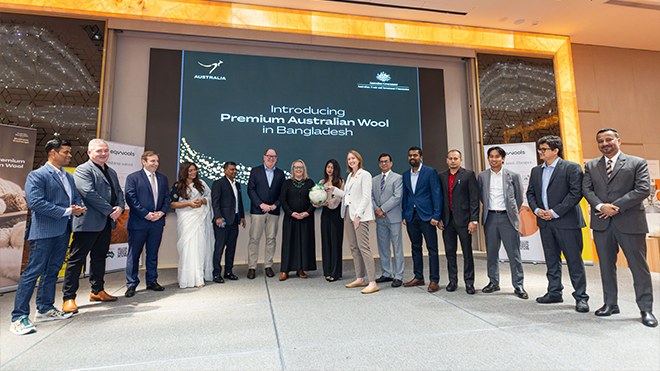
AWI is helping build wool-processing capability in new locations around the world – creating more sourcing options for brands and greater demand resilience for Australian woolgrowers.
"It's about diversifying the wool supply chain, reducing sovereign risk and increasing competition."
Why diversification matters
Global textile supply chains are being redrawn. Rising costs, pandemic-era disruption, tariffs, geopolitical conflict and demand for sustainable, traceable production are pushing brands towards shorter, simpler networks. Onshoring, nearshoring and the ‘China +1’ approach have lifted interest in locations such as Portugal and Mexico.
For AWI and Woolmark, the objective is not to displace China. “China will continue to be the dominant market for wool in regard to processing and also has strong growth potential as a consumer market, and we don’t want to take away from that,” Hill said. “It’s about growing new demand in new sectors, new categories and new areas, for example blends.”
What makes a market ready?
“Emerging markets need to show potential for increasing existing wool processing, or building capability of their current supply chain in other fibres and textile activities,” Hill said. “Favourable cost structures, labour availability, geographic location and economic trade advantages are key considerations and drivers.”
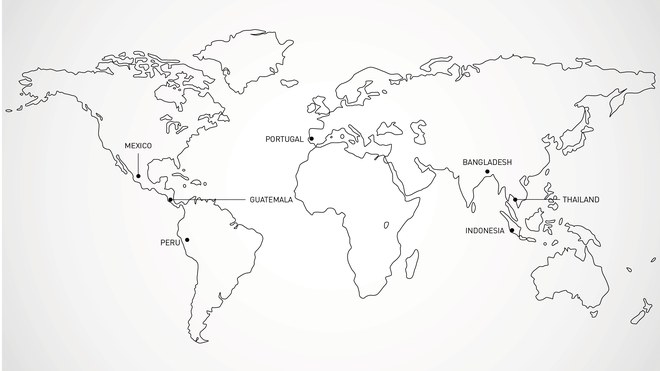
AWI tests market size, growth potential, political stability, GDP and textile exports, then considers existing wool processing, skills and the local supply-chain network. We continue to build on the work done over the past years in Bangladesh and Portugal, whilst moving more into exploring opportunities in Central & South America, Thailand, Indonesia, and Eastern Europe.
From awareness to a commercial supply chain
“We aim to identify and target destinations to diversify the global wool supply chain by supporting emerging markets to become commercially viable options for brands and retailers to source and process wool,” Hill said.
Work begins with wool and Woolmark awareness, followed by technical transfer and product development. As capacity grows, AWI connects local producers with brands, retailers and other buyers.
AWI has in-market support in Bangladesh, Vietnam, Mexico and Peru, and is looking to strengthen its presence in Thailand, Cambodia and Central America while assessing opportunities such as Indonesia.
India shows the pathway
Not every target remains an emerging market forever. “India is a mature market, the second biggest importer of Australian wool,” Hill said, noting Woolmark has had a presence there for 60 years.
India’s growing consumer market, vertically integrated supply chain, skills and investment capacity offer further room to expand wool.
Vietnam is following a similar trajectory. “Vietnam has now arguably graduated to a mature market,” Hill said. Over Woolmark’s 14-year presence, the country has expanded from a strong base in knitting, weaving and garment making to include wool spinning and dyeing.
Brands can source Vietnamese wool products beginning at yarn selection. A skilled workforce, competitive pricing and trade links strengthen the proposition; scouring and top making are the remaining stages needed for a fully vertical wool supply chain.
Vietnam: building a wool manufacturing market
Vietnam is a strong example of how Woolmark is helping develop new manufacturing markets for wool. We began working with Vietnam’s textile industry in 2012, when wool processing in the country was relatively limited. Today, we have more than 90 partners in Vietnam, including spinners, flatbed and circular knitters, and garment manufacturers. This work has included transferring technical know-how for wool manufacturing, connecting businesses with suppliers of raw materials, chemicals and machinery, and organising international trade missions to connect Vietnamese manufacturers with global brands and buyers.
The development of local wool-spinning capacity has been an important part of this growth. In recent years, three major wool spinners – Südwolle Group’s Dalat Worsted Spinning, Xinao and Lugang – have established spinning and dyeing operations in Vietnam, improving access to wool yarn for manufacturers in Vietnam and across Southeast Asia. This year also marked another significant development, with long-term Woolmark partner Youngone opening its Wool Development Centre at its Nam Dinh facilities. The centre will provide a dedicated hub for Woolmark to run technical workshops and events with international brands and supply-chain partners, while enabling Youngone to further develop and showcase its wool manufacturing capabilities with support from Woolmark’s technical team.
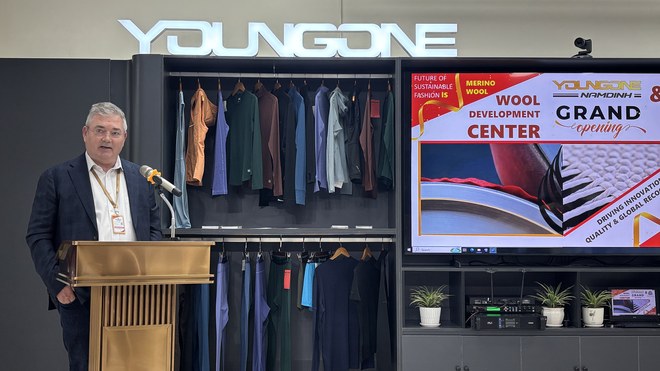
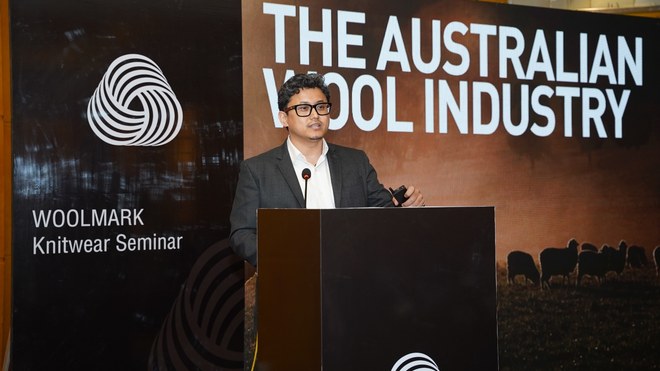
Woolmark continues to build wool-processing capability in Vietnam through technical knowledge transfer, product development and connections between manufacturers, suppliers, brands and buyers.
A direct benefit for woolgrowers
For Australian woolgrowers, the commercial logic is straightforward. “Woolgrowers are direct beneficiaries of increased demand and competition, reflected in the raw material price,” Hill said. “Diversification and reduced sovereign risk can help mitigate unforeseen geopolitical shifts.”
More viable processing locations give brands new sourcing options while reducing exposure to sudden changes in tariffs, trade sanctions, energy costs or regional disruption.
The road ahead
Over the next three to five years, AWI wants wool to move with the wider diversification of global textiles. “We want to keep in line with these changes and ensure wool products can be sourced from competitive, capable markets,” Hill said.
That means continuing to build wool awareness and capability in supported markets, deepening supply-chain partnerships and helping promising destinations become commercially viable production options. It also means remaining ready to pivot as costs, policies and buyer priorities change.
Building capability that lasts
Long-term progress depends on moving beyond one-off promotion. The sequence Hill describes – awareness, technical transfer, product development and buyer introductions – gives each market a practical route from interest to repeatable production. It also recognises that destinations start from different positions: some already have advanced knitting, weaving or garment capacity; others need more of the wool-processing chain before they can offer brands a complete sourcing proposition.
The comparison between India and Vietnam illustrates how that capability can compound. India combines established wool expertise with a growing consumer market and an integrated supply chain. Vietnam built on strengths in downstream manufacturing, then added spinning and dyeing. Its remaining opportunity – scouring and top making – shows that diversification does not happen in a single step; it develops as investment, skills and commercial confidence accumulate.
More options, without replacing China
That gradual expansion is central to AWI’s strategy. A wider network does not depend on any one country matching China’s scale. Instead, each commercially viable market adds another option for a particular product, category or customer. Together, those options give brands more flexibility to respond when tariffs, sanctions, energy costs or regional disruption alter the economics of sourcing.
For Australian woolgrowers, the value of that network lies in additional competition for the fibre.
This article appeared in Issue 106 of AWI’s Beyond the Bale magazine that was published in September 2026. Reproduction of the article is encouraged and should be attributed as follows: This article was first published in Issue 106 of AWI’s Beyond the Bale magazine.