




Japan looks upstream
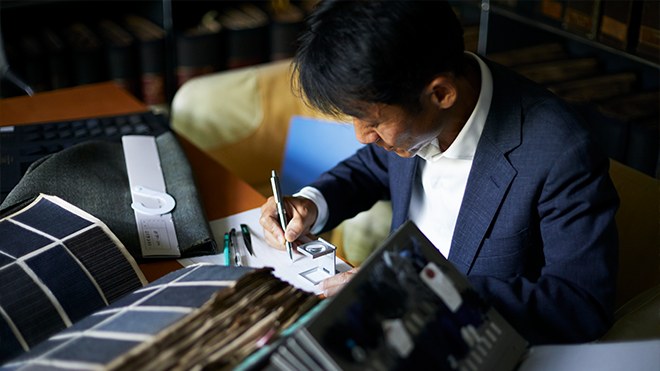
From new investment in wool processing to brands visiting Australian farms and buyers attending Australian auctions, Japan's wool industry is strengthening its connection with Australian Merino – and the growers behind it.
Japan – what is changing?
- Investment — Nikke is investing in Japan’s first new domestic top-making facility in decades, with a focus on quality, stable supply and traceability.
- Traceability — Processors and brands are seeking greater visibility through the supply chain, from raw wool and its production background through to finished product.
- Connection — Japanese companies are looking further upstream — visiting Australian farms, attending wool auctions and speaking directly with woolgrowers.
- Performance — Brands such as Goldwin are exploring wool beyond traditional winter apparel, including its potential in outdoor and performance products.
Japan has been an important market for Australian wool for generations, but the relationship is continuing to evolve.
Across processing, trading and performance apparel, Japanese companies are looking further back through the supply chain – seeking greater understanding of where wool comes from, how it is produced and the people behind it.
The reasons vary. For processor Nikke, investment in new domestic top-making capacity is about quality, stable supply and traceability. For global sportswear and outdoor brand Goldwin, coming to Australia provided an opportunity to understand wool production, provenance and the fibre’s performance potential first-hand. For wool company Motohiro Corporation, regularly attending Australian wool auctions and maintaining direct relationships with growers provides information that specifications alone cannot capture.
Together, their perspectives provide a snapshot of a sophisticated Japanese market in which quality remains fundamental, but reliability, transparency, provenance and stronger connections across the supply chain are becoming increasingly important.
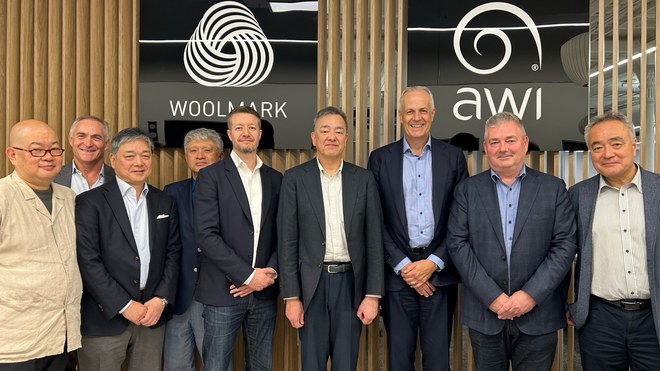
L–R Shigeki Tobe (Motohiro), Tim Marwedel (Schneider), Tetsuya Motohiro (Motohiro), Yoshiyasu Kaneda (The Japan Wool Textile/ Nikke), Samuel Cockedey (Woolmark), Yutaka Nagaoka (The Japan Wool Textile/Nikke), Bryan Fry (Woolmark), Stephen Hill (Woolmark), Akira Okada (The Japan Wool Textile /Nikke) at Sydney HQ office.
Nikke invests in wool’s future
One of the clearest signals of confidence in wool is coming from the Nikke Group, which is investing in Japan’s first new domestic top-making facility in decades. Nikke CEO Mr Yutaka Nagaoka said the investment was not simply about bringing processing back to Japan, but creating greater value through improved quality, stable supply and traceability.
“This project is not merely a return to domestic production; it is an initiative aimed at creating new value for the wool industry in Japan,” Mr Nagaoka said.
“Through improvements in quality, stable supply, and traceability, we aim to further enhance the value of wool in both the Japanese and global markets.”
The investment comes as global supply chains place increasing value on reliability, transparency and risk management alongside cost efficiency. Nikke will continue working within its international processing network, including with key partners in China, while strengthening its domestic capability.
The new facility is designed to improve quality control, shorten lead times and allow Nikke to respond more quickly to market needs, creating a more flexible processing pathway. For Australian woolgrowers, however, one of the most important elements is what sits at the beginning of that pipeline: reliable access to quality Australian Merino wool.
“This investment supports long-term demand for Australian Merino wool… [and] stable supply is a prerequisite for this investment,” Mr Nagaoka said.
Traceability will also be built more closely into the processing system, with Nikke planning integrated management from raw material through to finished product.
Mr Nagaoka said Australia’s existing systems were an important strength, describing its traceability infrastructure as among the most advanced in the world.
Nikke is committed to creating closer links between fibre origin, sustainability expectations and downstream demand. For Mr Nagaoka, that relationship begins with growers.
“You are not merely suppliers, but vital partners with whom we create long-term value together… your efforts form the foundation of our business,” he said.
“You are not merely suppliers, but vital partners with whom we create long-term value together.”
Goldwin comes to the source
At the brand end of the supply chain, Japanese global sportswear and outdoor company Goldwin is also looking more closely at the origins of the fibres it uses.
“As a brand, actually meeting woolgrowers is very rare.”
That was one of the strongest reflections from Goldwin Chief R&D Officer Mr Arai during a recent visit to Australia as the company deepens its understanding of Australian wool and its role in future material development.
Goldwin is reviewing and updating its Raw Material Procurement Guidelines, with transparency, traceability and responsible sourcing becoming increasingly important across its global operations.
During the Australian visit, the delegation visited wool-growing properties and auction rooms, providing the team with a first-hand view of the journey from farm through to sale.
Mr Toru Shibata, whose work includes developing materials to reduce environmental impact through changes in raw materials and contributing to guidelines for raw material and component procurement, said direct conversations with growers were particularly valuable.
“Going to farms, listening to what woolgrowers had to say and asking questions directly was very important,” Mr Shibata said. “Actually, being in Australia and hearing directly from woolgrowers helps us better understand the future of wool products and Australian provenance.”
The visit also gave Goldwin’s team an opportunity to look beyond wool’s traditional associations with sweaters and winter clothing and consider its potential across outdoor and active apparel.
Mr Shibata said wearing wool during activities such as hiking had helped demonstrate its comfort, versatility and natural odour resistance. “If you put the wool on and wear it, then you personally know the benefit of it and how good it is,” he said.
Goldwin already incorporates wool through brands such as Icebreaker, while opportunities are continuing to emerge for wool-based performance products across its broader portfolio, including future developments within Goldwin and THE NORTH FACE. The visit also reinforced the value the company places on Australian provenance and long-term confidence in supply.
“In the future, there might be times where you want to make wool products, but you won’t be able to, so protecting Australian provenance will be important,” Mr Arai said.
Motohiro links growers with the market
For Motohiro Corporation, understanding Australian wool begins well before the fibre reaches a mill or manufacturer.
Motohiro is one of a relatively small number of Japanese companies whose buyers regularly participate in Australian wool auctions. The company says attending sales directly allows it to gather first-hand market information without relying solely on the assumptions or intentions of intermediaries, while maintaining direct relationships with Australian woolgrowers.
Those relationships allow Motohiro to understand more than the specifications attached to a bale. Combining the expertise of wool buyers with communication with individual growers provides insight into the production background that numerical data alone cannot capture – information that can then be communicated further along the supply chain.
Motohiro operates across Australia, China, Japan and Europe. Australia is central to sourcing raw wool, collecting market information and communicating with growers; in China the company works with wool processors and purchases processing by-products; while in Japan and Europe its activities include selling processed wool such as tops, carbonised noils and carbonised wool.
After more than 20 years communicating directly with Australian woolgrowers, Motohiro regards Australia’s wool industry infrastructure as a significant competitive strength. It points particularly to the high rate of raw wool testing through AWTA, the established AWEX auction system and comprehensive industry databases, which it considers to be at a level unmatched by other wool-producing countries.
The opportunity, according to Motohiro, is to make greater use of those strengths when communicating and promoting Australian wool internationally.
Traceability and certification are increasingly part of that market conversation. However, its message to growers carries an important qualification.
International customers are placing increasing importance on certification and the background behind those certifications, but Motohiro cautions against certification becoming an independent measure of value at the expense of wool quality.
Its preference is for a neutral traceability system established by the Australian wool industry and recognised through downstream markets, while maintaining the principle that high-quality wool should attract value based on its quality.
Across all three businesses, the message from Japan is not that one attribute will determine wool’s future. Quality, reliable supply, traceability and provenance are increasingly interconnected – and so too are the relationships between the people growing the fibre and those processing, developing and ultimately selling it.
What Japan is telling Australian woolgrowers
The perspectives of Nikke, Goldwin and Motohiro converge on several fundamentals. Quality remains central, but customers are also looking for confidence in supply, greater traceability and credible information about provenance and production.
This article appeared in Issue 106 of AWI’s Beyond the Bale magazine that was published in September 2026. Reproduction of the article is encouraged and should be attributed as follows: This article was first published in Issue 106 of AWI’s Beyond the Bale magazine.