





Getting the basics right: how better weaner management is transforming Europambela
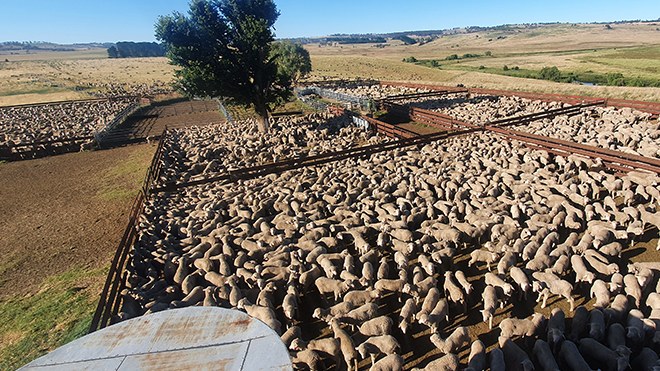
At Europambela Grazing Co, east of Walcha in northern NSW, manager Tony Overton has found that improving weaner performance has delivered benefits far beyond the young sheep themselves.
The 3,900-hectare operation runs across two properties receiving around 700 mm of predominantly summer rainfall. Its core enterprise is 7,500 self-replacing Merino ewes, based on Saxon types, with a standard reference weight (SRW) of 48 kg.
The flock has a strong ultrafine wool focus, targeting the Italian market with wool generally below 15 micron and cutting around 3.0–3.2 kg per head. Shearing takes place over six weeks from October.
For Tony, the transformation began with a simple shift in focus: measuring sheep performance and using that information to make management decisions.
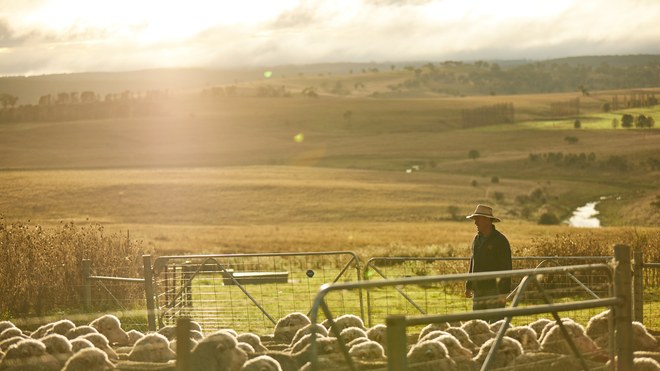
A simple message with a big impact
Tony attended AWI’s Winning with Weaners (WWW) for the first time in 2018 and says the take-home messages were straightforward and readily applicable to the business.
At the following weaning, Europambela began routinely weighing weaners, understanding their SRW and monitoring performance throughout the growing season. What began as a focus on young sheep soon exposed opportunities across the entire flock.
Historically, Europambela’s long-term lamb marking percentage had been around 80–85%. The introduction of pregnancy scanning also gave the business a clearer picture of reproductive performance and where losses were occurring.
Today, marking percentage is sitting just under 100%, with 25–30% twins compared with only around 5% seven or eight years ago.
“For a Saxon-based sheep, people have traditionally held the belief that you cannot get that,” Tony says. “You can get what you want, if you focus on it.” But reproductive performance is only part of the story.
Shifting the focus to reducing losses
One of the most significant changes has been the attention paid to survival.
When Europambela began monitoring weaner performance more closely, losses between marking and first shearing were approximately 15%. Today, that figure is below 2%.
While Tony regards the improvement as a major success, he still sees room to improve.
“That still equates to 150 lambs,” he says. “I would prefer to lose none.”
The result has been a change in mind-set – away from simply pursuing higher production and towards identifying where productivity is being lost.
“Our focus is now, rather than focusing on production, to minimising losses,” Tony says.
That has created what he describes as a ‘snowball effect’ through the flock.
With more lambs surviving and more replacements available, selection pressure has increased. Europambela now culls around 30% of ewe weaners while retaining sufficient replacements. The business is also able to class and remove around 20% of its adult ewes.
Improved reproductive performance and survival have therefore created considerably more flexibility within the enterprise.
Weighing provides the information to act
Another major step was investing in technology including Optiweigh, electronic scales and automatic drafting.
For Tony, being able to monitor live-weight has changed the way the business manages sheep because decisions no longer rely on occasional yard weighing or visual assessment alone.
“We don’t have to guess anymore,” he says. “We know where they are.”
For maiden ewes, Europambela now works towards a target of condition score 3 and 42 kg liveweight at joining in May.
That provides a clear management trigger. If sheep are falling behind, action can be taken before the consequences appear in reproductive performance.
The impact has been particularly noticeable in maiden ewes. Historically, maiden lamb marking rates had been as low as 45%.
Today, scanning is around 925, translating into marking percentages in the mid-80% range. Tony estimates that represents an improvement of approximately 30%.
Feed budgeting and maintaining momentum
The WWW Feed Budget Table for Merino Weaners has also become an important practical management tool at Europambela. Tony uses it to assess whether weaners are ahead of or behind their targets and determine how much supplementary feed may be required.
One important lesson has been understanding that energy and protein requirements need to be considered together.
Straight barley, for example, may not provide enough protein for rapidly growing weaners to make adequate use of the avail-able energy.
Europambela uses dried distillers grains (DDG), providing approximately 22% protein and 12–13 megajoules of metabolisable energy (MJ ME), as a supplementary feed option.
Pasture quality remains central. “If we don’t have green, we don’t have protein,” Tony says, using it as a simple rule of thumb when assessing the feedbase. The aim is to maintain weight gain rather than allowing young sheep to fall behind and then trying to recover lost performance.
Tony is also conscious of the relationship between declining weight gain, stress and parasite susceptibility. If young sheep stop moving forward, it is now a trigger to investigate why rather than simply accepting it as a seasonal outcome.
Better sheep get the best feed
Another significant change has been how feed is allocated across the business.
Historically, cattle received the best feed on the property. Today, priority is given to the young female sheep and weaners that will drive future productivity.
Europambela also runs around 500 cows, providing risk diversification and other management benefits, but the Merino enterprise is increasingly focused on production per animal rather than livestock numbers alone.
That philosophy extends to culling. Rather than relying on a single annual culling event, the business continually identifies sheep that are not meeting expectations, creating more opportunities to remove non-productive animals from the system.
It is another example of Tony’s focus on finding and reducing the ‘leakage’ from production.
Building the sheep for the future
Europambela’s longer-term breeding objective is a 14.5–15-micron ewe capable of lambing at 120% and producing a 42–45 kg lamb before cutting its teeth. Importantly, the aim is not to breed a bigger sheep.
The flock’s 48 kg SRW is considered appropriate for the environment. Instead, the focus is on improving productivity and efficiency within that frame.
The business is also broadening the traits considered in its breeding and selection program, including fat, muscle and eating quality alongside the wool characteristics that remain fundamental to the enterprise.
Europambela: the gains
- 15% → below 2% Losses between marking and first shearing
- 80–85% → just under 100% Long-term lamb marking percentage compared with today
- 5% → 25–30% Proportion of twins compared with seven or eight years ago
- 45% → mid-80% Maiden lamb marking percentage
- 92% Current maiden ewe scanning result
- 30% Ewe weaners now culled while still retaining sufficient replacements
- 42 kg + condition score 3 Target for maiden ewes at joining
The approach
Weigh. Monitor. Feed to target. Reduce losses. Use the information to act.
Resilience through better information
Tony sees Europambela’s gains as the accumulation of ‘one percenters’ rather than the result of any single revolutionary change.
The business also reconsidered its approach to stocking rate following the 2019–20 drought. With an expectation that approximately two years in every 10 will be dry, the emphasis has shifted away from stocking rate as the primary measure of performance. Instead, the focus is production per animal – which Tony says is ultimately delivering production per hectare. For him, that is the broader value of better weaner management.
“Not one ‘single thing’ changed,” he says. “It comes back to getting the basics right – and systems.”
Weighing sheep, setting targets, monitoring growth, managing nutrition, identifying non-productive animals and improving survival have collectively created greater flexibility across the enterprise.
The benefits also extend beyond immediate production. Improved reproductive performance and survival can reduce emissions intensity by producing more output from the breeding flock.
Tony believes there is still considerable potential to uncover. “The one percenters just keep fronting up for us,” he says. “I’m not chasing them – they keep showing up.”
What began with better weaner management has ultimately become a way of understanding the entire production system: measure performance, identify where losses are occurring and make management decisions early enough to do something about them.
For Europambela, getting those basics right is continuing to deliver.
This article appeared in Issue 106 of AWI’s Beyond the Bale magazine that was published in September 2026. Reproduction of the article is encouraged and should be attributed as follows: This article was first published in Issue 106 of AWI’s Beyond the Bale magazine.