





From farm to fast rail: broad wool’s new journey in India
For decades, broader wool has largely been discussed through the lens of traditional textile markets.
But increasingly, innovation programs are beginning to reposition broader micron wool into entirely different spaces – including transport, interiors, insulation and technical performance applications.
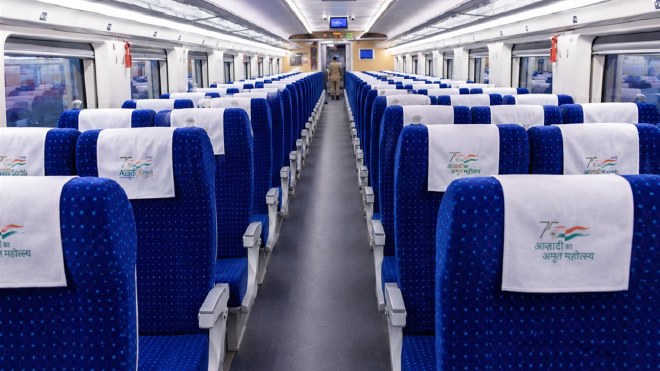
One of the latest examples is emerging through Indian Railways, where Australian broader wool is being used in newly developed upholstery fabric designed for next-generation rail interiors.
Developed specifically for high-speed and semi high-speed rail coaches, the upholstery velvet fabric has been engineered to meet the demanding requirements of one of the world’s largest public transport networks.
Importantly, the development is centred around broader micron wool.
The fabric incorporates 30.5-micron wool blended with nylon to deliver durability, pile retention and long-term performance in high-use seating environments. The upholstery construction uses an 85 per cent wool and 15 per cent nylon yarn in a double-pile woven velvet structure, with the final upholstery composition containing approximately 58 per cent wool.
While softness has traditionally dominated discussions around wool, developments like this highlight a different set of fibre strengths – durability, resilience, breathability, moisture management and comfort over long periods of use.
Importantly, the material has also been developed to comply with stringent inter-national rail safety standards through specialised flame-retardant back-coating technology.
And the commercial scale is significant. According to project information, Indian
Railways’ ongoing passenger coach upgrades are expected to require more than one million metres of upholstery fabric over the next five years.
For Australian woolgrowers, developments like this highlight how innovation programs are increasingly focused on applications where broader wool’s natural characteristics become genuine advantages.
That includes sectors such as transportation, interiors and technical textiles – industries increasingly searching for materials that can combine durability and performance with sustainability credentials.
The transportation sector is attracting growing interest as manufacturers look to reduce reliance on petroleum-based synthetic materials while maintaining strict safety standards.
Wool’s natural breathability, insulation properties and renewable fibre credentials are helping attract renewed interest in these applications.
At the same time, other innovation programs are continuing to explore broader wool opportunities beyond transport.
Developments in wool wadding and insulation products are using wool in the 22.5-to-28.5-micron range – and in some cases broader – for outerwear, filling and technical insulation applications.
Unlike synthetic alternatives, wool-based filling products offer natural moisture management and breathability while still providing warmth and loft retention.
Wool faux fur is another significant category, with developments using wool fibres in the 24-to-28-micron range, and sometimes broader, to create textured fabrics aimed at reducing reliance on fully synthetic pile materials.
Collectively, these developments reflect a shift towards diversification and identifying applications where wool can offer unique technical and environmental advantages.
The opportunities may not come from a single breakthrough product.
Instead, the future for broader wool may lie across a growing portfolio of specialised applications – from transport interiors, home furnishings and commercial upholstery to insulation, performance materials and technical textiles.
And while many of these markets are still evolving, developments like the Indian Railways project demonstrate that broader wool is steadily finding new relevance well beyond its traditional boundaries.
Header image: An AI generated image depicts the upcoming advancements to Indian Railways. A development made possible with Australian broad wool.
This article appeared in Issue 106 of AWI’s Beyond the Bale magazine that was published in September 2026. Reproduction of the article is encouraged and should be attributed as follows: This article was first published in Issue 106 of AWI’s Beyond the Bale magazine.