




A whole new world for the Merino
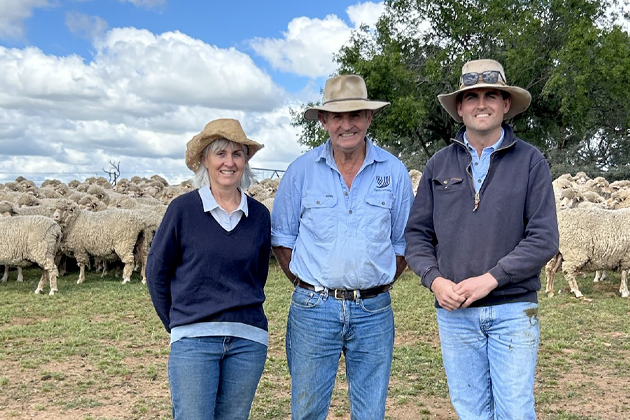
At 'Yarrawonga' in southern NSW, the Phillips family are proving the modern Merino is more than a wool sheep – it’s a high-performing, dual purpose enterprise driver. With 20,000 ewes, 3,500 lambs on feed and a strong genetic focus, they’re showing how wool income can underpin feeding costs and lift whole-of-flock profitability. Meat and wool. Genetics and growth. A Merino built for today’s market.
The modern Merino at work
At 'Yarrawonga', near Cunningar in the South West Slopes of New South Wales, the Phillips family is showing how the modern Merino continues to fit naturally into today’s mixed-farming landscape.
Across seven properties, Steve and Liz Phillips and their son Sam, the fifth generation on the land, manage 20,000 Merino ewes joined to Merino sires, another 10,000 joined to terminals, and 1,000 Angus cows.
About 2,500 acres are used for grazing crops, with Merinos remaining the main focus of the operation.
The family also sells around 600 rams each year to clients across southern and central New South Wales, Victoria and Tasmania.
Built on decades of experience, the Phillips’ enterprise highlights how far the Merino has come as a reliable, dual-purpose sheep delivering value from both wool and meat.
“People who used to be 40 per cent livestock and 60 per cent cropping are now 70 per cent sheep,” said Steve.
“And most of those are Merinos.”
Wool and meat working together
Once considered primarily a wool animal, the Merino is now firmly established as a balanced wool-and-meat proposition.
“Our Merinos make more money than our crossbreds,” Steve said.
“Mainly because of the extra income from the wool.”
It’s a straightforward equation. A Merino lamb can return around $300 on carcase value and another $80 for its fleece, while the ewe that raised it adds her own wool income to the overall return.
“It’s an extremely good package, the Merino is the whole package – meat and wool.” Steve said.
In some cases, Merino wether lambs are returning more than $400 once wool and meat are combined. “The versatility of the wether is very attractive – the profit margins are so much bigger,” Steve said.
“Then you have the versatility of the Merino ewe – the cull ewes can be joined to terminals for cash flow, and you still have the wool from them. She’s the cornerstone of the sheep industry.”
Breeding for performance
The Phillips family began moving toward the modern Merino about fifteen years ago, selecting for plainer-bodied, more fertile sheep with longer staple length and fine, soft-handling wool.
Today, the flock averages around 18-micron.
“You don’t have to go broad to have the multipurpose Merino,” said Steve.
“Early growth rates are a big factor now, and we’re seeing people really focus on that.”
Genetics and measurement are central to the operation. Australian Sheep Breeding Values are used to track performance and shared with commercial clients.
“Most young people want to see them now,” he said.
“It’s becoming more predictable – you can pick traits and growth rates. We DNA both sides, ewes and rams, and it’s worth it.”
Sam agrees. “We found the top one and five percentiles are the ones people are focusing on.”
Wool income supporting production
At their Gundagai feedlot, where around 3,500 lambs are finished each year, the Merino’s dual-purpose advantage becomes particularly clear.
“All the lambs that went into the feedlot had their feeding costs covered by their wool income,” said Sam.
“The Merino wool covers the feed. That’s the difference.”
He says the modern Merino now performs just as well as a crossbred lamb when managed correctly.
“People just have to feed them like a crossbred. If you do, their growth rates are just as good.”
The role of the Merino ewe
For the Phillips family, the Merino ewe remains central to both the enterprise and the broader sheep industry.
“You go to most enterprises that have good Merino sheep – it’s their best money maker,” said Steve.
“It’s about the money the Merino ewe produces, and it can come from either side, wool or meat.”
With both markets holding firm, Steve believes there is opportunity ahead.
“If both the meat and wool markets stay strong, I think there’s every chance Merino numbers will increase again,” he said.
“It’s a complete package now – meat and wool. It must be seen that way.”
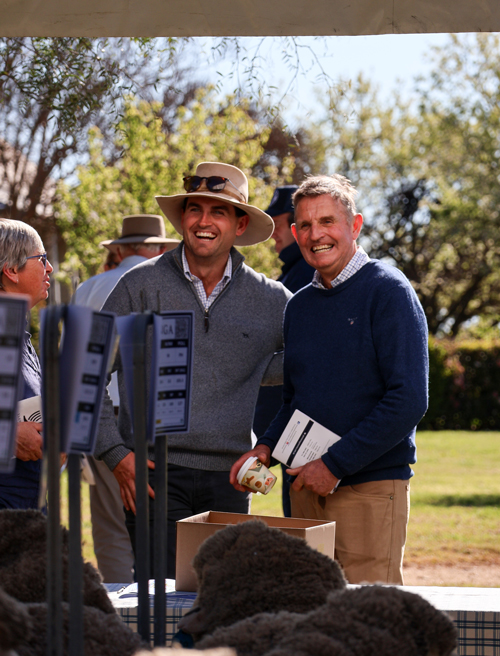
“You have to look forward, not backwards. In the Merino industry there’s too much living in the past – we need to look ahead.”
STEVE AND LIZ PHILLIPS, 'YARRAWONGA', NSW
Looking forward
Steve has watched the transformation of the breed over time.
“The world is full of grain – they can grow grain anywhere in the world,” he said.
“But wool, they can’t grow everywhere, and not quality wool like ours in Australia. The work that’s gone into the Merino flock over the last fifty years is incredible. Everyone’s micron has probably dropped two or three, and we’re producing better wool than anyone else in the world.”
He believes the modern Merino is now better placed than ever.
“It’s a whole new market for Merinos now,” he said.
“The wether lamb market hasn’t been there in the past like it is now. But I don’t think we’ve had the wether lambs we have now. There’s better genetics, better feeding, better management. They’re simply a more productive sheep. The wool comes off the animal where the meat is – it’s a combined package.”
“It’s a whole new world for the Merino,” he said.
“You have to look forward, not backwards. In the Merino industry there’s too much living in the past – we need to look ahead.”
For the Phillips family, that approach is clear – continuing to breed, feed and manage a sheep that delivers consistent returns and flexibility across a modern farming system. The Merino has once again proven itself not just as a wool sheep, but as a practical, profitable all-rounder for Australian conditions.
This article appeared in Issue 105 of AWI’s Beyond the Bale magazine that was published in March 2026. Reproduction of the article is encouraged and should be attributed as follows: This article was first published in Issue 105 of AWI’s Beyond the Bale magazine.