





Tods
When Australian wool appears in an international fashion collection, it is not there by accident. It is there because the fibre has proven itself – in consistency, performance and integrity – long before it reaches a design studio.
That story continues in 2026, as Tod’s and Woolmark mark the second year of their collaboration with the release of the 15-Micron Wool Double Bomber Jacket – a garment that places Australian Merino wool at the centre of its construction, design and narrative.
For woolgrowers, this is not about fashion cycles. It is about where Australian wool sits in the world, and how the decisions made on farm shape the way that fibre is valued, used and trusted far beyond the farm gate.
Wool chosen first, design built second
Rather than designing a garment and then sourcing a fibre to suit, Tod’s has worked the other way around – developing pieces that respond directly to the natural qualities of superfine Merino wool.
The Bomber Jacket is made from 15-micron Woolmark-certified wool, selected for its softness, comfort and ability to perform in a structured outer garment. The silhouette draws on early 1900s menswear, reinterpreted with modern finishing and clean lines. Ribbed knit edges, piping and patch pockets highlight the balance between structure and softness – something that can only be achieved when the fibre itself is fit for purpose.
For growers producing ultrafine wool, this reinforces a familiar principle: when fibre capability is consistent, it opens doors well beyond traditional end uses.
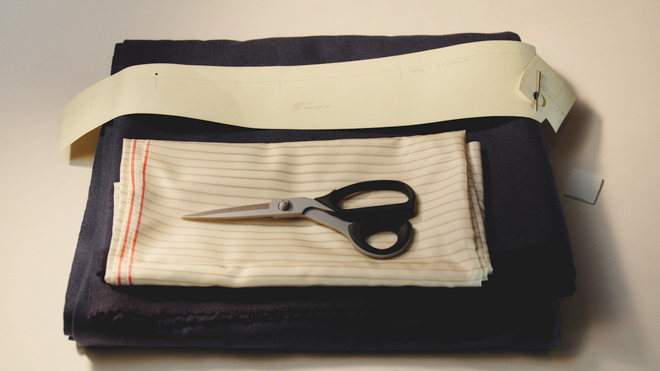
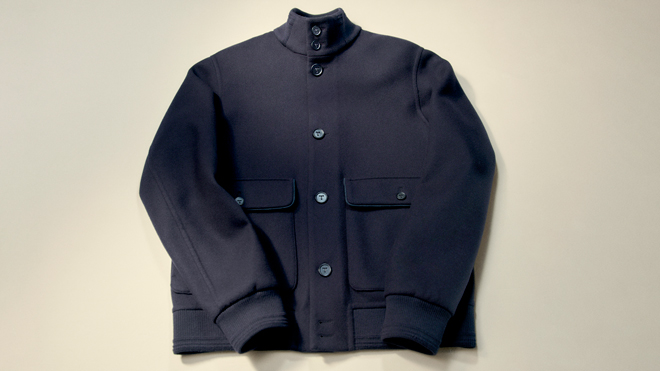
From ultrafine fleece to finished garment — fibre from Paling Yards contributing to premium 15-micron wool pieces within the Woolmark collaboration.
The discipline behind double construction
A defining feature of the jacket is its double-faced construction – a tailoring technique that places enormous demands on fabric quality.
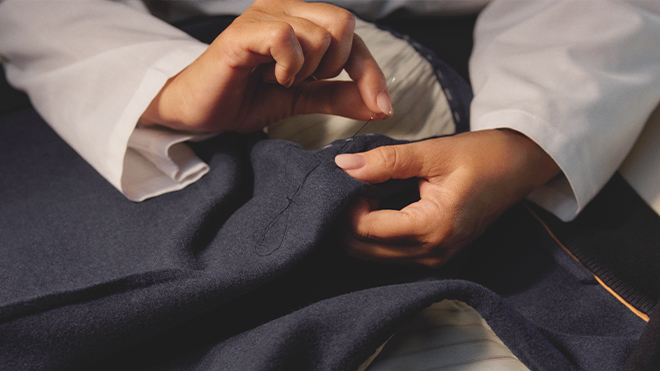
In this process, the wool fabric is finished without visible seams. Temporary seams are removed, edges are folded and joined by hand using invisible stitching, and corners are trimmed and reinforced to create a clean, seamless finish. There is nowhere for weakness or inconsistency to hide.
This level of construction relies entirely on the strength, handle and uniformity of the wool. For Australian woolgrowers, it underlines a simple reality: high-end manufacturing is only possible when the fibre delivers reliability at every stage of the supply chain.
“ This collaboration shows how design and natural fibres come together to tell a story of provenance and craftsmanship,”
JOHN ROBERTS, CEO AUSTRALIAN WOOL INNOVATION
Provenance built in, not added on
The wool used in the collection is sourced from select Australian farms, including Paling Yards, a long-established property founded in 1935 and now operated by its fourth generation.
At Paling Yards, rotational grazing systems are used to maintain groundcover year-round, preserve grassy woodlands and protect native pastures and biodiversity. These systems support animal performance while underpinning the consistency required to produce ultrafine wool season after season.
What stands out is that this provenance is not treated as a marketing add-on. It is embedded in the product narrative itself – linking landscape, people and fibre directly to the finished garment.
“This collaboration shows how design and natural fibres come together to tell a story of provenance and craftsmanship,” said John Roberts, CEO Australian Wool Innovation.
“By featuring wool sourced from farms such as Paling Yards, we’re recognising the role woolgrowers play in shaping the final product – from paddock to garment.”
A broader wardrobe, a broader future
The Bomber Jacket sits within a wider Woolmark-certified capsule which was released Autumn/Winter 2025, including:
- A 15-micron wool baseball cap with a breathable, water-repellent membrane and leather trim
- Long-sleeved polos and sweaters in 15-micron wool
- A half-zip jumper in 100% superfine wool
- A hooded winter jacket crafted from extra-fine wool
For growers, this breadth matters. It demonstrates how fine wool continues to find relevance across multiple garment types – reinforcing demand beyond any single product category.
What this story says about Australian wool
Rather than positioning wool as a raw input, collaborations like this reinforce its role as a defining material – one that influences design, construction and credibility.
It is a reminder that:
- micron, consistency and preparation still matter
- on-farm systems travel with the wool, whether acknowledged or not
- Australian wool’s reputation is built gradually, clip by clip
From paddocks producing 15-micron wool to meticulous hand-finishing overseas, the story holds together because the fibre holds up.
And that story begins – and ends – with growers.
GROWER FOCUS
Charlie Bell
PALING YARDS
Behind the fibre used in the Tod’s and Woolmark collaboration is Charlie Bell, who manages Paling Yards with a long-term focus on flock performance, landscape care and fibre discipline.
Producing ultrafine wool at this level is not about chasing a single market opportunity. For Charlie, it comes down to consistent decision-making over time – breeding choices, pasture management and animal care all working together to deliver a reliable result year after year.
Rotational grazing systems play a central role, maintaining groundcover across seasons and supporting the health of native pastures and grassy woodlands.
These systems underpin both animal wellbeing and fibre quality, allowing sheep to perform while protecting the country they rely on.
While the finished garments may feel a long way from the shearing shed, Charlie sees the connection clearly.
Wool that meets demanding specifications does so because of what happens well before shearing – in flock structure, seasonal planning and attention to detail.
“ Recognition isn’t tied to one clip or one season – it comes from getting the fundamentals right over the long term.”
CHARLIE BELL, PALING YARDS
For Charlie and his family, the story is less about visibility and more about continuity – producing wool that stands on its own merits, wherever in the world it ends up.
This article appeared in Issue 105 of AWI’s Beyond the Bale magazine that was published in March 2026. Reproduction of the article is encouraged and should be attributed as follows: This article was first published in Issue 105 of AWI’s Beyond the Bale magazine.