





Taking wool beyond the farm gate
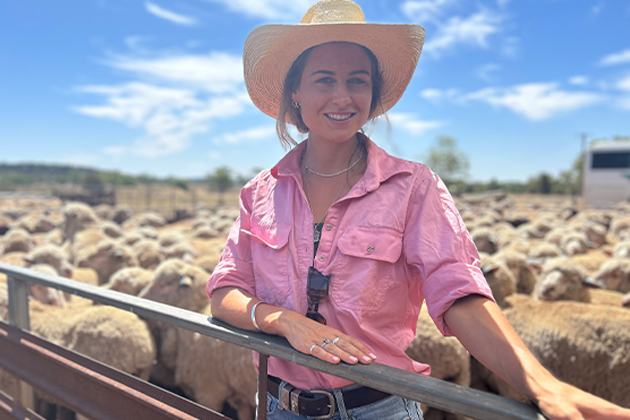
The future of Australian wool will not rest on production alone. It will also depend on how wool is used – whether it ends up in everyday products, whether consumers understand it, and whether they choose it regularly, not just occasionally. That work does not sit only on farm. It sits across the supply chain. Gabby Neal works in that space.
This is not a story about fashion for fashion’s sake. It is a story about how wool is used, understood and valued. Gabby represents a different type of industry participant – one who works across production and market, and who focuses on practical ways to connect the two.
From the farm to fashion
I first met Gabby at the Condobolin Flock Ewe Competition. It is the sort of event that is practical by nature – focused on performance, measurement and improvement. It is also where you often see younger people quietly stepping into the industry, not necessarily through traditional roles, but through skills that connect wool to the wider market.
Gabby grew up in a woolgrowing family in Central West New South Wales. Merino wool was part of everyday life. So were the pressures that come with farming – seasonal risk, long-term decision-making and working with what the year delivers. What sets Gabby apart is that she has also spent time at the other end of the supply chain, working in fashion and consumer-facing business.
With formal training and industry experience in fashion and design, she understands how fibre moves from farm to finished garment. Over time, that gave her a clear view of where wool was missing out. Not because it lacked quality or performance, but because it was not showing up often enough in products people wear every day.
Her career path was not straightforward. After school, Gabby studied radiation physics before deciding it was not the right fit. She moved into fashion, studied in Sydney and built experience through internships before working in talent management at a time when influencer marketing was starting to take off.
In her early twenties, she was managing large brand partnerships and working alongside a creative director whose projects ran between Sydney and New York. Two summers working in the United States gave her exposure to the scale and speed of global fashion.
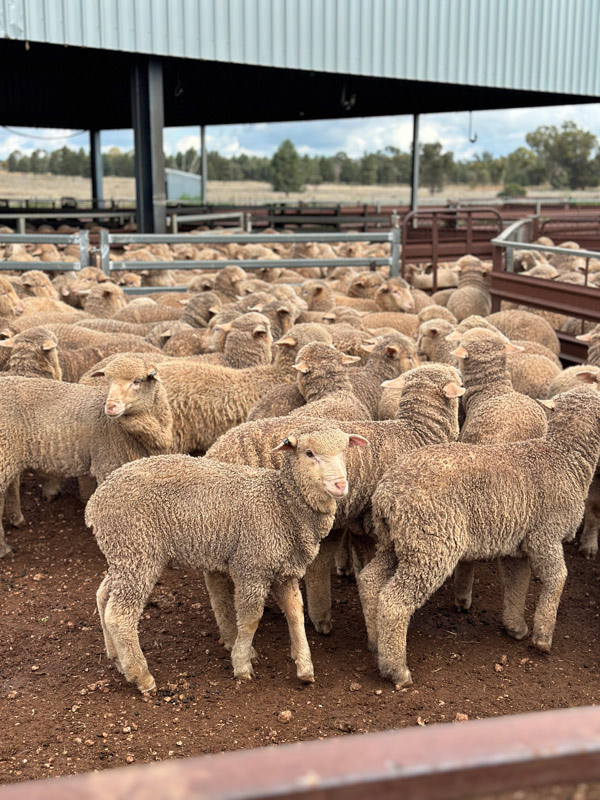
Header and above: Gabby Neal at home in the yards in Central West NSW – where production meets perspective on how wool moves beyond the farm gate.
Back home, conditions were very different. Drought was affecting large parts of New South Wales, including her family’s operation. Being away from the farm during that time was difficult.
“I’ve always come home and worked on the farm,” Gabby said. “Not being able to be there when things were tough really impacted me.”
That experience prompted her to think differently about how she could contribute. If she could not always be on the farm, how else could she support the industry her family relied on?
Education was always part of her upbringing. Gabby often spoke about her father taking the time to explain farming to visitors – where food and fibre come from, and why it matters. As she got older, those conversations moved beyond day-to-day work to include the broader business picture.
“For me, it reinforced how important it is to understand the whole supply chain, from fibre through to how a consumer makes a decision.”
GABBY NEAL, INTACT, CENTRAL WEST NSW
At the same time, the fashion industry was starting to talk more seriously about sustainability and natural fibres. That was when the connection became clear.
“I realised we weren’t just farming – we were part of the fashion industry,” Gabby said.
A visit to the wool sales reinforced that view. Seeing what happens to wool after it leaves the farm helped her understand where value is added and where opportunities can be lost. When she compared that with what consumers increasingly look for – comfort, durability and performance – the gap stood out.
Wool already does those things well. The issue was not the fibre. It was how it was being presented and used.
Making wool everyday
INTACT was created in 2021 with a simple aim: to make Australian Merino wool part of everyday wardrobes, and in doing so, help support woolgrowers by building demand.
From the beginning, Gabby wanted to keep things straightforward. INTACT was built around a small number of staple pieces designed to be worn often, rather than seasonal fashion items. Knitwear was a practical starting point. It allowed for efficient use of fibre and lighter-weight garments, which helped challenge the idea that wool is only for winter.
Product development was careful and slow. Samples were worn over long periods and adjusted based on how they performed. Friends tested garments in everyday settings. Gabby also surveyed around 300 consumers to better understand how people viewed wool and what stopped them from buying it.
The results were familiar. Many people still see wool as itchy, hot or formal. For younger consumers, those assumptions often stop the conversation before it starts.
The early response to INTACT was encouraging, but it also highlighted a commercial reality. While younger people may like the idea of wool, many cannot afford higher-priced garments. Gabby adjusted accordingly. Her main customer base became older, city-based consumers who value quality and natural fibres. At the same time, she kept thinking about how wool could be introduced earlier and more easily.
Her answer focused on everyday items.
When Gabby talked about opportunity, she did not start with coats or fashion pieces. She talked about underwear, base-layers and socks – items people buy regularly.
“These are everyday items,” she said.
“They’re often treated as disposable – but they’re an easy way for people to try wool.”
Lower-priced wool products offered a way to bring new consumers into the fibre. Once people experience wool next to skin – and understand how it performs – their views often change.
Good for your skin and your health
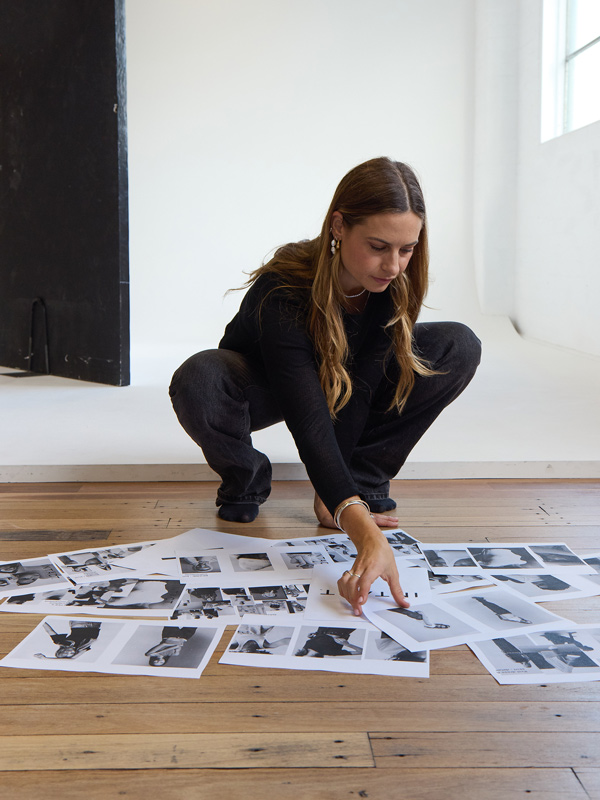
Above: From global dialogue to local execution – developing practical wool pieces consumers choose to wear regularly.
Merino wool’s natural qualities fit well with this approach. It is soft, breathable, odour resistant and suitable for year-round wear when designed properly. Gabby saw these traits as practical selling points, particularly for garments worn every day.
“If you’re going to wear something every day, it should be good for your skin and your health,” she said.
Later collections continued to test these ideas. A knit dress and skirt designed for warmer conditions challenged the assumption that wool does not belong in summer wardrobes. At pop-up events, many customers were surprised by how light the garments felt.
Online sales were more difficult, reinforcing how important touch and experience still are when it comes to wool.
More recently, Gabby developed a wool–linen blend dress made in Sydney using fabric sourced through AWI’s The Wool Lab. The process highlighted how many steps are involved in local manufacturing and the challenges that sit around rebuilding onshore capacity.
In September, Gabby joined AWI’s Future Wool Industry Leaders tour to China. She attended the Nanjing Wool Market Conference and took part in discussions focused on finished products.
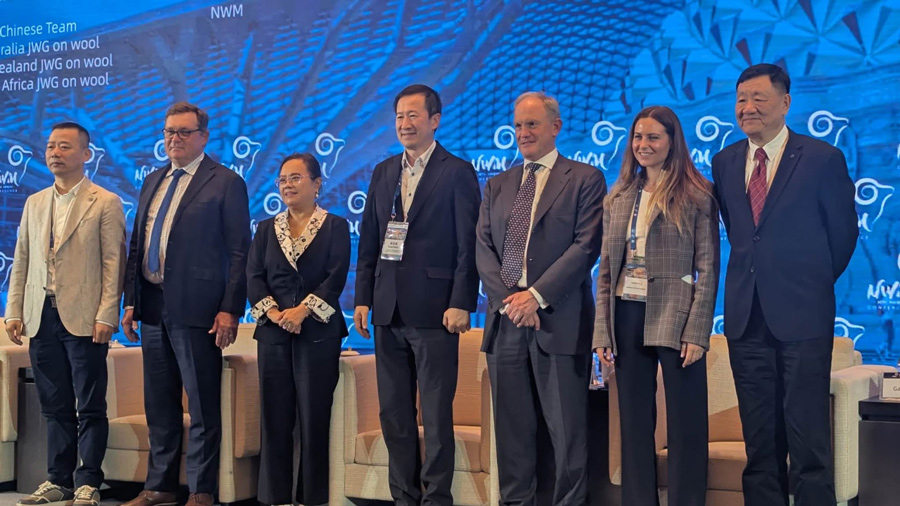
Above: On the panel at the Nanjing Wool Conference – reinforcing the link between production, processing, and consumer decision-making.
What stood out most was scale. The speed, efficiency and level of innovation in China were eye-opening. The trip also reinforced the importance of understanding the full supply chain.
“For me, it reinforced how important it is to understand the whole supply chain,” Gabby said. “From fibre through to how a consumer makes a decision.”
Not long after returning, Gabby was contacted by China Global Television Network and asked to take part in an on-farm interview about the wool industry. The crew travelled to the Central West to film her and her father working sheep and talking about wool.
It was only at the end of the day that Gabby learned the program’s estimated audience was around 200 million viewers.
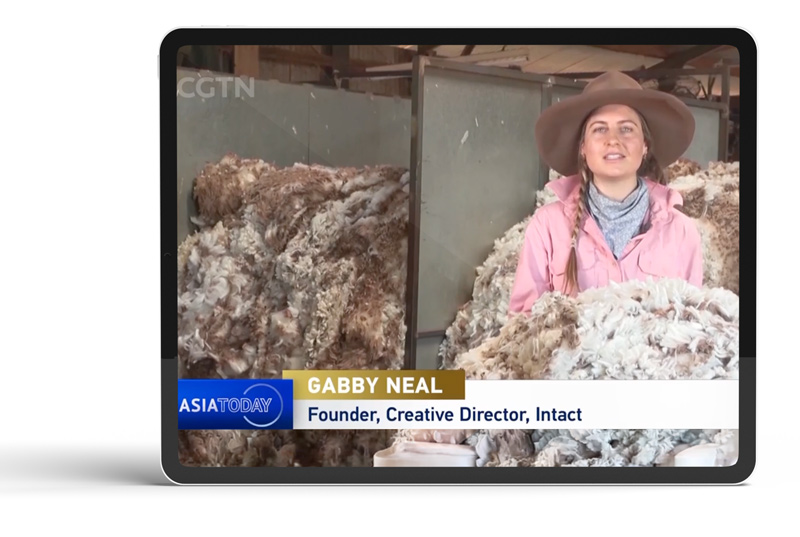
For her, the moment was not about publicity. It was about being on the farm with her father and contributing in a way that felt genuine.
Wool already performs well. The challenge is making sure it ends up in products people choose and wear regularly.
That is where Gabby is putting her effort – and where part of wool’s future will be shaped.
Left: L-R: Izzy Carlon and Leah Baklien. Right: Pictured L-R: Julie Davies, Lily Edmonds, Jannala McNally, Skyla Wedd, Prue Chapman and Izzy Carlon. PHOTOS: Stephan L’Hostis Photography
Designing wool’s future: Fleece to Fashion connects fibre and innovation
The future of Australian wool depends not only on how it is grown, but how it is understood and used by the next generation of product designers. Programs like Fleece to Fashion play an important role in building that connection early.
Held annually in Armidale, the Fleece to Fashion Gala Parade provides emerging designers with the opportunity to work directly with wool, exploring its performance, versatility and aesthetic potential through garment design. The program helps bridge the gap between fibre production and finished product, ensuring wool remains front-of-mind as new designers enter the global apparel industry.
The 2025 Supreme Award, sponsored by Australian Wool Innovation (AWI), was awarded to Whitehouse Institute of Design student Skyla Wedd. As part of the prize, Skyla will undertake an international industry immersion, expected to include visits to Japan and Korea, where she will engage with brands, manufacturers and innovators across the wool supply chain.
This firsthand exposure provides valuable insight into how Australian wool moves from raw fibre to premium garments, while building practical understanding of the technical, commercial and creative factors that influence fibre selection. Programs like Fleece to Fashion form part of AWI’s broader Industry Development and Education Extension efforts, which aim to strengthen wool’s position in global markets by ensuring those designing future products understand its natural performance advantages.
By supporting emerging designers at the beginning of their careers, AWI is helping embed wool into future product pipelines – strengthening its relevance across fashion, performance apparel and technical applications.
These early connections are critical. Fibre choice is often determined at the design stage, and confidence in wool’s performance, supply chain and innovation potential can influence material decisions for decades to come.
Pathways in wool
The Woolmark Learning Centre is equipping the next generation of wool professionals with practical, industry-relevant knowledge across fibre science, processing, product development, sustainability and marketing.
The free, self-paced online platform connects learners anywhere in the world with technical insights that strengthen wool’s position from raw fibre to retail.
For woolgrowers, it represents more than education – its capability building across the global value chain that ultimately underpins demand for Australian wool.
Growers, students, and industry participants can explore the courses and register free at woolmarklearningcentre.com.
MORE INFORMATION
woolmarklearningcentre.com
This article appeared in Issue 105 of AWI’s Beyond the Bale magazine that was published in March 2026. Reproduction of the article is encouraged and should be attributed as follows: This article was first published in Issue 105 of AWI’s Beyond the Bale magazine.