




From classroom to paddock: building the next generation through the School Wether Challenge
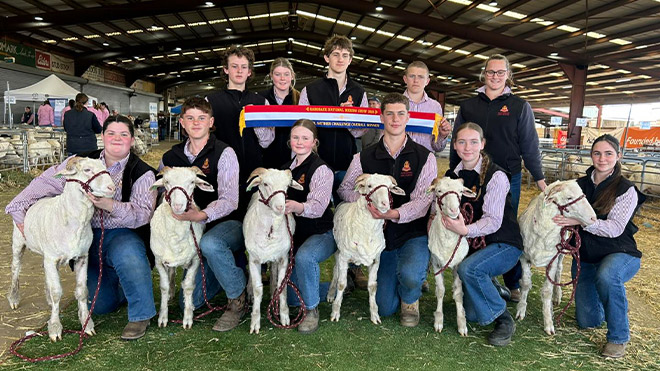
Across Australia, students are stepping out of the classroom and into sheep yards, paddocks and feed sheds as the School Merino Wether Challenge continues to grow state by state.
Backed by Australian Wool Innovation and delivered in partnership with schools, studs and industry volunteers, the program is giving young people a rare opportunity to learn the wool industry by doing it.
Rather than learning about sheep production from a textbook, students take responsibility for a team of Merino wethers over several months.
They manage feeding, monitor growth, handle and prepare sheep, and learn how everyday decisions influence both animal performance and end value.
The challenge culminates in a state based judging event where students present their sheep and explain the management choices they’ve made along the way. It’s a simple model – but one that’s proving powerful.
A national program with local impact
The School Merino Wether Challenge now operates in every major wool growing state, with participation continuing to build. In 2025, more than 3,000 students from over 160 schools were involved nationally, reflecting strong uptake across regional and rural communities.
While each state delivers the program slightly differently, the fundamentals remain consistent: real sheep, real responsibility, and a strong commercial lens.
Students are assessed not just on how sheep present on the day, but on preparation, understanding of wool and meat traits, animal welfare, and their ability to explain the management decisions behind the outcome.
South Australia
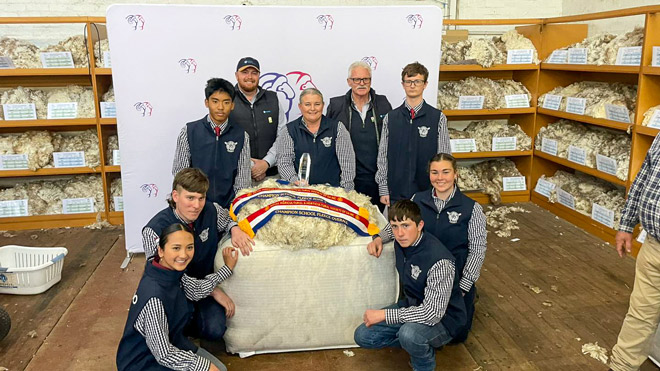
Above: Lameroo regional Community School, SA – Champion school fleece
Justifying decisions
- 41 schools involved in 2025
- Strong emphasis on presentation and explanation, not just appearance
- Judging reinforces commercial meat and fleece traits
- 2025 SA Grand Champion: Lucindale Area School – Pen 1 (Supreme Pen – Overall Meat & Fleece Winner, John Rothwell Perpetual Shield)
“The wether challenge mirrors what happens on commercial farms. Students have to justify their decisions – not just present sheep. That’s where the learning really deepens.”
TOM WILLIAMS, SA AGRICULTURE TEACHER
New South Wales
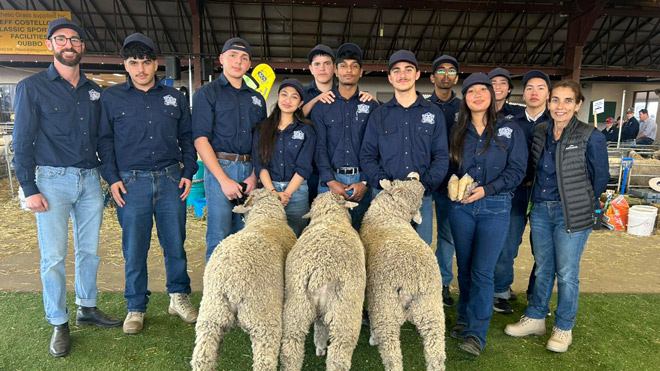
Above: Strathfield South High School, NSW – Encouragement Award
Header: Narrandra High School, NSW – Overall Winners
Scale and commercial focus
- One of the largest programs nationally
- 450+ Merino wether lambs allocated in 2025
- 76 schools participating across the state
- 2025 NSW Grand Champion: Narrandera High School
“ What surprises people is how quickly students take ownership. Once those wethers arrive, they’re checking feed, weighing gains, and debating decisions like real producers. It’s no longer theory – it’s livestock they’re responsible for.”
SARAH MCKENZIE, NSW AGRICULTURE TEACHER
Victoria
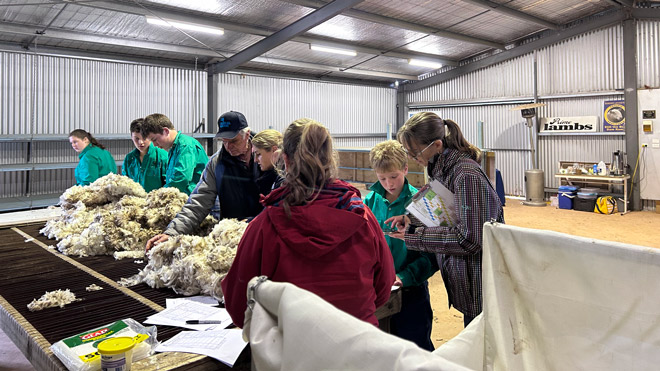
Above: Victorian secondary school students participating in the 2025 Challenge
Confidence through handling
- Program launched in 2024 and expanded again in 2025
- Growing participation from schools new to sheep production
- Strong focus on handling skills and wool literacy
- 2025 VIC Grand Champion: Greater Shepparton Secondary College
“ For many students, this is the first time they’ve worked closely with sheep. By the end of the challenge, they’re confident handling stock and talking about wool quality like it’s second nature.”
HANNAH DOYLE, VICTORIAN AGRICULTURE TEACHER
Tasmania
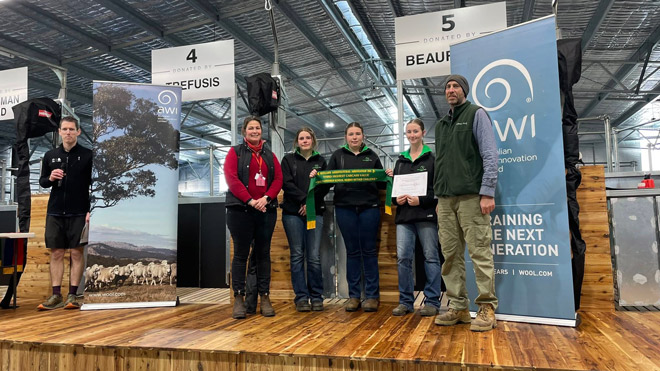
Above: Scottsdale High School, TAS – Grand champion
Daily care and consistency
- Delivered with strong stud breeder involvement
- Emphasis on daily responsibility and animal welfare
- Learning centred on consistency over time
- 2025 TAS Grand Champion: Scottsdale High School
“ It’s the day-to-day responsibility that makes the difference. Students see firsthand that consistency in care leads to better outcomes – just like it does on farm.”
BEN ROBERTS, TASMANIAN AGRICULTURE TEACHER
Queensland
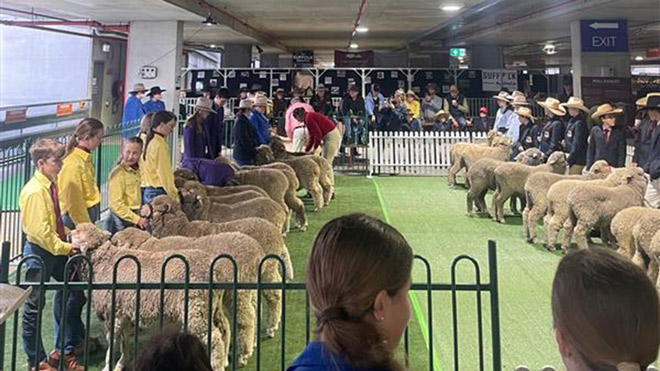
Above: Queensland secondary schools participating in the 2025 Challenge
Momentum building
- Still an emerging program, but growing each year
- Increasing school and team participation
- Strong engagement once schools experience the model
- 2025 QLD Grand Champion: Oakey State High School
“ Each year we’re seeing more interest from students and schools. Once students experience the challenge, word spreads quickly.”
RACHEL THOMPSON, QUEENSLAND PROGRAM COORDINATOR
Western Australia
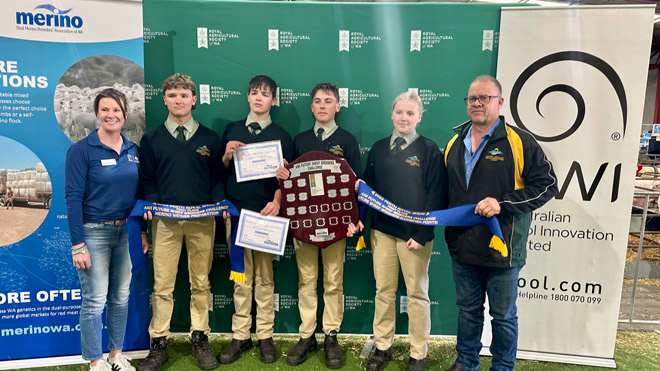
Above: WA College of Agriculture – Harvey – Overall winner
Pathway to industry
- Long-running youth sheep initiatives supported by AWI
- Linked with major shows and industry mentors
- Clear pathway into sheep and wool careers
- 2025 WA Overall Champion: Western Australian College of Agriculture – Harvey
“ Programs like this create a genuine pathway into the sheep industry. You’re not starting from scratch – these young people already understand stock, wool and responsibility.”
DAVID CLARKE, WA INDUSTRY MENTOR
Learning that sticks
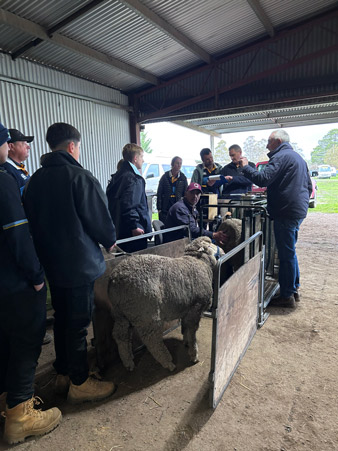
For many students, the wether challenge is their first sustained exposure to sheep handling and management. Over the course of the program, they develop skills that are difficult to teach in a classroom alone – stockmanship, observation, consistency and accountability.
Importantly, the challenge reinforces commercial relevance.
Students learn that good outcomes are rarely accidental; they are the result of informed decisions around nutrition, animal care, preparation and timing. By judging day, teams must be able to explain not just what they did, but why they did it.
Growing capability, not just competition
While ribbons and placings are part of the experience, the real success of the School Merino Wether Challenge lies in what happens well before judging day. Students learn to work as a team, manage animals over time, and take pride in preparation and presentation.
As participation continues to expand across the country, the challenge is quietly doing something vital for the wool industry: normalising sheep work for young people and showing them there is a future in it.
For an industry built on long-term thinking, that may be the most valuable outcome of all.
Why it matters to woolgrowers
The School Merino Wether Challenge isn’t just an education program – it’s a pipeline. At a time when labour availability, practical skills and industry understanding are real constraints, the challenge gives students early, positive exposure to sheep and wool production.
It builds confidence around animal handling, reinforces welfare-focused management, and develops a commercial mindset grounded in real-world outcomes.
For woolgrowers, the value is long-term: students who understand sheep, respect the animals, and appreciate how on-farm decisions flow through to wool quality and value. Many participants go on to further agricultural study or straight into industry roles – bringing with them skills that can’t be taught overnight.
All competitions are supported by AWI and made possible through the partnership and organisation of the stud breeder associations in each state.
Thank you to NSW Stud Breeders Association, Dubbo National Ram Sale Association, SA Stud Merino Sheepbreeders Association (Merino SA), Stud Merino Breeders’ Association of WA (Merino WA), Australian Sheep Breeders Association, Stud Merino Breeders Association of Tasmania and Queensland Department of Primary Industries.
This article appeared in Issue 105 of AWI’s Beyond the Bale magazine that was published in March 2026. Reproduction of the article is encouraged and should be attributed as follows: This article was first published in Issue 105 of AWI’s Beyond the Bale magazine.