



Full circle: Greenwich Pastoral’s Merino story from paddock to product
For six generations, the Downie family has run Merinos. Today the family business continues to evolve, balancing wool production with broader business realities while remaining committed to the long-term role of Merino sheep in their system.
In the Upper Derwent Valley near Hamilton, Tasmania, Merino sheep have shaped both the landscape and the livelihood of Greenwich Pastoral for generations.
“We are the sixth generation of the Downie family to farm in this area so there is a strong connection to the land and family history on the land we farm on,” Hannah and Chris explain.
That history is closely tied to wool production. The country itself is well suited to Merino sheep, and wool has long played a central role in the business.
“Merino wool has been the staple income for generations, a large portion of our land is well suited to running Merino sheep producing high quality wool,” they said.
Like many Merino enterprises across Australia, Greenwich Pastoral has adapted over time. While wool remains an important contributor, the business has diversified to manage market fluctuations and maintain long-term resilience.
“Wool currently making up 30–40% of our income, for us, wool is an integral part of our business, but like any bulk commodity we have to continually work on efficiencies to remain viable in a commodity driven market.”
Breeding for balance and adaptability
At the centre of Greenwich Pastoral’s Merino enterprise is a breeding program focused on flexibility and long-term resilience.
“Our breeding focus is dual purpose Merinos; to achieve high growth rates for an earlier turn off of wether lambs while maintaining moderate wool production.
“We strive to be able to establish a Merino-based flock that can be easily adapted to a changing climate and economic conditions year on year.”
For many Merino growers, this balance between wool and meat production has become increasingly important.
Maintaining productive, adaptable sheep allows enterprises to manage risk while continuing to produce high quality wool suited to a range of markets.
From bulk commodity to branded yarn
Like most Australian woolgrowers, Greenwich Pastoral sells the majority of its clip into the wool market auction system. Once it leaves the farm gate, it typically becomes part of a much larger global supply chain.
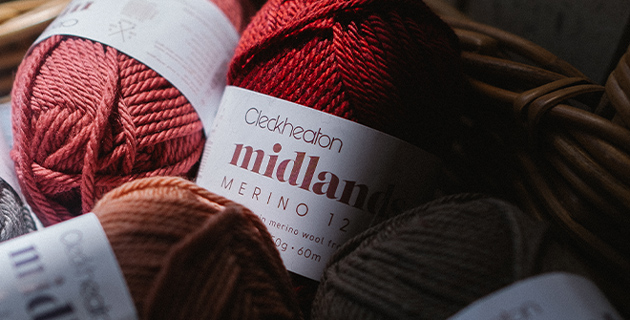
However, their involvement in Cleckheaton Midlands Merino 8 ply and 12 ply yarn has provided a rare opportunity to see that journey more clearly.
“It’s definitely a full circle moment… they can wear a jumper with wool produced in the paddocks surrounding them.”
HANNAH AND CHRIS DOWNIE, GREENWICH PASTORAL UPPER DERWENT VALLEY
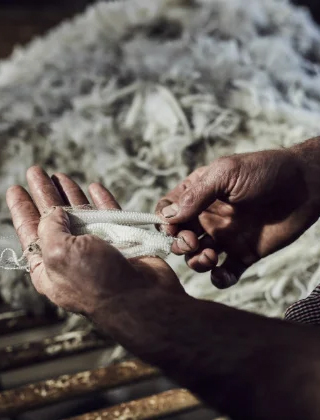
“The majority of our wool clip is sold as a bulk commodity so it’s quite unique for us to be able to actually see and feel our own wool in a single-origin yarn product,” they said.
For Hannah and Chris, seeing wool grown on their farm. transformed into a finished product brought a new perspective to something that is usually distant from daily farm operations.
“It’s definitely a full circle moment,” they said.
“The children’s grandma knits jumpers and beanies for them, they are quite thrilled that they can wear a jumper with wool produced in the paddocks surrounding them.”
Experiences like this highlight the connection between on-farm decisions and the final products used by consumers. Breeding, animal health, nutrition and wool handling all contribute to producing fibre capable of meeting the requirements of specific yarns and products.
Seeing their wool become Cleckheaton Midlands Merino yarn has also reinforced the importance of maintaining consistent breeding and management decisions over time.
While most wool is sold into the broader market, the same fundamentals underpin all production — sound animal health, clear breeding direction and careful wool preparation.
Their experience reflects the reality for many growers, where wool remains part of a diversified enterprise but continues to provide stability and long-term value. Maintaining a Merino flock allows flexibility to respond to changing markets while ensuring wool remains a reliable and relevant component of the business.
For growers, it also reinforces the broader role Australian wool continues to play across global textile markets — often in ways not immediately visible from the farm gate.
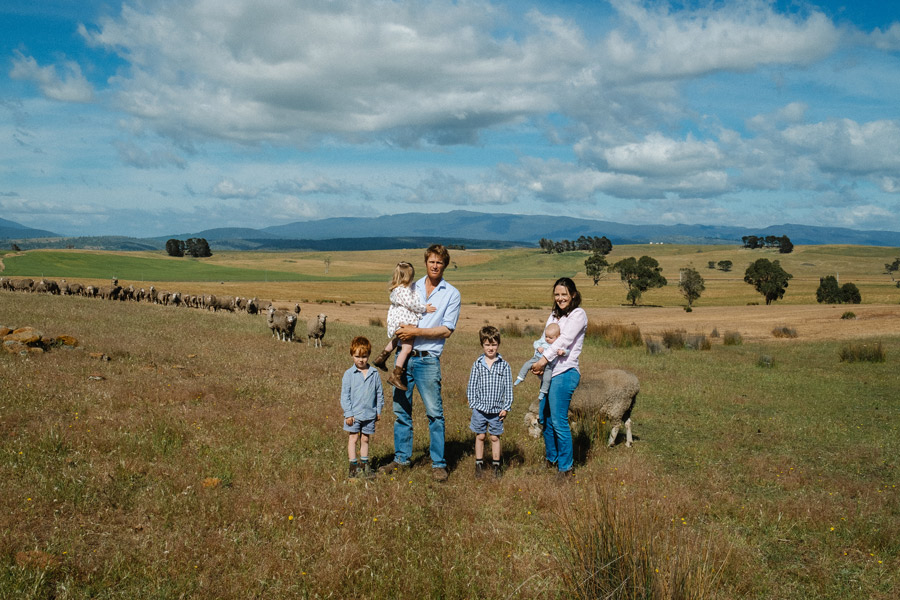
Top: A family-led Merino enterprise shaped by adaptability, consistency and a clear breeding direction.
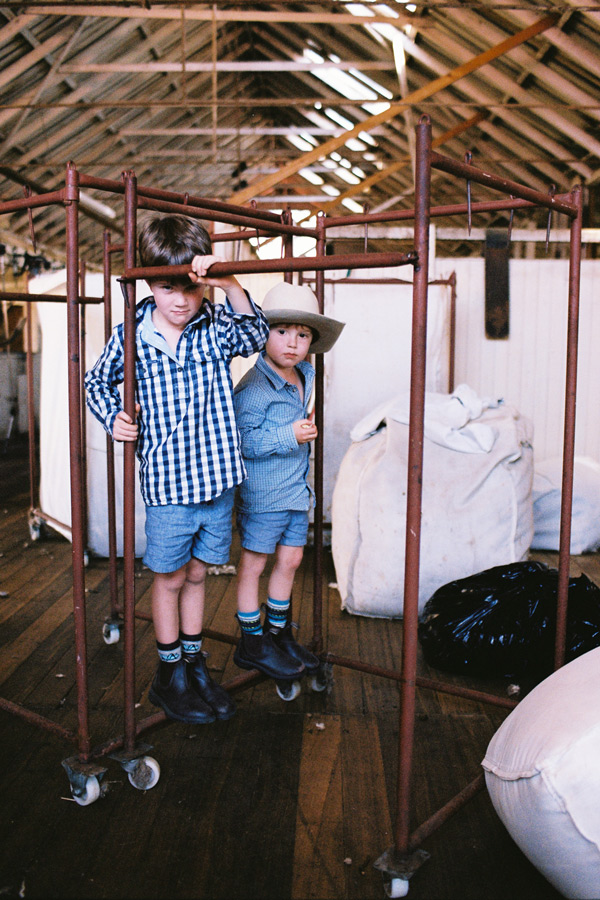
Bottom: From shed to fleece: building early understanding of wool production while maintaining a focus on fibre quality and enterprise sustainability.
Sustainability through everyday management
“Sustainability is implemented and achieved on our property in a number of ways; through improved animal welfare practices targeted at optimising nutrition and resource use, monitoring animal health closely and promptly, low stocking rates and providing low stress handling,” they explain.
Land management has also evolved to protect natural assets and support the long-term viability of the property.
“Changed land management practices such as fencing off waterways and environmentally sensitive areas and developing a biodiversity plan” have become part of their approach.
Like many producers, they emphasise that these decisions must work within the realities of running a commercial farming business.
“At times, it’s a balancing act, trying to produce an economically viable product while continuing to improve our practices,” they said.
“However, at the end of the day it’s important to us; and we want to and have succeeded doing the right thing by the stock and the land we not only farm on but live on too.”
These practical steps reflect the broader direction of many Merino enterprises — focusing on animal welfare, land stewardship and production efficiency to support both business sustainability and long-term productivity.
Pride in production and continuity
Producing wool remains an important part of Greenwich Pastoral’s identity as well as its business.
“We take great pride in the wool we are producing,” they said.
That pride reflects both the effort required and the long-term commitment involved in maintaining a Merino enterprise across generations.
“Farming is certainly a way of life, it requires a lot of hard work, dedication, determination and passion but also care; care about the animals and animal welfare practices we implement; and improving environmental sustainability and our own land management practices.”
This long-term perspective shapes decision-making across the enterprise, with a clear focus on ensuring the business remains viable into the future.
“Our ultimate goal is to be able to pass on a successful and thriving farming enterprise to our children and ensure that we leave the land in a better place than when we became its custodian.”
A continuing role for Merino wool
“We are committed to producing wool in the future in the most sustainable and ethical way that we can and would hope that future generations will be able to achieve this too,” they explained.
Their experience reflects the reality for many Australian woolgrowers – adapting to changing markets while maintaining the core strengths of Merino production.
Wool may now sit alongside other enterprises, but its importance remains clear. It continues to contribute to business stability, supports flexible breeding systems, and connects the farm to global textile markets.
From the paddocks of the Upper Derwent Valley to Cleckheaton Midlands Merino yarn, the journey of Greenwich Pastoral’s wool reflects both continuity and adaptation — and the enduring role of Merino sheep in Australian agriculture.
This article appeared in Issue 105 of AWI’s Beyond the Bale magazine that was published in March 2026. Reproduction of the article is encouraged and should be attributed as follows: This article was first published in Issue 105 of AWI’s Beyond the Bale magazine.