




Defending the fibre: getting the science right on wool’s true footprint
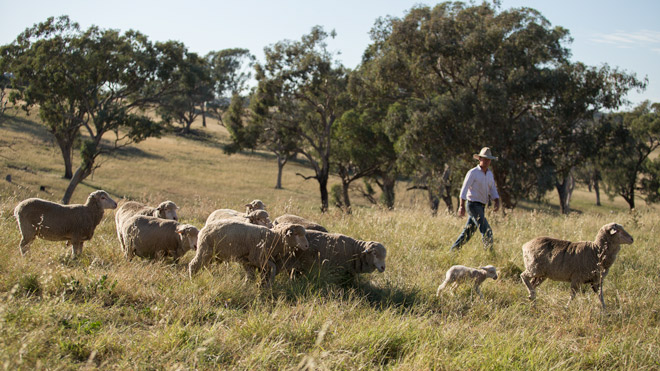
When sustainability claims are made, the numbers behind them matter. For woolgrowers, those numbers increasingly influence how wool is judged, compared and ultimately valued in the marketplace.
If the data is wrong or incomplete, wool can be unfairly penalised – despite being a natural, renewable fibre produced in complex grazing systems that also store carbon and support biodiversity. That’s why getting the science right is critical.
Why it matters to growers
Around the world, brands, retailers and governments are tightening sustainability requirements. Many are using lifecycle assessment (LCA) data to guide sourcing decisions and product labelling.
When those assessments rely on broad global averages rather than Australian- specific data, wool can appear to have a higher footprint than it actually does. That can affect demand, market access and confidence in the fibre.
By investing in more accurate, industry-specific data, Australian Wool Innovation (AWI) is helping ensure wool is assessed fairly – and that the full picture of emissions and removals is recognised.
A fairer measure for natural fibres
AWI has worked with the Australian Meat Processor Corporation (AMPC) and the Department of Agriculture, Fisheries and Forestry on new research that delivers a clearer, more representative picture of wool’s environmental footprint.
The project has developed a new data framework that measures emissions and removals across Australia’s red meat and wool industries, reflecting real production systems rather than generic global assumptions.
As brands work toward ambitious greenhouse- gas targets under initiatives such as the Science Based Targets initiative (SBTi), some have taken shortcuts – shifting away from natural fibres based on incomplete data.
Many existing global models fail to account for carbon stored in regenerating vegetation, or the role of well-managed grazing systems in maintaining healthy soils and landscapes.
AWI Program Manager for Eco Credentials Angus Ireland said the updated framework helps correct those gaps. “The importance of accounting for both sides of environmental impact can’t be overstated,” he said. “This work improves the accuracy of greenhouse-gas reporting for wool and highlights the carbon removals happening across Australia’s sheep country.”
Real data, real progress
The framework, developed by Integrity Ag, allows emissions to be measured at a product level, right through to the point of sale. It also introduces national estimates for land us change and water use, providing a more complete picture of production impacts.
For growers, the outcome is tangible. Wool’s carbon footprint has fallen 7 per cent, from 26.3 to 24.5 kg CO2-e per kilogram of greasy wool since 2020. Sheep meat and beef recorded similar improvements.
When industry-specific data is used, emissions are often less than half the levels shown in older global models.
Integrity Ag Chief Scientist Dr Stephen Wiedemann said the work gives the industry a stronger foundation.
“This provides the product-specific results needed for accurate benchmarking and allows industries to report progress more transparently and more often,” he said.
Defending wool on the world stage
AWI will now incorporate the updated data into its Wool Lifecycle Assessment dataset, which is freely available to the global market.
That dataset has already been adopted as globally representative by the European Commission and France’s textile-labelling system – meaning the latest improvements will flow directly into international rating schemes that influence brand decisions and consumer perception.
Angus Ireland said the benefits extend well beyond research.
“It’s about ensuring that when fibres are compared, the accounting is right,” he said. “These improvements mean schemes can show not only emissions, but also removals – a complete picture of sheep-farm impacts.”
Science that backs the story
This project reinforces the role of good science in protecting wool’s position as a natural, climate-relevant fibre.
By replacing one-size-fits-all assumptions with data drawn from Australian farms and processors, the industry now has the evidence to demonstrate real environmental performance.
For woolgrowers, it’s reassurance that the work done on-farm – managing land, livestock and natural resources – is being properly recognised.
And as sustainability reporting becomes more regulated, both in Australia and globally, it ensures wool’s true story is counted, understood and defended.
Why it matters to growers
Sustainability data is increasingly shaping how wool is assessed, compared and sourced by brands and governments.
When lifecycle assessments rely on broad global averages rather than Australian-specific data, wool can appear to have a higher environmental footprint than it actually does. That can influence sourcing decisions, product labelling and long-term demand for the fibre.
By investing in more accurate, industry-led data, AWI is helping ensure wool is measured fairly – accounting for both emissions and carbon removals. This work protects market access, supports confidence in Australian wool and ensures growers’ on-farm management and environmental gains are properly recognised as sustainability reporting becomes more regulated worldwide.
This article appeared in Issue 105 of AWI’s Beyond the Bale magazine that was published in March 2026. Reproduction of the article is encouraged and should be attributed as follows: This article was first published in Issue 105 of AWI’s Beyond the Bale magazine.