




Current Flystrike Research
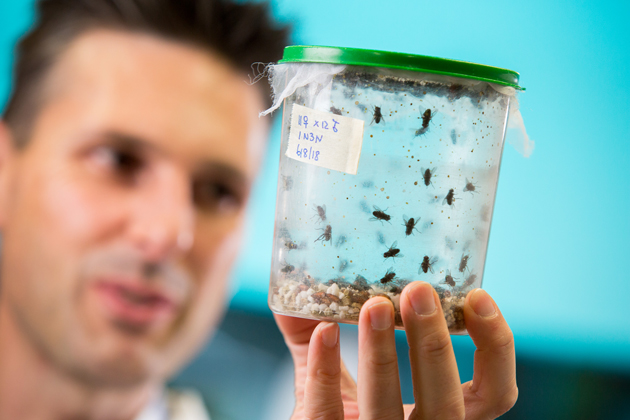
An overview of the AWI flystrike program and its progress.
Flystrike is a critical issue for Australian woolgrowers, impacting both animal welfare and farm profitability. It is estimated to cost the Australian sheep industry in excess of $320 M per annum in prevention, treatment and productivity losses (Shephard et al. 2022).
Over the last two decades, AWI has dedicated substantial resources to improving flystrike prevention and treatment methods, aimed at reducing reliance on practices like mulesing, and the use of chemical pesticide treatments.
Chemical resistance in sheep blowflies is compromising the effectiveness of current sheep flystrike control options. Moreover, there is a risk that access to chemical pesticide treatments may become more restricted due to concerns related to workplace health and safety, as well as residue and environmental issues.
AWI and its research partners are investing in a range of new technologies and natural formulations to provide new flystrike prevention and treatment approaches with low residue and reduced environmental impacts, that target the blowfly and minimise the risk of flystrike in sheep.
Current Projects
Sterile Insect Technique
This collaborative project funded by AWI, MLA, University of Adelaide, Animal Health Australia and Livestock SA aims to eradicate sheep blowfly from Kangaroo Island using the Sterile Insect Technique (SIT). The SIT method for controlling sheep blowflies involves the mass release of irradiated sterile male blowflies, which mate with female blowflies, thereby suppressing reproduction rates and controlling the fly population size.
Development of Novel Fly Traps
This multidisciplinary project (entomology, biotechnology, analytical chemistry and genomics) led by Deakin University will build the key biochemical data to develop a novel fly lure technology for flytraps.
The project will use chemical and molecular methods to identify key attraction cues for female flies drawn to susceptible sheep suffering from conditions like dermatitis and fleece rot, with the aim of developing a targeted and effective new lure.
The lure will be tested across various properties in different states, considering geographic and climatic variations, to assess their impact on wild fly populations and flystrike rates. Optimal trap design to capture L. cuprina females will be also investigated.
This project has been awarded an Australian Research Council (ARC) Linkage Program Grant.
Nanotechnology and Tea Tree Oil
Tea tree oil (TTO) is already being used in many external parasitic treatments such as human lice treatments, domestic pet tick control and fly repellent.
Previous AWI investment into nanotechnology for flystrike control, carried out by the University of Queensland, has demonstrated the ability of silica nanoparticles to provide extended periods of protection for insecticides.
This project, co-funded by AWI, AgriFutures and Beef and Lamb New Zealand and led by the Department of Primary Industries of Queensland, will design and test unique TTO–nanoformulations with purpose-design release characteristics to give prolonged periods of protection against flystrike, with minimal residues and off-target effect.
Novel Targets against Flystrike
This project builds on AWI’s previous investment in the blowfly genomics program with the University of Melbourne. The main objective of this research is to identify genes and proteins that could be of use in the development of future blowfly control strategies. These would include novel targets for new insecticide chemistries or biological interventions.
This project has been awarded an Australian Research Council (ARC) Linkage Program Grant.
Flystrike Chemical Resistance
This project aims to increase the understanding of chemical resistance in sheep blowflies, including the use of different chemical rotation strategies to prevent or delay the development of resistance and opportunities to reduce the impact of resistance once it has been detected.
The project outcomes are informing recommendations for woolgrowers on best practice management strategies specific to their circumstances to prevent or slow the development of blowfly resistance to the commonly used flystrike chemical treatments.
Breeding and Selection
Breeding sheep naturally resistant to all forms of flystrike is a long-term solution to managing the risk of flystrike in some types of Australian wool sheep. Breeding strategies must also integrate objectives for other health and welfare traits such as worm resistance, conformation and reproductive performance. For woolgrowers who are working to reduce their reliance on mulesing, the goal is to maintain or improve productivity outcomes, whilst breeding a flock that has enhanced resistance to breech flystrike and that can be managed effectively, without the need for mulesing or for a high reliance on chemical control.
There is no one-size-fits-all sheep breeding program and breeding strategies need to be customised to the individual farm to suit sheep breed, wool type and environment, guided by key principles identified from AWI’s investment to date in breeding for breech flystrike resistance.
AWI invests strongly in identifying and promoting optimal breeding options and strategies for woolgrowers to employ to meet their breeding objective. Examples include Wether Trials, Ewe Trials, Australian Merino Sire Evaluation and MERINOSELECT.
AWI's latest publications on breeding and selection for flystrike resistance, including project reports, are available at www.wool.com/flystrikelatest/#breeding
Analgesia and Anaesthesia
The development of effective and practical anaesthetic and analgesic treatments for lambs has been a critical advance in alleviating the pain and distress lambs experience associated with husbandry procedures such as mulesing, castration and tail docking
The provision of anaesthesia and analgesia during husbandry procedures has been shown to significantly reduce stress and pain for lambs, with follow-on benefits reported by growers of faster ‘mothering up’, faster healing and better recovery.
AWI invests in this area to assist with product development and making sure effective alternative anaesthesia and analgesia options are available for woolgrowers to use, as well as education and extension to enhance their uptake and use.
AWI's latest publications on analgesics and anaesthetics, including project reports, are available at www.wool.com/flystrikelatest/#research-analgesia
Education, Extension and Promotion
There are many challenges involved in identifying solutions that meet the diverse range of sheep and wool type, environment and farm business priorities under which Australian woolgrowers operate. Accordingly, they have adopted a complex integrated pest management approach to reducing the risk of flystrike to ensure the best lifetime welfare of their sheep.
AWI is responsible for ensuring woolgrowers and their advisors have access to best practice information and support to meet the wide range of management options for improved lifetime welfare of sheep, and that domestic and international stakeholders are aware of, and understand, best practice management of flystrike and the welfare implications.
AWI’s Flystrike Extension Program supports woolgrowers in improving the lifetime welfare of their sheep, reducing their reliance on mulesing and crutching, optimising chemical use and increasing whole farm profitability through the provision of practical information and tools and access to accredited advisor support. Find out more about it at www.wool.com/flystrikeresources.
AWI also regularly engages with domestic and international stakeholders to ensure they understand best practice management of flystrike and the welfare implications. This includes:
- Regular AWI Animal Welfare Forum, which is an opportunity for key animal welfare groups to meet researchers involved in the flystrike RDEEC program and discuss project outcomes. Animal welfare groups that attend the forum include RSPCA Australia, RSPCA Victoria, RSPCA NSW, Animals Australia, Four Paws in Australia and The Humane Society International - Australia.
- Biennial AWI Flystrike RD&E Forum.
- Regular engagement with international and domestic brands and retailers by the Woolmark Regional Managers, both within Australia and internationally.
Measuring, monitoring and improving the success of education, training and extension programs in delivering on-farm husbandry practice change for flystrike, enabling industry to better demonstrate its commitment to ensuring lifetime welfare of sheep. Results from woolgrower surveys of their practices are available at www.wool.com/flystrikelatest/#woolgrower-surveys